



Why the Mastars Energy Chain System Lasts Longer


Do not underestimate this black component—can a joint this small influence whether the Mastars Energy Chain System remains stable after millions of motion cycles? The photographed part is a side-link joint module used in the Mastars Energy Chain System, an industrial cable carrier system. It connects adjacent links and controls the bending path of the complete carrier. For industrial equipment manufacturers, the system must continuously carry, guide, and protect multiple power and control cables through long travel, repeated bending, changing loads, and limited maintenance access. In marine, port, and other industrial applications, it may also be exposed to salt spray, moisture, and corrosive environments. To improve wear resistance compared with conventional PA-based interfaces, Mastars applies modified PEEK to the high-wear contact area. In project testing, the joint achieved more than 15 million cycles, around 3–5 times the comparison baseline, helping extend maintenance intervals, reduce lifecycle service costs, and increase the service life of the complete system.
A first assembly may run smoothly, but smooth initial operation does not prove long-term stability. Conventional PA-based joint interfaces can gradually wear, leading to increased clearance, higher drag, noise, and uneven articulation. Long lead times and slower service response for imported replacement parts can further increase downtime pressure. Once these effects accumulate across multiple links, the consequences are no longer limited to one joint; they can include cable stress, unstable motion, machine downtime, and repeated maintenance.
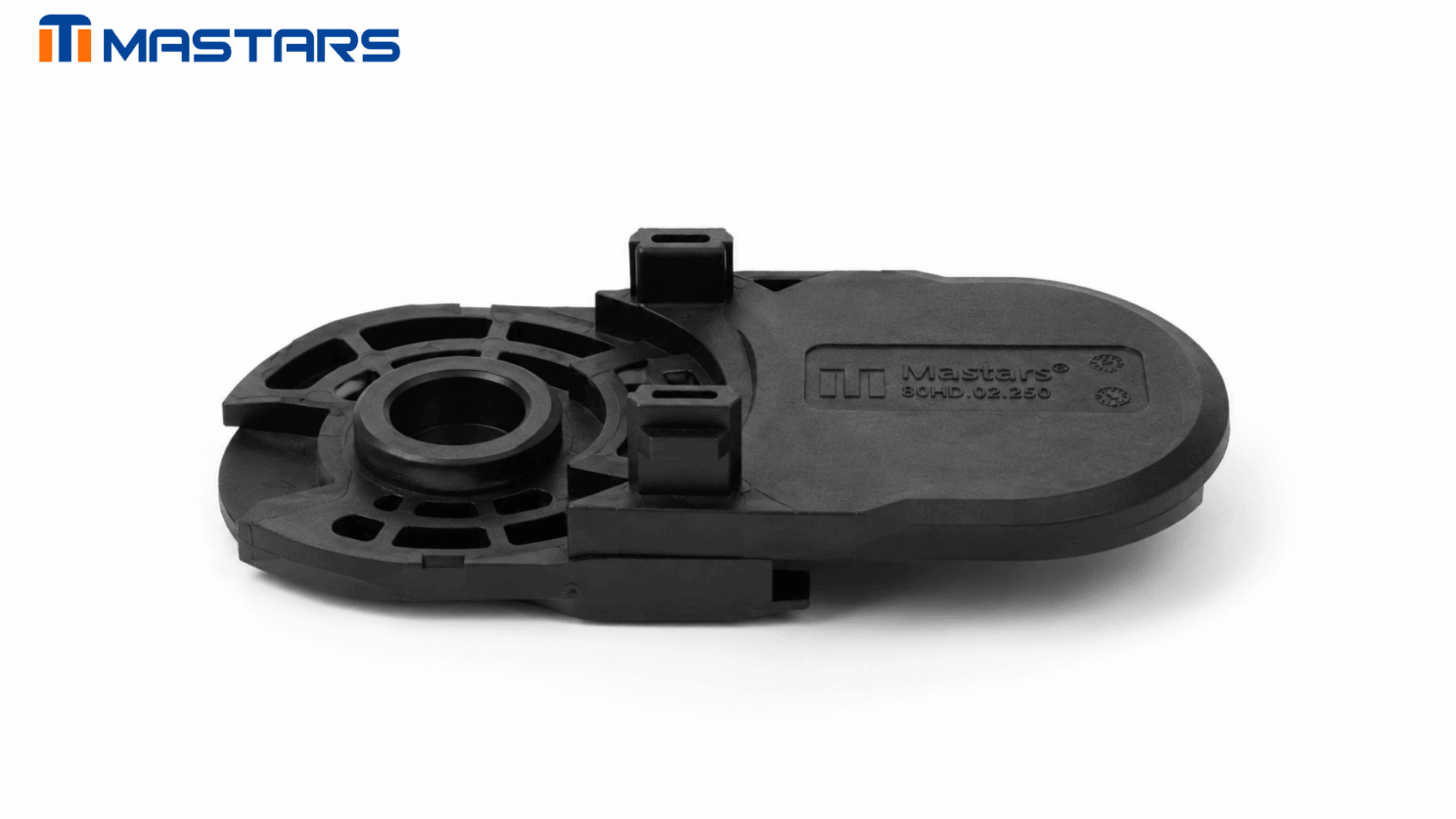
Engineering the Wear Interface First
Joint reliability is not determined by material grade alone. The wear pair, pin-to-bore fit, molding consistency, accumulated clearance, sealing, load, speed, duty cycle, and bending radius all influence how the carrier moves. If these factors are not controlled during development, even a high-performance polymer can be compromised by local stress, assembly variation, or unverified operating conditions. The result may be uneven articulation, cable side loading, increased drag, and earlier-than-planned maintenance.
With technical support from a materials team at Beihang University, the Mastars Energy Chain System combines a PA66 structural body with modified PEEK at the high-wear joint interface, together with dual-sided bore inserts, wear-resistant pins, and dedicated waterproof features. The coordinated route covers material formulation, structural simulation and DFM, precision mold design and manufacturing, injection molding, the manufacturing and sourcing of wear-resistant pins and related metal components, joint assembly, full-chain assembly and cable-routing confirmation, cycle, friction, and sealing verification, as well as field feedback for continued improvement. Engineering and supply-chain control for the Mastars Energy Chain System are managed through a single project route, allowing the design to move from validation into repeatable production without splitting responsibility among multiple suppliers.
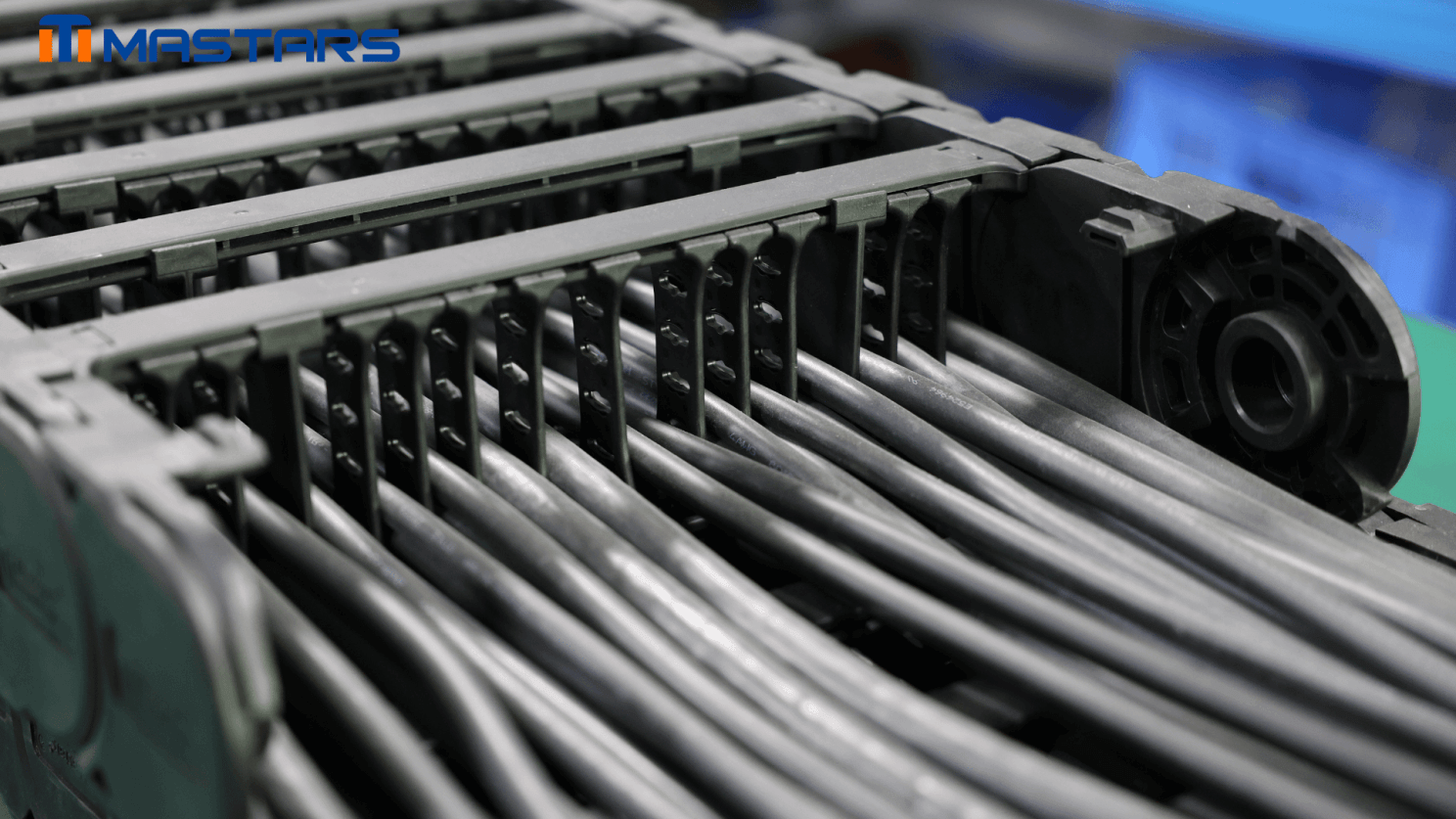
Measurable Gains Across Service Life
The Mastars Energy Chain System turns joint-level wear control into longer service life, lower motion resistance, and faster response for maintenance and replacement supply.
Key results include:
✅ Project joint wear-life benchmark: 15 million+ cycles, around 3–5× the comparison baseline
✅ Joint-interface friction coefficient: 0.10–0.15, with operating resistance reduced by 50%+
✅ Delivery benchmark: 2–4 weeks, compared with 8–12 weeks
✅ Comparable-performance project pricing: approximately 10% lower
✅ Longer maintenance intervals with reduced lubrication and replacement demand
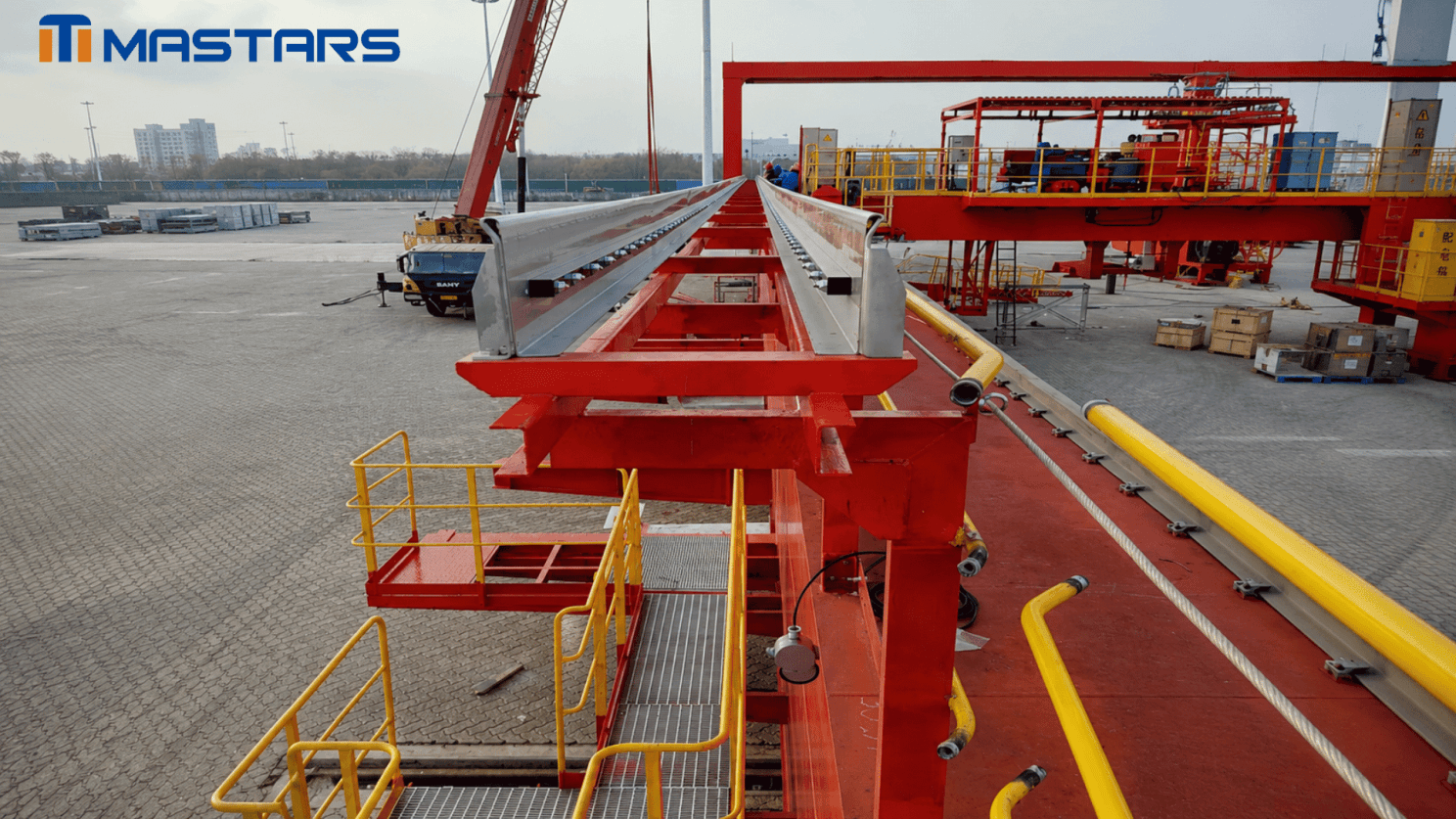
Built for Demanding Industrial Motion Systems
The Mastars Energy Chain System is developed around this system-level control rather than treating the joint as an isolated molded part. With this system-level approach, industrial cable carriers can support a wide range of applications:
- Industrial automation — gantry and transfer systems
- Machine tools — long-travel machining equipment
- Port handling — crane cable-management systems
- Marine equipment — deck machinery
- Wind energy — service and positioning systems
Could the Mastars Energy Chain System support your project’s stroke, load, cycle count, and operating environment? Share the cable package, bending radius, speed, duty cycle, maintenance conditions, and environmental requirements with Mastars. Contact our engineering team to review the joint architecture and delivery route before the cable carrier specification is fixed.

Hot Articles


Hot Tags
Stay Connected!


Manufacturing on Demand
Please fill in the following information to obtain plan details (information is confidential and not disclosed publicly), we will contact you within 24 hours, please keep your phone available!
Upload a 3D/2D model to see instant pricing, lead time, and DFM feedback.