



Multi-Process Manufacturing of a Professional Digital Mixer Chassis


One Chassis, Several Functional Requirements
Mastars manufactured a sheet-metal chassis for a customer’s professional digital mixer project, connecting sheet metal fabrication, bending, painting, and printing within one coordinated delivery route.
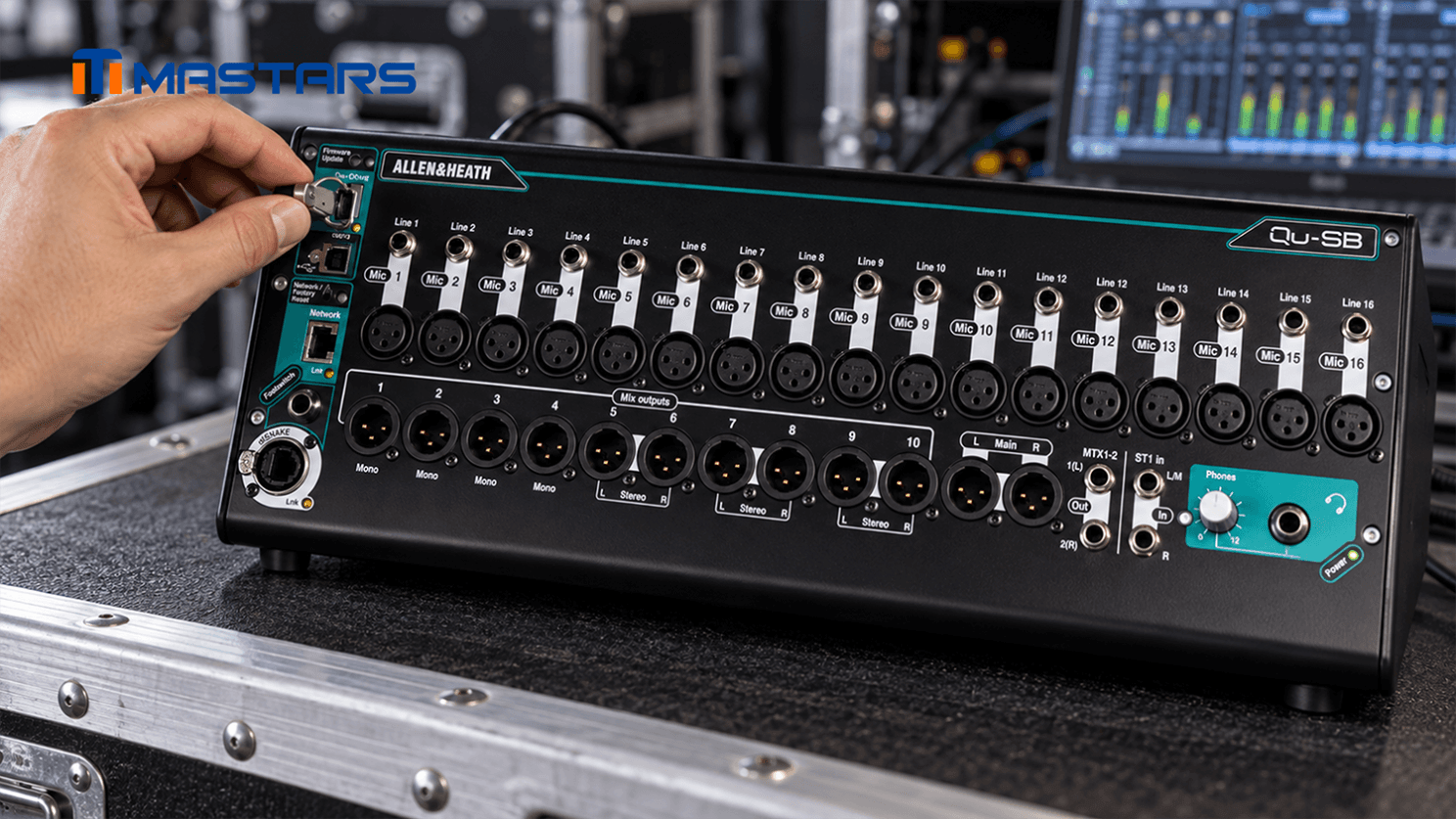
The chassis is used for the Allen & Heath Qu-SB digital mixer. Designed for live sound, studio, and installation applications, the Qu-SB measures 435.5 × 174.5 × 161.8 mm and supports standard 19-inch, 4U rack mounting.
Its panel accommodates 16 mono inputs as well as Mix, Main L/R, Network, USB, dSNAKE, Phones, and power connections. It is therefore more than a protective enclosure: it must maintain accurate relationships between the external interfaces, internal components, rack-mounting structure, and operating graphics.
The focus of this project was not sheet metal fabrication alone, but how the Mastars team coordinated four consecutive processes to keep the openings, bent structure, painted surface, and printed graphics consistent.
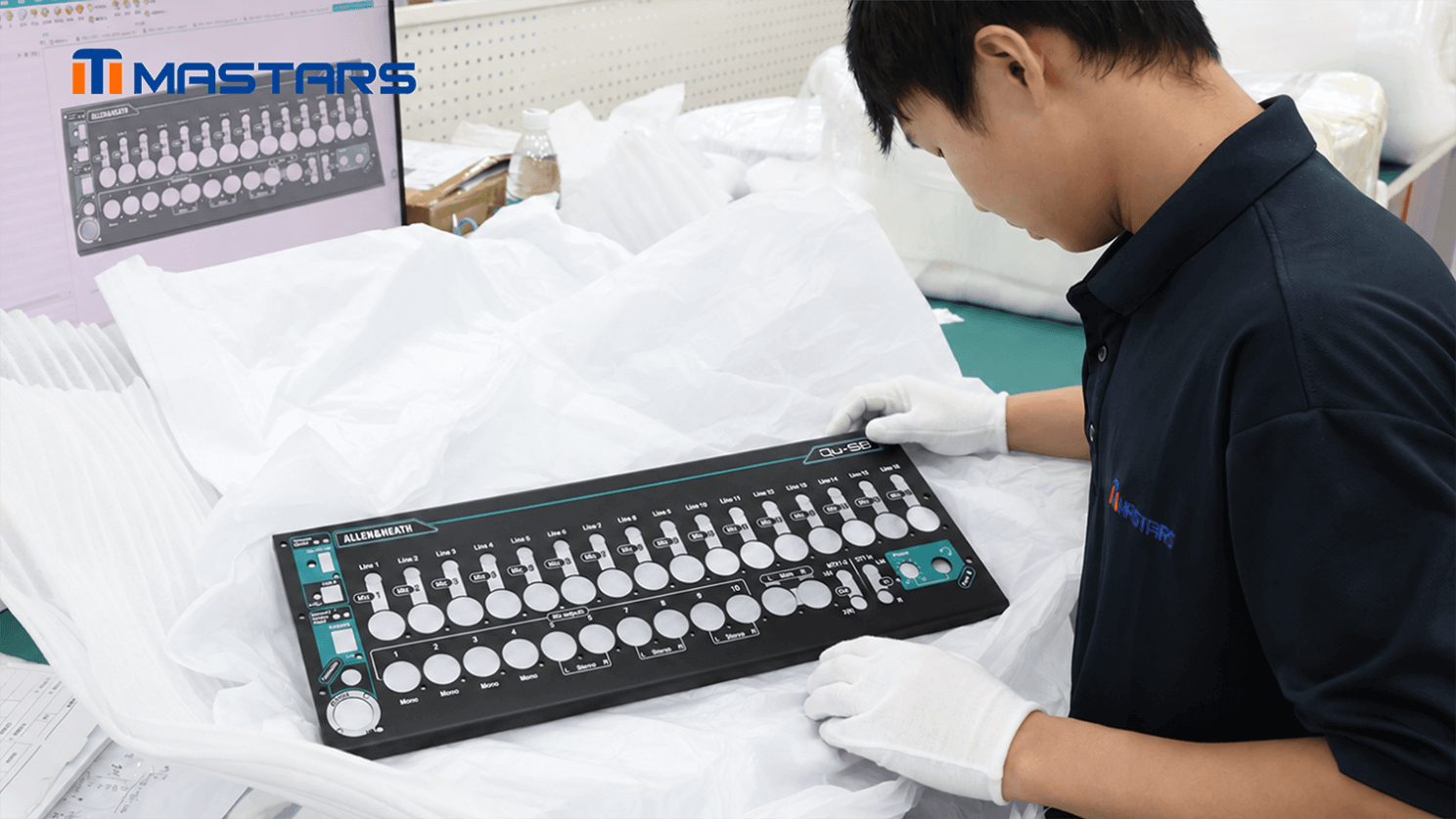
When One Deviation Affects the Next Process
To maintain the chassis’s critical dimensions and assembly relationships, the Mastars engineering team controlled manufacturing around ±0.10 mm hole-centre tolerance, ±0.05 mm hole-size tolerance, and ±0.50° angular tolerance.
A hole-position deviation can prevent connectors from aligning correctly. A variation in bending angle can change the spatial position of an entire interface face. Uneven paint around an opening can affect appearance and local assembly clearance, while printing offset can cause interface names and channel numbers to lose alignment with their corresponding positions.
For engineering and sourcing teams, the main concern is accumulated variation between processes. A part may show no obvious problem after a single operation, but earlier deviations can become visible in the final geometry, assembly, and appearance after bending, painting, and printing.
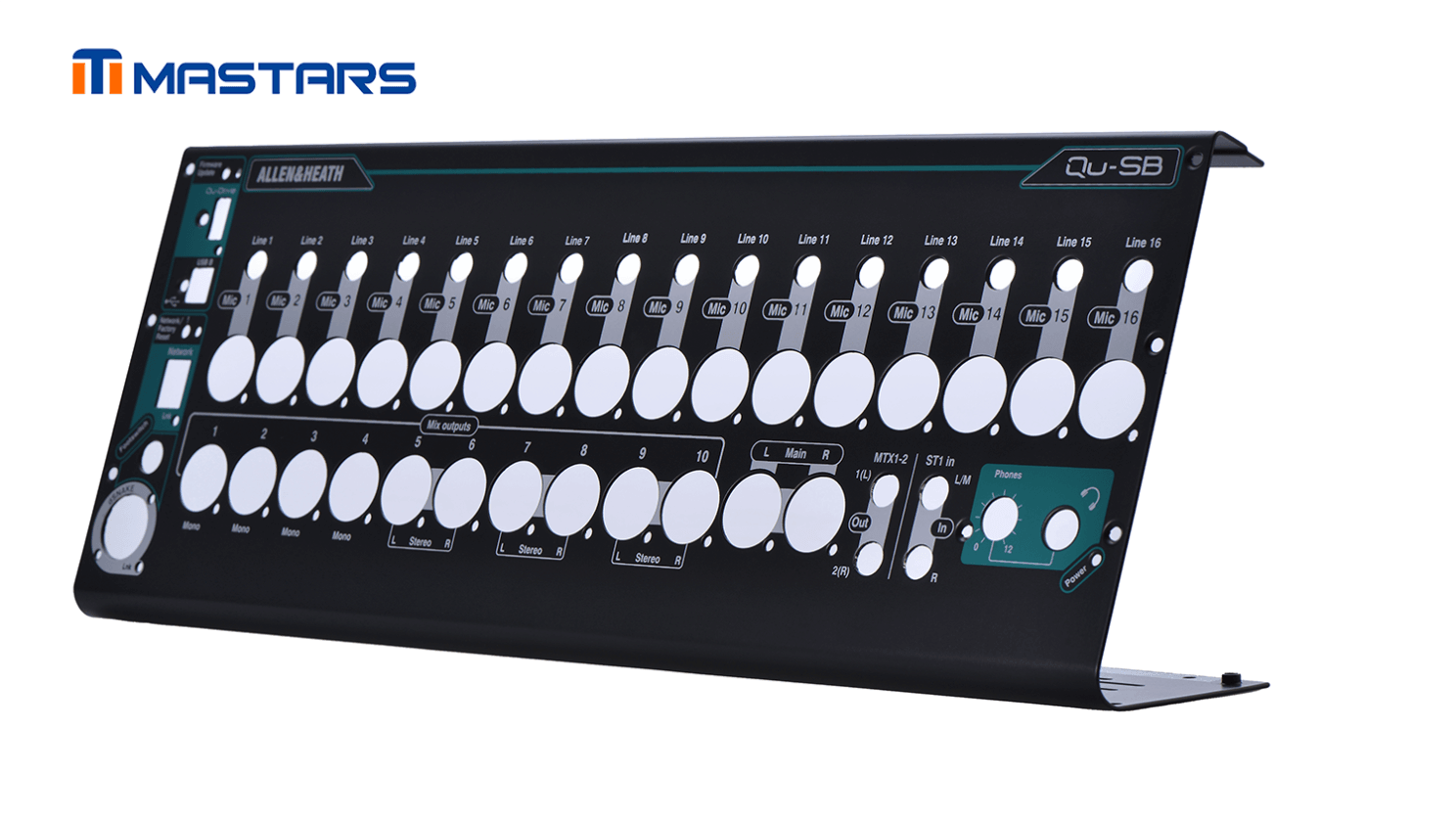
Mastars’ Manufacturing Control Route
Qu-series frames use 18-gauge cold-rolled Zintec steel to provide the required strength and rigidity. The Qu-SB also uses a fanless airflow design, so its chassis contributes to structural support, interface positioning, rack installation, and airflow—not appearance alone.
Starting from the finished chassis geometry and interface relationships, Mastars connected the four manufacturing processes and final inspection within one controlled route:
Sheet-metal cutting and forming — create the enclosure profile and the dense openings required for audio, network, USB, control, and power connections.
Bending and geometry control — form the side walls, edges, and interface faces while controlling bend angles, overall dimensions, and interface positions.
Surface preparation and painting — maintain consistent coating and black appearance across large flat surfaces, bends, edges, and openings while providing a stable base for printing.
Graphic registration and printing — use the actual interface openings and manufactured features as positioning references for channel numbers, interface names, functional areas, logos, and multicolour graphics.
Final inspection — check the chassis geometry, critical openings, cutout condition, painted appearance, print clarity, and alignment between the graphics and corresponding interfaces before delivery.
Within this route, the sheet-metal openings and outer profile provide the basis for bending, while the actual formed chassis becomes an important reference for painting and graphic registration. Mastars did not treat the four processes as separate manufacturing tasks. Each stage was controlled around the final product’s dimensional, assembly, appearance, and functional-identification requirements.
This approach reduces the risk of inconsistencies when drawing revisions, dimensional references, cosmetic standards, and print files are transferred among multiple suppliers, helping the finished chassis correspond more reliably with subsequent connector installation and final assembly.
What the Customer Gains
This functional chassis, manufactured around the digital mixer’s final assembly requirements, is the result of precise coordination across four processes.
For this sheet-metal chassis project, this is reflected in:
A 435.5 mm-wide structure is controlled through forming and finishing, with its overall geometry and large visible surface considered together.
±0.10 mm hole-centre and ±0.05 mm hole-size requirements provide a clear dimensional basis for connector positioning and downstream assembly.
The ±0.50° angular requirement connects bending control directly with final interface direction and enclosure fit.
Four coordinated manufacturing processes keep the functional openings, formed structure, painted surface, and printed information within one delivery route.
Engineering and sourcing teams reduce the risk of transferring different drawing revisions, inspection criteria, and graphic references between multiple suppliers.
Where the Same Manufacturing Logic Applies
The same manufacturing approach is relevant wherever a formed metal enclosure combines dense interfaces, visible surfaces, functional graphics, and downstream assembly requirements.
- Professional Audio Equipment — digital mixers, audio interfaces, stageboxes, rack processors
- Industrial Electronics — control panels, industrial gateways, drive enclosures, operator terminals
- Medical Devices — diagnostic equipment, laboratory controllers, monitoring systems, instrument housings
- Test and Measurement Equipment — power supplies, signal analysers, data-acquisition units, benchtop instruments
Does your enclosure also require its openings, bends, painted finish, and functional graphics to remain aligned through multiple manufacturing processes?
Send your drawings, interface layout, finishing requirements, and printing files to Mastars to discuss a coordinated manufacturing route.

Mastars, the most trusted one-stop manufacturing services provider for low-volume production worldwide!
Hot Articles

Hot Tags
Stay Connected!


Manufacturing on Demand
Please fill in the following information to obtain plan details (information is confidential and not disclosed publicly), we will contact you within 24 hours, please keep your phone available!
Upload a 3D/2D model to see instant pricing, lead time, and DFM feedback.