



Beyond Cooling Fins: CNC Engineering for Complex Aluminum Enclosures


More Than a Protective Housing
Mastars' CNC machining services support the manufacturing of complex aluminum enclosures that integrate cooling fins, internal cavities, mounting structures, and multiple functional interfaces.
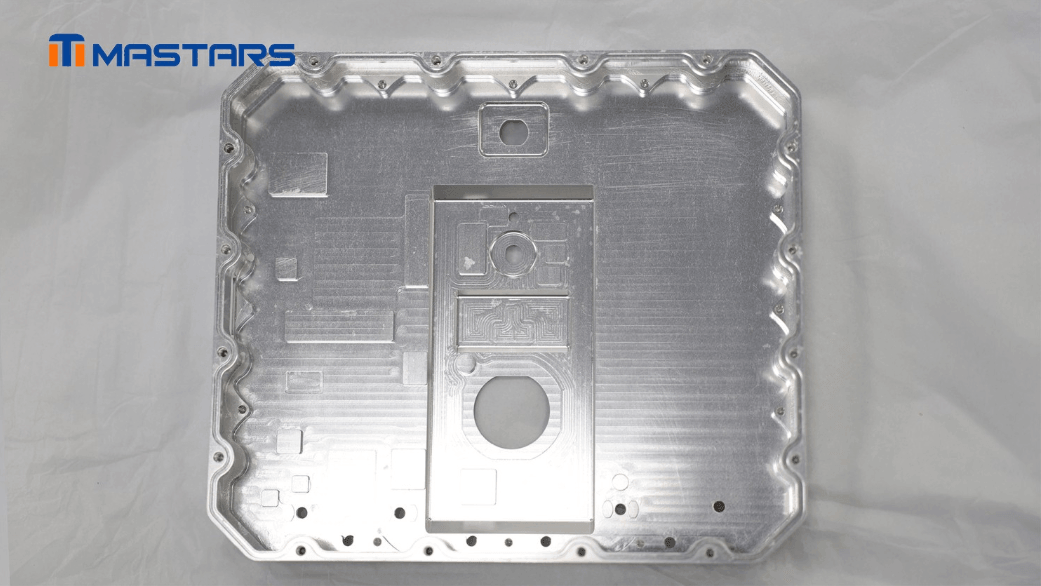
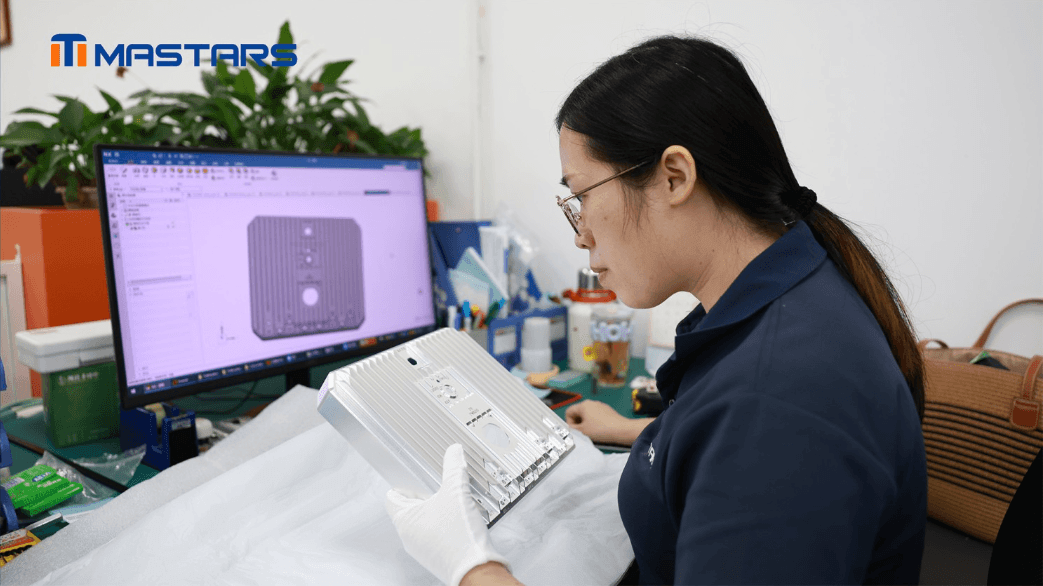
The enclosure in this case combines several engineering requirements into a single component. Its exterior features closely spaced parallel cooling fins and multiple connector openings, while the interior contains large machined cavities, stepped surfaces, threaded mounting features, and a continuous perimeter groove.
These structures suggest a combination of thermal management, mechanical support, component installation, and potential environmental protection requirements.
For manufacturing engineers, the challenge lies in translating these different functions into a practical machining strategy while maintaining the dimensional relationships required for subsequent assembly.

Cooling Fins: Where Thermal Design Meets CNC Machining
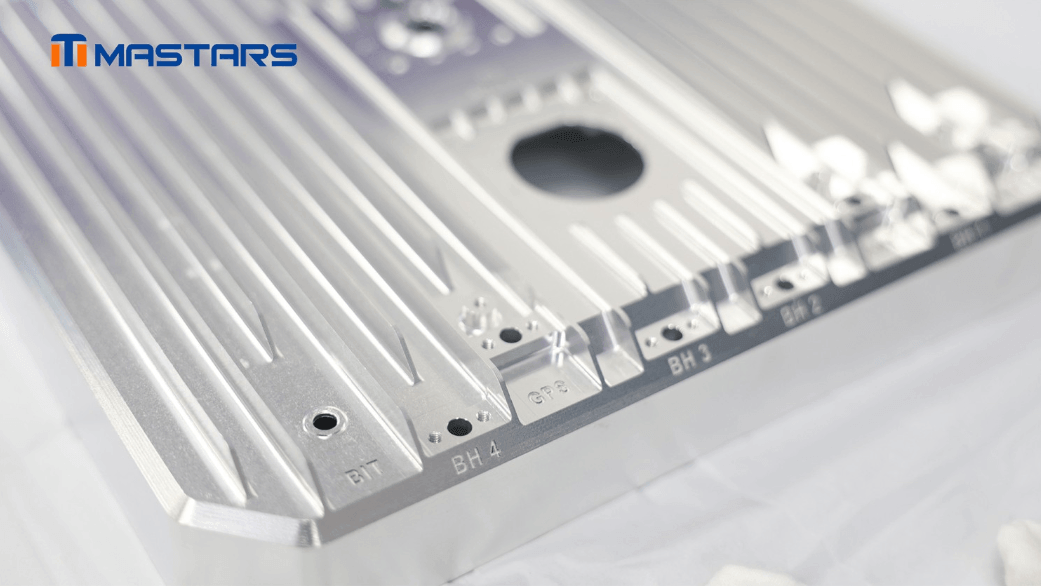
The most distinctive feature of this aluminum enclosure is its array of parallel cooling fins.
These fins increase the available external surface area and can support passive heat dissipation when an effective thermal path exists between internal heat-generating components and the enclosure.
However, thermal performance depends on more than surface area. Fin spacing, height, orientation, airflow conditions, and thermal contact all influence the final result.
From a CNC manufacturing perspective, closely spaced fins introduce additional considerations. Narrow channels limit tool accessibility, making cutter selection and toolpath planning particularly important. Fin height, spacing, and edge geometry must also be considered alongside machining stability and burr formation.
Surface condition is another factor. Machining marks, edge quality, and subsequent finishing requirements can affect the final appearance and functional surfaces of the enclosure.
A suitable machining strategy therefore needs to consider both the intended fin geometry and the manufacturing requirements of the surrounding structure.
Complex Internal Cavities Require Careful Process Planning
The internal side of the enclosure presents a different set of machining challenges.
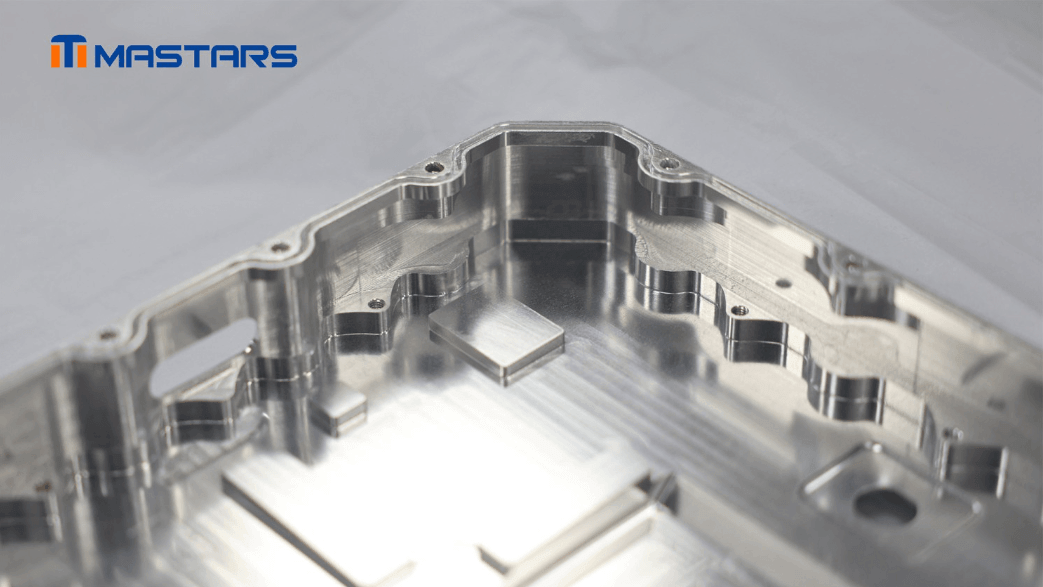
Large recessed areas, stepped surfaces, mounting features, and localized machined interfaces occupy much of the component. These structures may accommodate electronic assemblies, fastening points, and other functional elements.
Producing complex cavities requires careful consideration of workholding, machining access, cutting forces, and material removal.
As material is removed, the stress balance within a metal workpiece may change. Depending on the initial material condition and component geometry, this can contribute to dimensional variation during machining.
For this reason, roughing and finishing operations should be planned around the overall structure rather than individual cavities alone.
Workholding and datum selection are particularly important when exterior and interior features must maintain defined dimensional relationships. Tool accessibility, cutting sequence, and finishing allowances also influence how critical surfaces can be machined consistently.
These considerations become increasingly relevant when a component combines large cavities with relatively narrow structural sections.
Precision at Every Interface
Beyond the cooling fins and internal cavities, the enclosure contains multiple connector openings, threaded holes, and mounting features.
Although these details occupy relatively small areas, their dimensions and positions can influence the installation of internal electronics and external connectors.
For example, a connector opening must be considered together with its mounting holes, reference surfaces, and corresponding assembly components. Even when an individual feature is machined within tolerance, the relationship between multiple features remains important.
The enclosure also includes a continuous machined groove around part of its internal perimeter. This feature may be intended for a gasket or another sealing element, although its exact function has not been confirmed.
If the groove serves as a sealing interface, its dimensions, surface condition, and relationship with the mating component would require appropriate control.
These details highlight the importance of identifying critical assembly interfaces before machining begins. Dimensional inspection should reflect how the component will be assembled, rather than focusing only on individual feature dimensions.
How Mastars Approaches Complex CNC Manufacturing
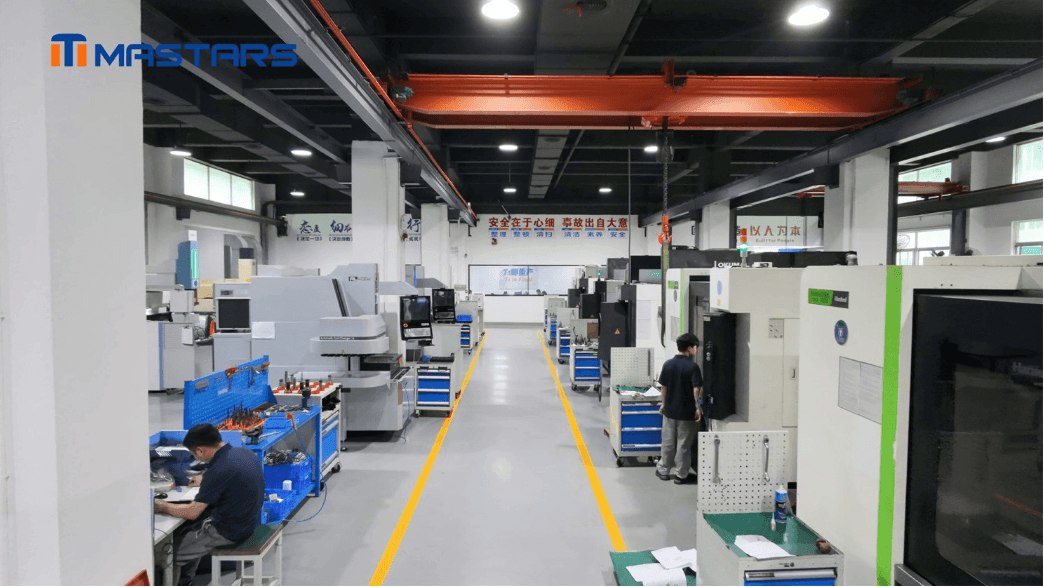
At Mastars, manufacturing planning for complex aluminum components begins with understanding the complete part geometry and its intended functional requirements.
For an enclosure combining cooling fins, internal cavities, and multiple interfaces, engineering review considers tool accessibility, machining directions, workholding arrangements, and the relationships between critical features.
The machining strategy must also account for material removal and finishing requirements. Large cavities and narrow channels may require different cutting approaches, while mounting surfaces and connector openings can demand additional attention during finishing operations.
Where multiple machining orientations are required, datum selection and setup planning become important for maintaining dimensional relationships across the component.
Inspection requirements should be considered during process planning as well. Mounting holes, threaded features, mating surfaces, and potential sealing interfaces may require different measurement methods depending on their specifications.
Mastars focuses on matching machining methods, process planning, and inspection requirements to the actual geometry and function of each component.
This engineering-led approach supports the transition from complex CAD geometry to a manufacturable physical part.
What Customers Gain
For customers developing complex aluminum enclosures, a coordinated manufacturing approach helps address several important engineering and production concerns.
Earlier manufacturability assessment
Complex fins, deep cavities, narrow channels, and critical interfaces can be evaluated before the machining strategy is finalized, helping identify potential manufacturing difficulties earlier.
More coordinated machining operations
Cooling fins, internal cavities, and mounting interfaces can be considered together during workholding and process planning, supporting better control of related features.
Greater attention to assembly requirements
Connector openings, threaded holes, and mating surfaces can be incorporated into machining and inspection planning according to their functional relationships.
Better preparation for downstream processes
Surface condition, deburring, dimensional inspection, and subsequent finishing or assembly requirements can be considered as part of the overall manufacturing route.
These considerations help product teams evaluate manufacturability at the component level while maintaining attention to its intended function.
Verification Beyond CNC Machining
Completing CNC machining is an important manufacturing milestone, but functional performance requires further verification.
For this type of enclosure, dimensional inspection may focus on critical mounting locations, threaded holes, connector openings, machined surfaces, and mating interfaces.
Thermal performance must be evaluated under actual operating conditions. Heat-source location, thermal contact, airflow, and the assembled device configuration all influence the effectiveness of the cooling structure.
Similarly, any intended sealing or environmental protection performance must be confirmed against the relevant design requirements and test conditions.
A precisely machined enclosure provides the physical foundation for subsequent assembly and functional verification. Its final performance depends on how the complete product is designed, assembled, and operated.
Applications Across Industries
The manufacturing considerations discussed in this case also apply to other products that combine aluminum structures with electronic assemblies.
- Industrial Electronics: Industrial gateways, controller housings, embedded computing enclosures, and industrial monitoring devices.
- Telecommunications: Wireless communication modules, network equipment, antenna-related electronics, and communication terminals.
- Automation & Robotics: Sensor housings, motion controllers, robotic control units, and embedded control systems.
- Energy & Power Systems: Power electronics housings, monitoring equipment, electronic control units, and power conversion devices.
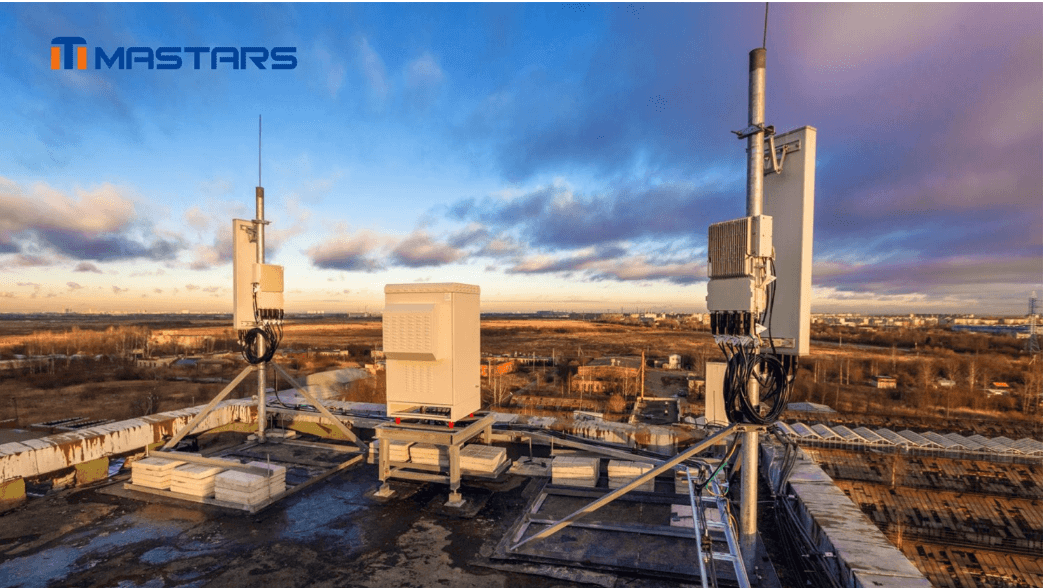
Across these industries, engineers often face similar questions involving thermal management, structural geometry, interface accuracy, and manufacturing feasibility.
Is your next aluminum enclosure being designed with machining, thermal management, and assembly requirements considered together?
Mastars provides CNC machining and coordinated manufacturing services to help product teams turn complex designs into manufacturable components. Get a quote now!

Mastars, the most trusted one-stop manufacturing services provider for low-volume production worldwide!
Hot Articles
Hot Tags
Stay Connected!


Manufacturing on Demand
Please fill in the following information to obtain plan details (information is confidential and not disclosed publicly), we will contact you within 24 hours, please keep your phone available!
Upload a 3D/2D model to see instant pricing, lead time, and DFM feedback.