



Carbon Fiber Nested Tubes For Outdoor Gear


Segmented Outdoor Poles Need Stable Joints
Can two spliced carbon fiber tube sections still stay light, straight, and stable? For outdoor gear companies developing tarp poles, tent support rods, camera supports, landing net handles, or outdoor utility poles, the joint is not just a simple connection. It affects the whole pole’s weight, straightness, hand feel, and long-term stability.
A product may look acceptable at the first build, but that does not mean the spliced structure is stable enough. What really needs control is whether the nested interface is flat, the insertion depth is consistent, the adhesive layer is stable, and the inner and outer tubes stay connected without looseness, deflection, or visible step mismatch. If this area is not handled well, the product’s actual performance can be greatly reduced. In low-volume projects, tube forming, CNC machining, bonded assembly, and inspection may also involve multiple suppliers. Once these steps are separated, communication becomes slower, quality consistency becomes harder to control, and the final joint may show looseness, uneven interfaces, or visible misalignment.
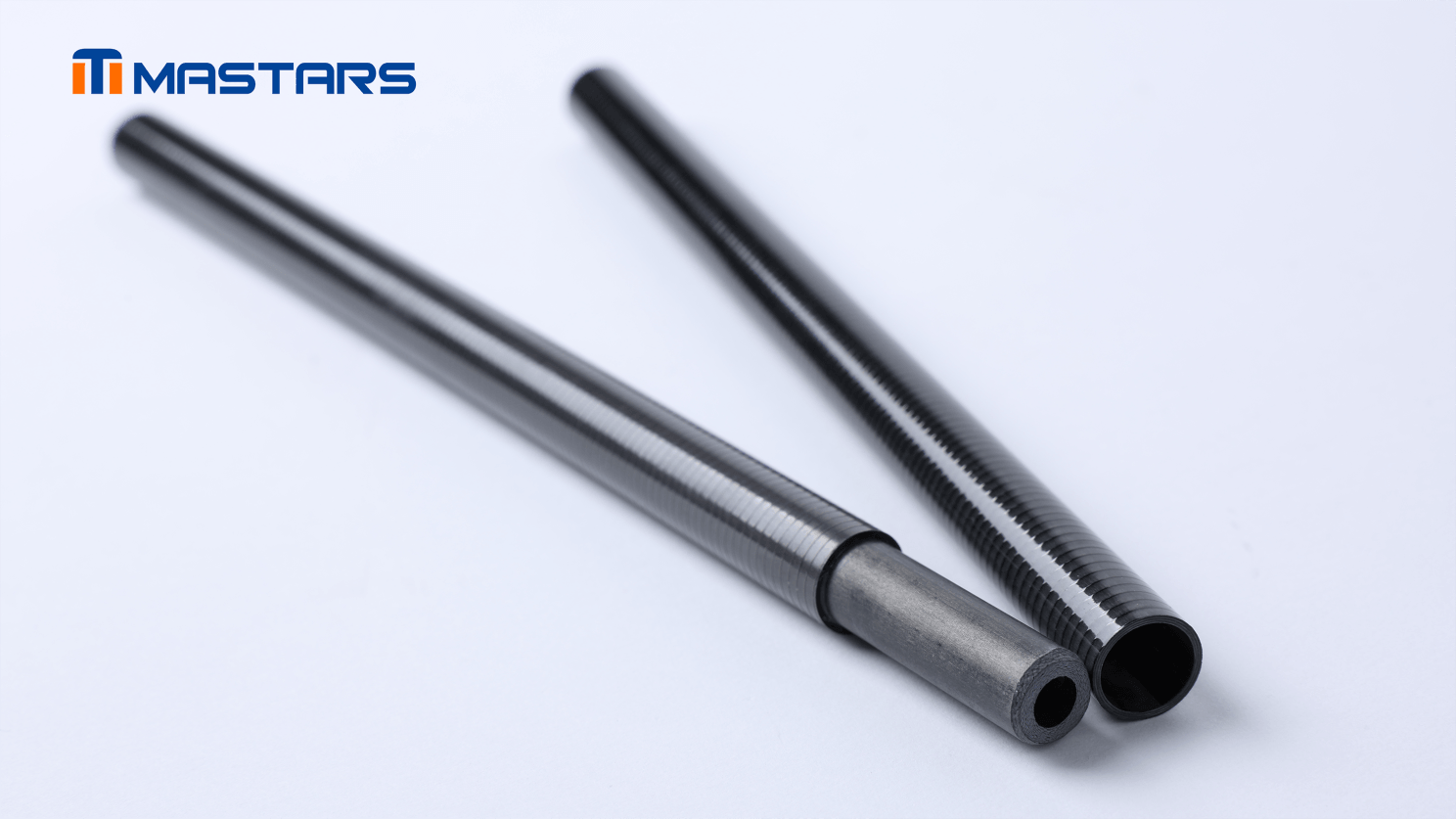
From Tube Body To Fixed Joint
Carbon fiber nested tubes pose several linked manufacturing risks: uneven tube walls after machining, fiber burrs on the textured surface, unstable nesting fit, and weak bonding at the splice joint. If the interface is not flat and well-aligned, the connection can become the first visible weak point of the whole pole.
Mastars controls the route from carbon fiber prepreg layup, mandrel winding, vacuum hot pressing, CNC turning of the outer anti-slip texture, nestewell aligned, the connection can become the first visible weak point in step machining, and epoxy bonding. By connecting tube forming, precision machining, and bonding control, Mastars helps make the spliced carbon fiber pole lighter, cleaner, and more stable.
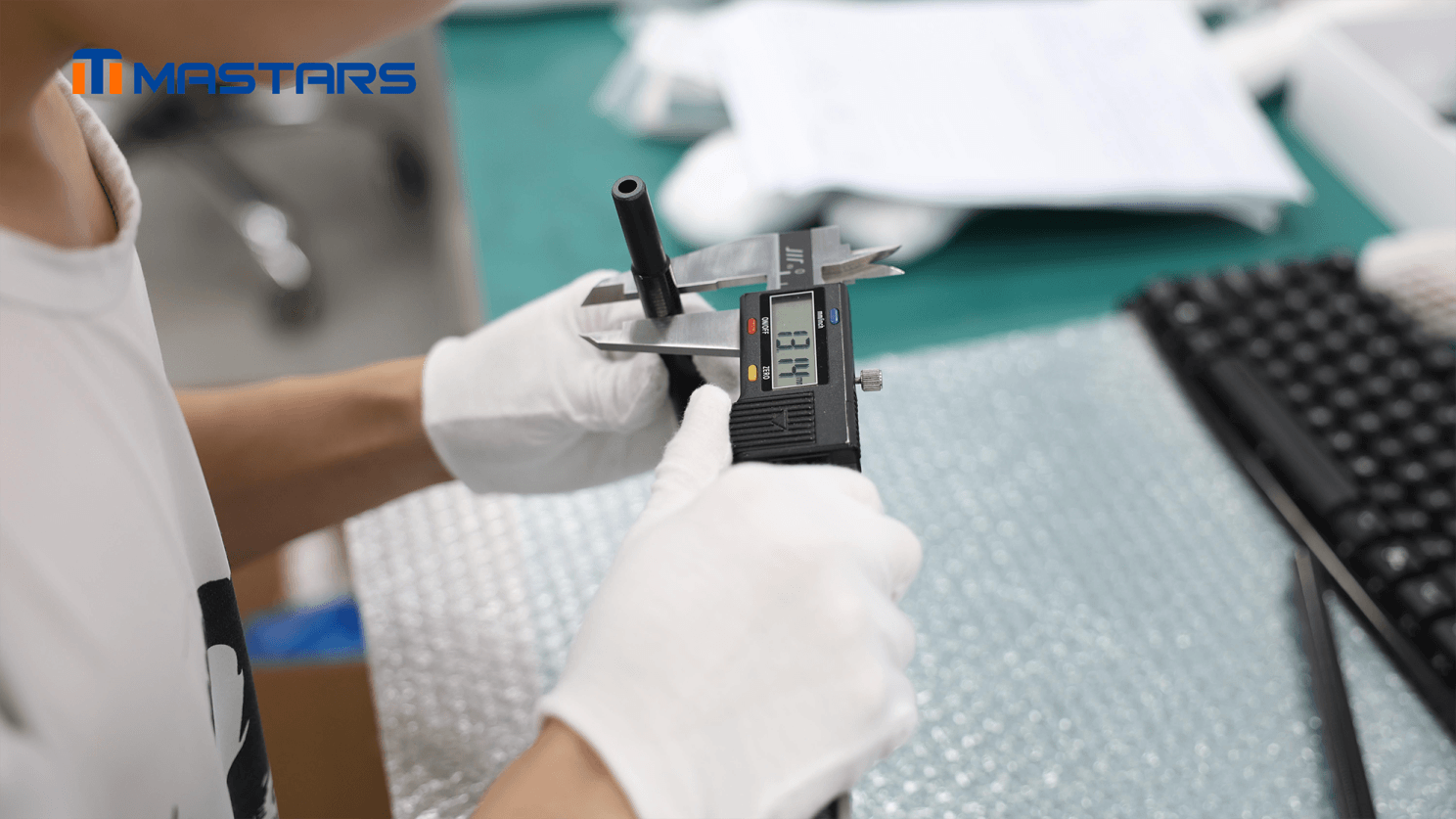
Practical Gains for Outdoor Products
Mastars helps outdoor brands turn segmented carbon fiber poles into lighter, more stable, and more reliable spliced structures.
For this type of project, the value becomes clear in material, joint, and surface control:
At the same volume, CFRP can reduce weight by about 39–43% versus aluminum and 79–80% versus steel.
Nested fit clearance can be inspected and controlled within about 0.05–0.15 mm.
Bonded insertion depth can be designed to be around 1.5–2D, where D means tube diameter.
CNC-machined grip texture depth can be controlled at around 0.10–0.30 mm.
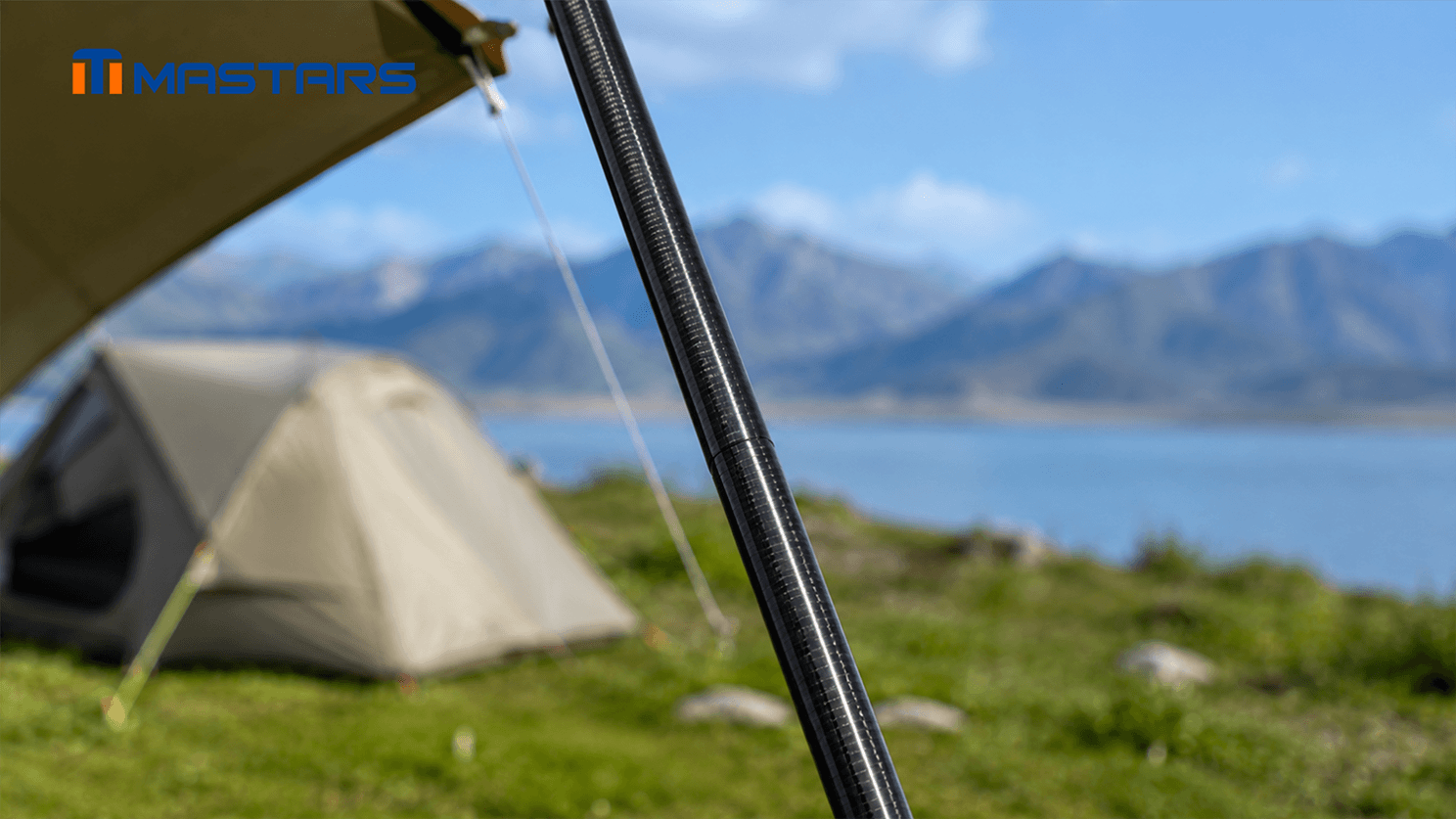
Broader Use In Telescopic Structures
The same pressure appears beyond one carbon fiber tube project. When a product needs repeated extension, outdoor resistance, and stable hand feel, material forming, surface machining, and bonding control must work together from the beginning.
Similar engineering requirements often appear in these areas:
- Camping — tarp poles
- Hiking — trekking poles
- Photography — portable supports
- Fishing — landing net handles
If your product depends on a lightweight telescopic tube, the manufacturing route should be reviewed before production details are locked. What tube size, nesting structure, or surface grip requirement are you working on? Contact Mastars to discuss your carbon fiber telescopic tube requirements.

Mastars, the most trusted one-stop manufacturing services provider for low-volume production worldwide!
Hot Articles
Hot Tags
Stay Connected!


Manufacturing on Demand
Please fill in the following information to obtain plan details (information is confidential and not disclosed publicly), we will contact you within 24 hours, please keep your phone available!
Upload a 3D/2D model to see instant pricing, lead time, and DFM feedback.