



AI Infrastructure Needs More Than Computing Power


AI infrastructure is often discussed in terms of GPUs, computing power, and software. But behind that computing capacity is a growing layer of physical hardware — servers, power electronics, liquid-cooling systems, network equipment, and the precision housings and structural components that hold critical systems together. For Mastars, supporting this kind of hardware means combining engineering review, CNC machining, and quality control rather than treating machining as an isolated process.
Complex CNC-machined aluminum housings are one example. Deep cavities, thin sections, mounting bosses, precision interfaces, and extensive material removal can all exist within a single component. For engineers developing this type of hardware, “Can it be machined?” is only the first question. The bigger concern is whether it can be manufactured consistently, verified against critical requirements, and delivered ready for assembly. That is why Mastars considers manufacturability, machining strategy, and downstream inspection from the beginning of the project.
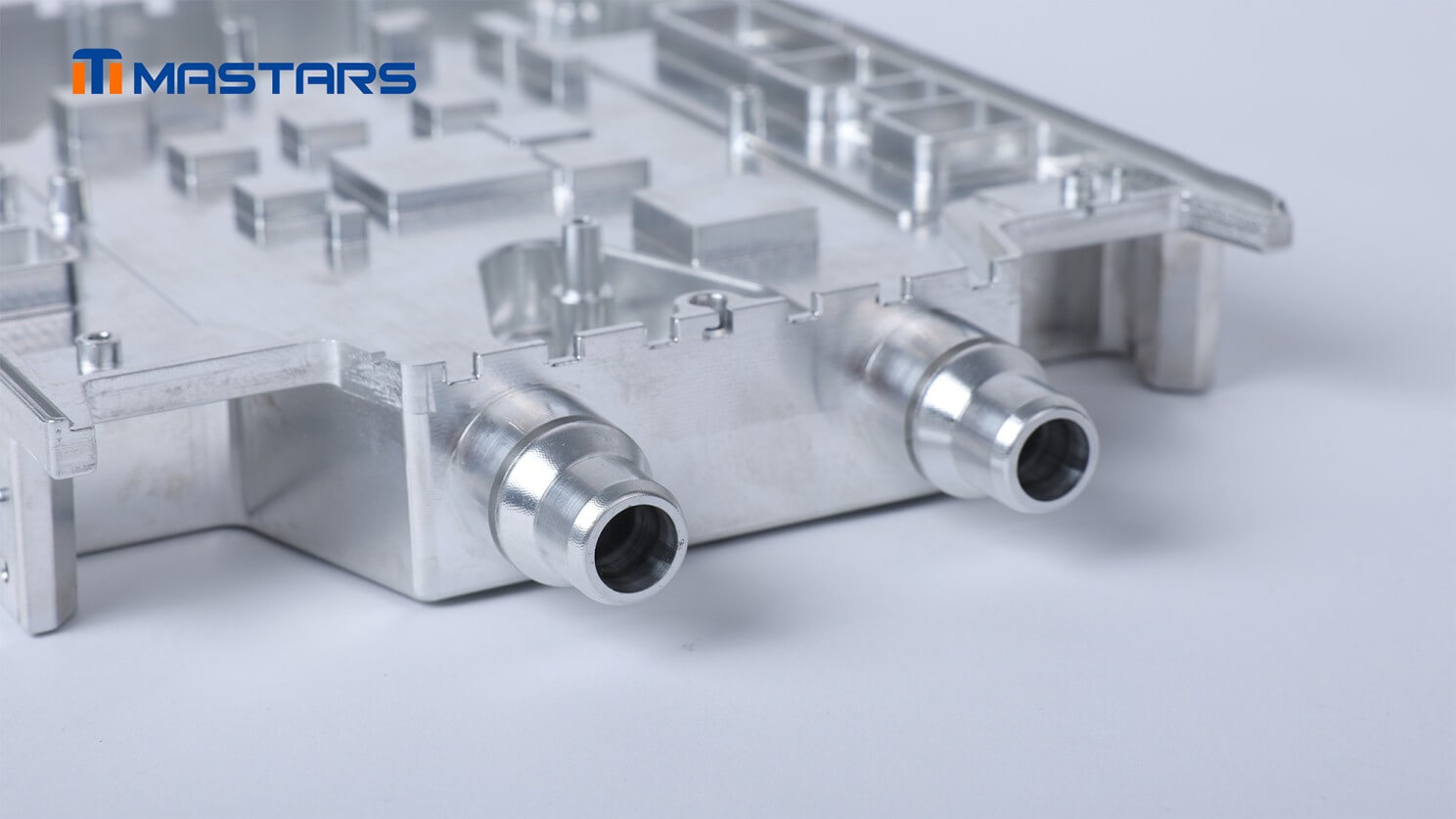
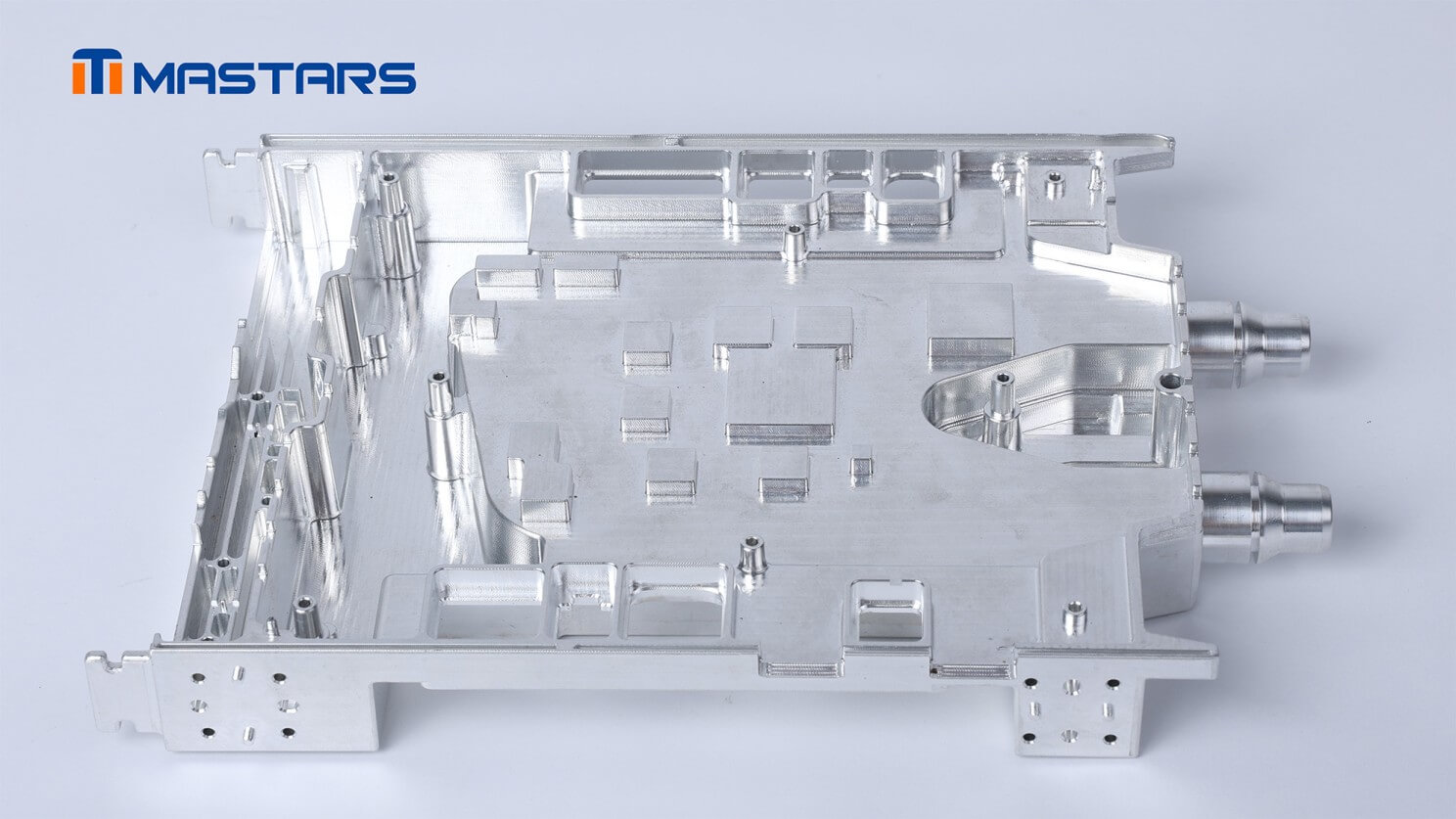
The aluminum housing shown here illustrates the type of CNC manufacturing challenge also found across high-performance infrastructure hardware. As material is removed from the billet, the remaining structure becomes less rigid, while mounting surfaces, holes, and interfaces still need to maintain their dimensional relationships. For AI infrastructure and related high-performance systems, housings of this type can do more than provide protection — they may also support component mounting, alignment, thermal interfaces, and system integration.
Managing Risk Before the First Cut
For complex housings, manufacturing decisions should begin before machining starts. Wall thickness, cavity depth, tool access, workholding, machining references, and critical interfaces all influence how the part should be produced.
Depending on geometry, complex billet-machined housings may involve 70%–90%+ material removal. As the part loses rigidity, machining sequence becomes critical. Roughing, semi-finishing, and finishing need to be planned so that critical features are not completed too early and then affected by later material removal.
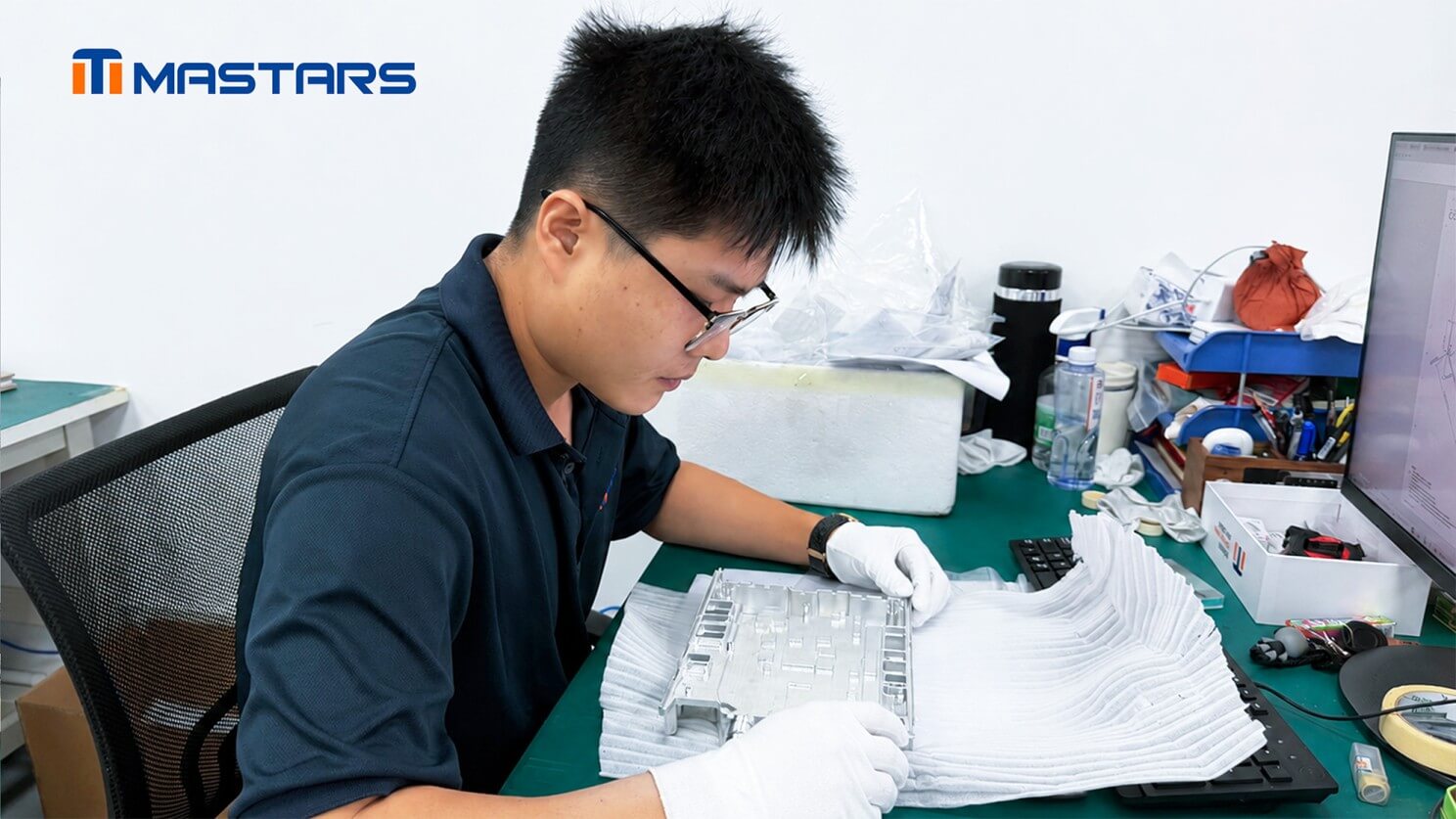
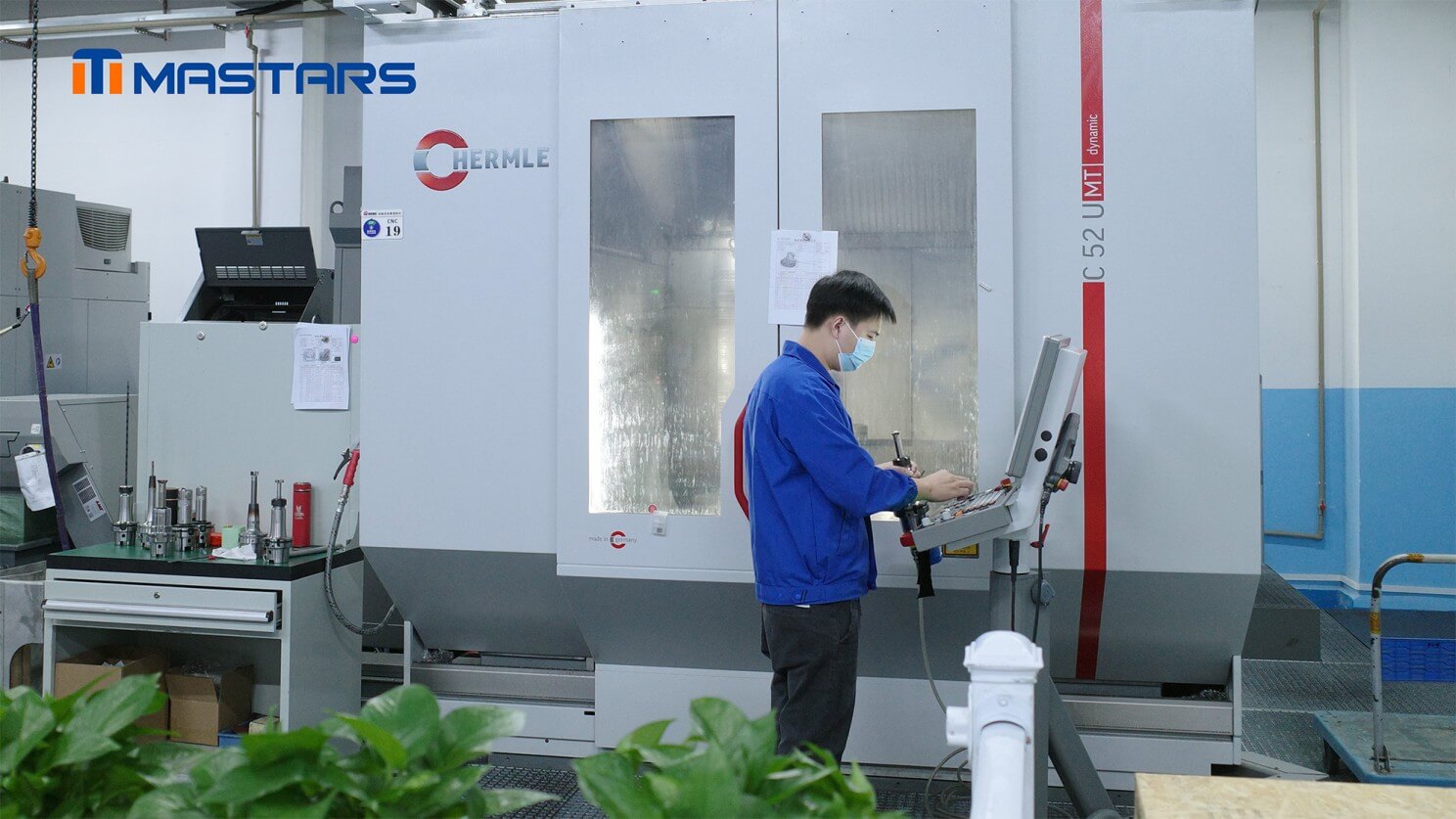
Mastars connects engineering review, process planning, CNC machining, and inspection within one workflow. Before machining, the team reviews manufacturability, tool access, workholding, and critical features. During production, the machining sequence is planned around changing part rigidity and key dimensional relationships. After machining, critical surfaces, holes, and interfaces are inspected before the component moves into the next stage.
For suitable precision CNC applications, critical dimensional requirements may fall within the ±0.01–0.05 mm range, depending on part size, geometry, material, and inspection requirements. The goal is not to apply the tightest tolerance everywhere, but to identify which interfaces actually affect assembly and function, and focus machining and inspection control there.
More Control from CAD to Functional Hardware
Client core value: Reduce manufacturing uncertainty before it becomes rework, assembly problems, or project delays.
More specifically, the value can be reflected in these areas:
70%–90%+ material removal — machining strategy planned around changing part rigidity
±0.01–0.05 mm critical-feature control — applied where assembly and interface requirements demand it
4 connected manufacturing stages — engineering review, process planning, CNC machining and inspection
4 key complexity factors considered — material removal, deep cavities, thin sections and functional interfaces
1 manufacturing partner — supporting the path from CAD review through machining and dimensional verification
For customers, the value is not in any one number. It is in how these factors are managed together. Thin walls affect rigidity, rigidity affects machining sequence, and dimensional variation at a critical interface can eventually become an assembly problem.
Building the Physical Hardware Behind AI
The same manufacturing challenges appear across the physical systems supporting modern AI infrastructure:
- AI Servers — structural housings, chassis and precision mounting components
- Liquid Cooling — cold-plate housings, manifolds and interface components
- Power Electronics — converter, inverter and power-distribution housings
- Network Infrastructure — equipment chassis, enclosures and structural components
As AI systems become denser and more power-intensive, the hardware surrounding compute, power, cooling and connectivity becomes increasingly important. These systems require more than machining capacity alone. They require manufacturing decisions that consider geometry, interfaces, assembly, and verification from the beginning.
AI needs more than computing power. It needs physical infrastructure engineered to support it.
If you are developing complex aluminum housings, cooling components, structural hardware, or other CNC parts for AI and data-center infrastructure, share your CAD data, material, quantity, and critical requirements with Mastars. Our engineering and manufacturing teams can help evaluate a practical route from design review through machining and inspection.

Mastars, the most trusted one-stop manufacturing services provider for low-volume production worldwide!
Hot Articles

Hot Tags
Stay Connected!


Manufacturing on Demand
Please fill in the following information to obtain plan details (information is confidential and not disclosed publicly), we will contact you within 24 hours, please keep your phone available!
Upload a 3D/2D model to see instant pricing, lead time, and DFM feedback.