



A Small Bracket with Critical Assembly Requirements


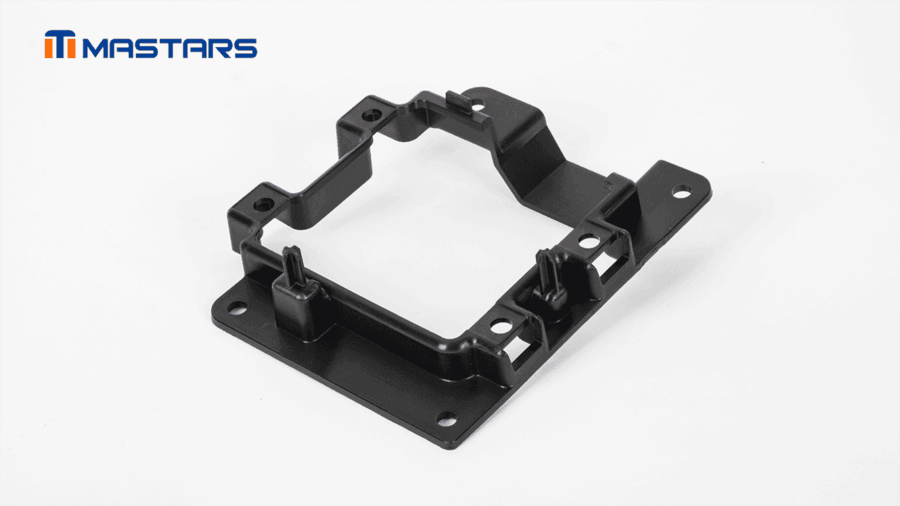
Mastars manufactured a Lower Camera Mounting Bracket for an automotive camera application, using injection molding and PA6-GF30 engineering plastic. The component serves as a structural mounting interface, with multiple fastening points, positioning features, and an irregular central opening.
Unlike a simple plastic cover, this bracket must maintain dimensional relationships between several functional areas. Its mounting holes, locating features, support surfaces, and surrounding walls all contribute to how the component fits within the larger camera assembly.
The part uses Ultramid® B3WG6, a 30% glass-fiber-reinforced PA6 material, selected for an application requiring a combination of structural rigidity, mechanical strength, and injection molding capability.
The engineering challenge lies not simply in producing the bracket's geometry, but in translating its functional interfaces into a repeatable molded component.
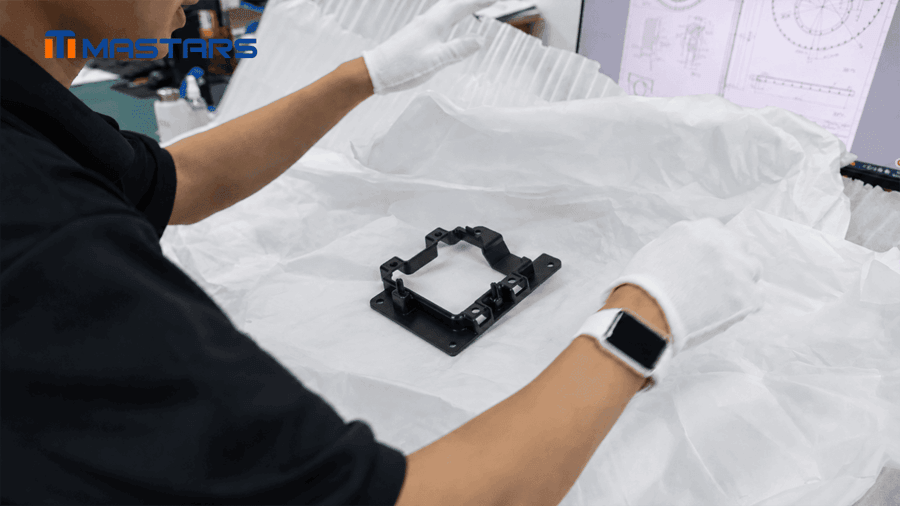
Dimensional Control of Critical Assembly Features
An automotive camera mounting bracket mechanically connects the camera-related assembly to its supporting structure.
The supplied component features several mounting holes distributed around its perimeter, raised locating elements, stepped support areas, and a central opening. These features must work together during assembly.
For this type of structure, dimensional variation can create several engineering concerns.
Mounting-hole alignment — Position differences may cause assembly interference or increase fastening stress.
Locating-feature consistency — Variations in molded positioning features may affect how mating components are seated.
Flatness and deformation — Warpage in the supporting structure can change the relationship between mounting surfaces.
Local structural integrity — Ribs, bosses, and transitions must withstand assembly loads without introducing unnecessary stress concentrations.
The objective is not to apply the tightest possible tolerance to every dimension. Instead, identify the features that directly affect fit, positioning, and mechanical reliability, then set appropriate manufacturing and inspection requirements.
Why PA6-GF30 Was Used
The material specified for this bracket is BASF Ultramid® B3WG6, a heat-aging-resistant, 30% glass-fiber-reinforced polyamide 6 molding grade.
Glass-fiber reinforcement increases stiffness and strength compared with unfilled PA6, making this material suitable for structural components requiring dimensional support under mechanical loading.
However, reinforced polymers also introduce additional manufacturing considerations.
Fiber orientation and anisotropic shrinkage
During injection molding, glass fibers tend to orient in response to melt flow. Different orientation patterns can produce different shrinkage behavior, contributing to deformation or dimensional variation.
Moisture absorption
PA6 absorbs moisture from its environment. This can influence dimensions and mechanical behavior after molding, making material conditioning and the intended service environment relevant to validation.
Complex structural transitions
Mounting bosses, thin walls, stepped regions, and thicker support sections cool differently. Without appropriate design and process control, these transitions can contribute to sink marks, residual stress, weld lines, or warpage.
For Mastars, manufacturing decisions must therefore account for both the material specification and the bracket's functional geometry.
The goal is not simply to mold PA6-GF30 successfully, but to preserve the dimensions and structural features that matter during assembly.
Connecting Mold Design with Dimensional Control
For a component with multiple fastening and locating interfaces, manufacturing quality begins before the molding cycle.
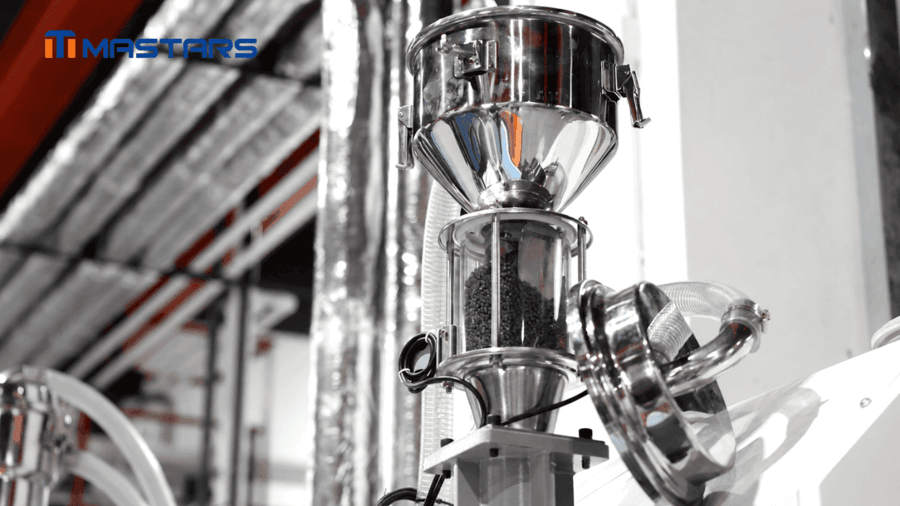
Mastars' manufacturing approach connects the material requirements, mold design, process planning, and dimensional verification around the bracket's actual assembly needs.
Key engineering considerations include:
DFM and structural review — Evaluate wall thickness transitions, reinforcing features, mounting bosses, draft angles, and potential deformation areas.
Mold and gating strategy — Assess melt-flow direction, gate positioning, filling balance, and weld-line locations, particularly near functional mounting features.
PA6-GF30 process control — Manage material drying, melt and mold temperatures, packing conditions, and cooling consistency in accordance with the selected material grade.
Dimensional inspection — Prioritize mounting-hole positions, locating-feature relationships, support-surface flatness, and other drawing-defined critical dimensions.
Assembly verification — Confirm that molded features engage correctly with mating parts and that fastening does not introduce unacceptable distortion.
These are connected engineering requirements rather than isolated manufacturing steps.
A change in gate placement may influence fiber orientation. Fiber orientation can affect shrinkage behavior. Shrinkage can alter the positions of mounting interfaces, which ultimately affects assembly.
This relationship between material behavior, tooling decisions, and functional dimensions is central to manufacturing a reliable camera mounting bracket.
What This Means for the Customer
For the customer, the value of precision injection molding is measured by how consistently the bracket supports the intended assembly.
30% glass-fiber reinforcement — Provides a material basis for improved structural stiffness compared with unfilled PA6, while requiring attention to fiber orientation and shrinkage.
Multiple functional mounting interfaces — Makes it important to coordinate hole positions, locating features, and supporting surfaces within one manufacturing and inspection strategy.
Material-specific process planning — Helps identify potential deformation and dimensional risks before they affect assembly.
Assembly-focused dimensional control — Prioritizes the critical features instead of applying unnecessarily restrictive tolerances throughout the entire component.
Connected manufacturing decisions — Supports clearer coordination between engineering requirements, mold development, molding, and verification.
These benefits describe the engineering objectives of the manufacturing approach; they are not claims of measured project improvements.
Beyond Automotive Camera Brackets

The same engineering considerations apply to other precision injection-molded structures where glass-fiber-reinforced polymers support critical mounting interfaces.
- Automotive Electronics — Camera brackets, sensor supports, electronic module carriers, and control-unit mounting frames.
- Industrial Automation — Machine-vision camera mounts, optical sensor brackets, actuator supports, and positioning components.
- Robotics — Vision-module carriers, sensor mounting frames, structural covers, and equipment support brackets.
- Medical Devices — Imaging-module supports, diagnostic equipment brackets, instrument mounting frames, and internal structural components, subject to application-specific material validation.
Across these applications, the engineering question remains similar:
How can a complex plastic bracket retain its functional dimensions while moving through tooling, injection molding, and repeated assembly?
Mastars supports customers in evaluating these manufacturing decisions, connecting material behavior, mold design, production requirements, and dimensional verification.
Have a camera bracket or glass-Fiber-reinforced structural component under development? Share your drawings with Mastars to discuss the manufacturing requirements.

Mastars, the most trusted one-stop manufacturing services provider for low-volume production worldwide!
Hot Articles
Hot Tags
Stay Connected!


Manufacturing on Demand
Please fill in the following information to obtain plan details (information is confidential and not disclosed publicly), we will contact you within 24 hours, please keep your phone available!
Upload a 3D/2D model to see instant pricing, lead time, and DFM feedback.