



Beyond Metals: Precision Engineering with Zirconia Ceramics


When Conventional Materials Are Not Enough
Metal is often the first choice for precision mechanical components. But what happens when a part needs to withstand repeated friction, provide electrical insulation, or limit heat transfer?
Choosing a different metal may not solve every problem. Sometimes, the better approach is to reconsider the material itself.
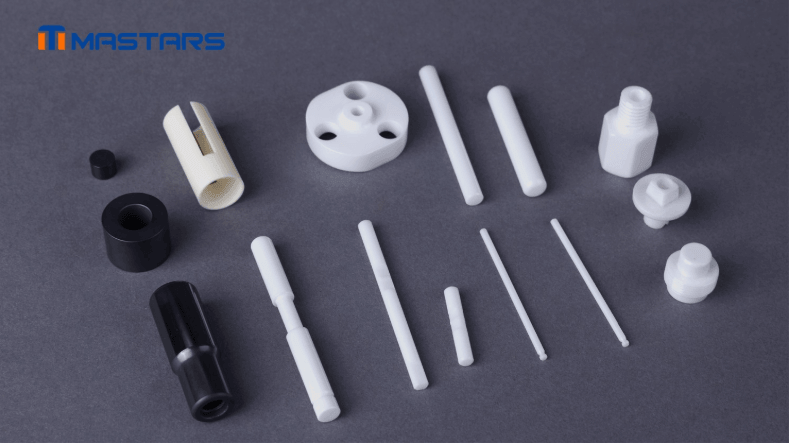
At Mastars, we manufacture precision zirconia ceramic components, including slender rods, stepped shafts, threaded parts, and custom geometries. These components are designed around requirements that go beyond shape alone, from material selection and dimensional control to surface quality and assembly compatibility.
Zirconia (ZrO₂) offers a combination of high hardness, mechanical strength, and relatively high fracture toughness among engineering ceramics. But making the most of these properties requires the right manufacturing approach.
For engineers developing wear-sensitive, insulating, or precision mechanical components, the question is not simply whether zirconia can replace metal. It is whether zirconia can better meet the demands of the application.
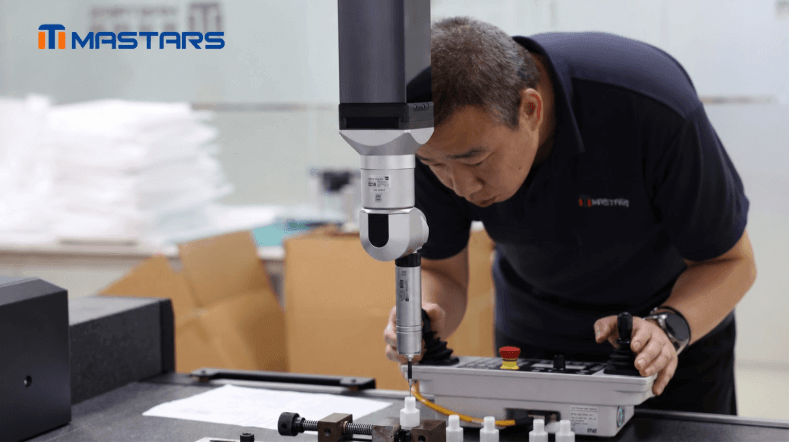
When Does Zirconia Make More Sense Than Metal?
Material selection often begins with familiar options such as stainless steel, aluminum alloys, and engineering plastics. Each has its advantages, but certain operating conditions can introduce limitations.
In sliding or contact applications, engineers may need to control wear while maintaining critical mating surfaces. In electrical equipment, a metal component may require additional insulation. In assemblies where heat transfer must be limited, conventional metallic materials may not provide the desired thermal behavior.
Zirconia offers an alternative for selected applications because it combines high hardness, mechanical strength, electrical insulation, and relatively low thermal conductivity.
Mastars' zirconia material data lists typical values of 13 GPa Vickers hardness, 900 MPa flexural strength, and 200 GPa Young's modulus. These properties make zirconia worth considering for precision components where wear resistance, structural rigidity, and dimensional requirements must be addressed together.
Certain stabilized zirconia compositions also benefit from transformation toughening, a mechanism that helps resist crack propagation. This contributes to zirconia's relatively high fracture toughness compared with many conventional engineering ceramics.
However, material selection still requires attention to impact loads, stress concentrations, and assembly conditions. Zirconia is not a universal replacement for metal, but it can offer a better combination of properties for specific engineering requirements.
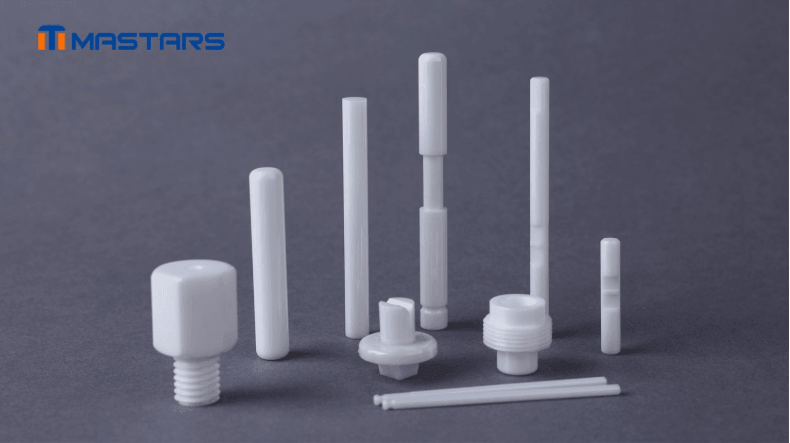
What Changes When You Switch from Stainless Steel to Zirconia?
For product developers, material differences matter most when they influence actual component design.
Consider thermal conductivity. Mastars' zirconia material reference lists approximately 3 W/(m·K) at 25°C, compared with around 16.7 W/(m·K) for SUS304 stainless steel.
That represents approximately 82% lower thermal conductivity for the referenced zirconia material. In applications where limiting heat transfer is important, this difference can help engineers explore alternative thermal designs.
Density is another consideration. Zirconia has a reference density of 6.02 g/cm³, compared with approximately 7.9 g/cm³ for SUS304 stainless steel, a difference of roughly 24%.
For components of equivalent volume, this translates into a lower material mass. However, the final weight of an assembly will also depend on its geometry and design requirements.
Electrical behavior introduces another distinction. Unlike stainless steel, zirconia provides high electrical resistivity at room temperature, making it suitable for consideration in selected insulating components.
These differences do not automatically make zirconia the better choice for every application. But they give engineers additional options when conventional materials create compromises between mechanical, thermal, and electrical requirements.
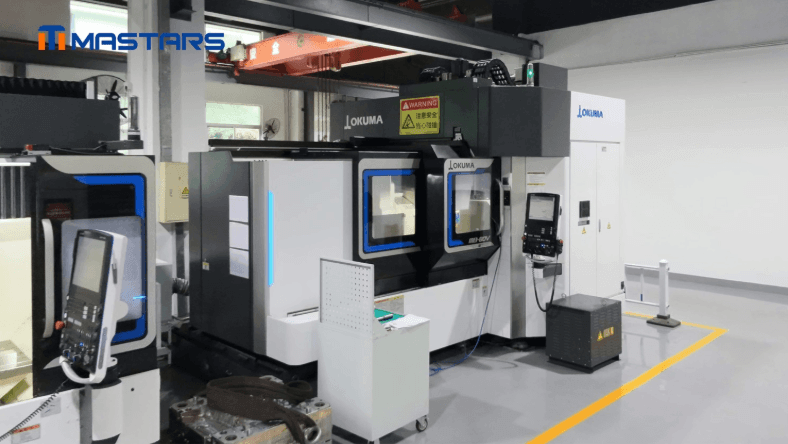
How Mastars Turns Zirconia into Precision Components
Selecting zirconia is only the beginning. For customers, the next challenge is turning the material into a component that meets functional and manufacturing requirements.
Mastars' precision ceramic manufacturing workflow covers five key stages: Material Customization, Precision Forming, High-Precision Polishing, Coating, and Testing.
Material customization focuses on matching the ceramic material system to the application's operating conditions. Requirements involving wear, mechanical loading, electrical insulation, or thermal behavior can influence material selection.
Precision forming addresses the required geometry, including cylindrical sections, stepped profiles, threaded features, and small custom structures. Because zirconia manufacturing involves dimensional changes during ceramic processing, geometry and final dimensional requirements must be considered together.
High-precision polishing helps achieve the surface quality required for selected contact, sliding, and mating interfaces. For ceramic components, surface integrity is especially important because local defects and edge damage can affect performance.
Coating is available as part of the documented manufacturing route when additional surface functionality is required. The appropriate coating process depends on the component and its intended application.
Testing connects the finished part with its dimensional, surface, and functional requirements.
By coordinating these stages, Mastars helps customers address material selection, geometric complexity, surface finishing, and inspection within a connected manufacturing process.
Why Small Ceramic Parts Can Be Difficult to Manufacture
A precision ceramic component may look simple, especially when it is a small white rod or threaded part. But the manufacturing requirements can be more demanding than the appearance suggests.
The zirconia components manufactured by Mastars include slender rods, stepped shafts, threaded geometries, and small custom-shaped features.
For slender ceramic rods, customers need consistent diameters, straightness, and reliable handling. Their small cross-sections make careful processing and dimensional control particularly important.
For stepped shafts, the challenge extends beyond producing different diameters. Transitions, reference surfaces, and mating dimensions must be considered so the component can fit correctly within an assembly.
For threaded ceramic parts, customers need more than a recognizable thread profile. Thread geometry, edge integrity, and assembly loading all matter because excessive local stress can increase the risk of ceramic damage.
Small holes and custom features introduce additional concerns involving edge quality, accessibility, and inspection.
Mastars approaches these geometries through precision forming, finishing, and testing, with attention to the features that matter for the intended application.
The objective is not simply to produce a complex ceramic shape, but to deliver a component whose geometry and surface condition support its functional requirements.
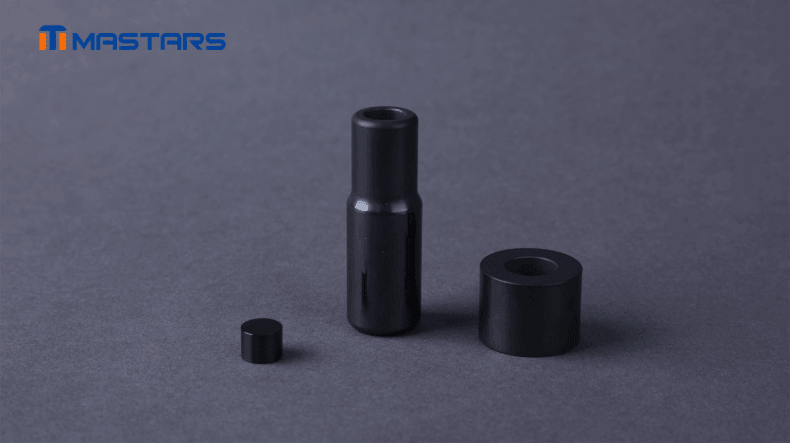
What Customers Gain
For engineers and purchasing teams, the value of zirconia is not limited to its material specifications. It lies in how those properties can address practical design and manufacturing challenges.
13 GPa Hardness for Wear-Sensitive Components
For guides, sleeves, and sliding components, repeated contact can gradually affect surface condition and fit. Zirconia's high hardness provides a material option for applications where wear resistance is a priority, subject to the actual contact and operating conditions.
900 MPa Flexural Strength for Precision Mechanical Parts
Slender shafts, stepped components, and small functional parts require careful consideration of mechanical loading. With a reference flexural strength of 900 MPa, zirconia offers useful strength for selected precision applications when geometry and stress concentrations are properly managed.
Approximately 82% Lower Thermal Conductivity Than SUS304
With thermal conductivity of approximately 3 W/(m·K) versus 16.7 W/(m·K) for SUS304, the referenced zirconia material offers a lower-conductivity option for components where limiting heat transfer is beneficial.
10¹⁴ Ω·cm Volume Resistivity for Electrical Insulation
In electrical and automation equipment, metallic conductivity can create design constraints. Zirconia's high room-temperature volume resistivity provides an alternative for selected insulating and structural components.
Beyond material performance, Mastars supports customers through material customization, precision forming, polishing, surface treatment, and testing, helping connect the material choice with the finished component's manufacturing requirements.
Quality Control That Supports Functional Performance
For precision ceramic components, surface appearance alone does not tell the full story.
Customers need to know whether a part will fit its mating components, maintain the required surface condition, and meet the dimensional requirements of its application.
For slender rods, diameter consistency and straightness may be important. For stepped components, critical dimensions and geometric relationships require attention. For threaded parts, thread geometry and edge condition can influence assembly performance.
Surface quality also matters. Localized chips, scratches, or processing-related defects may affect ceramic reliability, particularly near stressed features or contact surfaces.
Mastars incorporates testing into its documented ceramic manufacturing workflow. Inspection requirements are considered according to component geometry and intended function, rather than applying the same criteria to every part.
For customers, this means manufacturing quality should be evaluated through the characteristics that actually matter in the final application.
Where Zirconia Ceramics Can Make a Difference
Zirconia is relevant to industries where material properties and precision geometry must work together.
- Industrial Equipment & Fluid Handling: Wear-resistant guides, valve components, sleeves, and selected sliding or sealing interfaces.
- Automation & Robotics: Precision shafts, insulating components, and mechanical parts requiring controlled surface quality.
- Electronics & Electrical Equipment: Insulating spacers and structural components where electrical conductivity must be limited.
- Medical & Laboratory Equipment: Precision ceramic components for applications requiring appropriate material selection, surface quality, and application-specific validation.
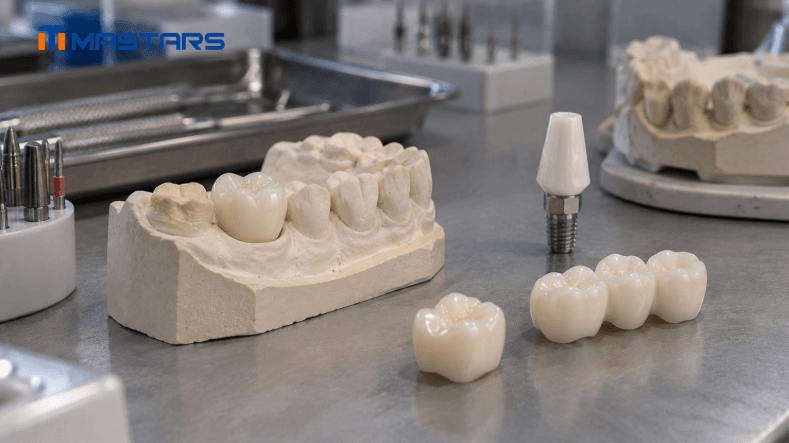
The common requirement across these applications is not simply high hardness or strength. It is the ability to match material behavior, component geometry, and manufacturing quality to the product's intended function.
Is your next precision component facing challenges with wear, electrical insulation, or thermal performance?
Mastars provides precision ceramic manufacturing and coordinated production services, helping customers move from material selection and complex geometry to finished components ready for further product integration. Get a quote!

Mastars, the most trusted one-stop manufacturing services provider for low-volume production worldwide!
Hot Articles
Hot Tags
Stay Connected!


Manufacturing on Demand
Please fill in the following information to obtain plan details (information is confidential and not disclosed publicly), we will contact you within 24 hours, please keep your phone available!
Upload a 3D/2D model to see instant pricing, lead time, and DFM feedback.