



Manufacturing Injection-Molded Components for the NavVis CLX Handheld Reality Capture Device


When Product Design Moves Into Production
Mastars has supported the NavVis CLX handheld reality capture device from DFM through mold engineering, trial molding, and injection molding production.
NavVis develops reality capture and spatial data technologies that turn physical sites into accessible digital representations. Its new NavVis CLX is a compact handheld reality capture device designed for high-volume, everyday documentation workflows such as site assessment, area and quantity surveying, and LOD200 Scan-to-CAD/BIM.
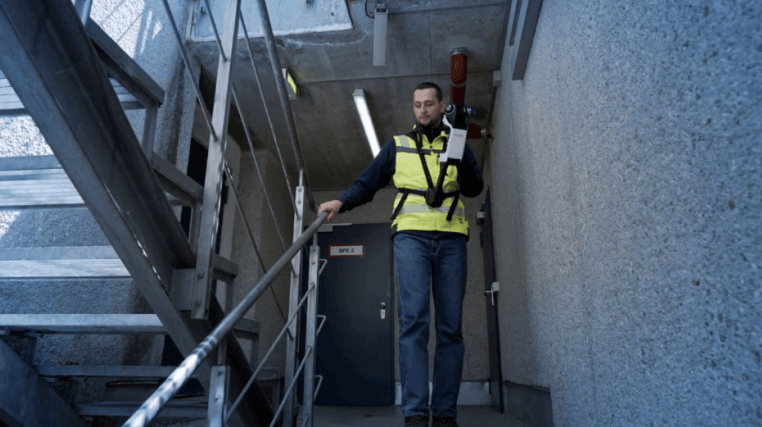
At approximately 1.8 kg, CLX integrates two LiDAR sensors, three 12 MP panoramic cameras, a 4-inch display, and an easy-grip handle designed around portability and ergonomics. As operators move through a site, the device captures spatial and visual data while providing live coverage feedback on its integrated display.
Behind that compact product architecture is another engineering challenge: the surrounding plastic components must bring together structural support, openings, assembly interfaces, exterior surfaces, and handheld ergonomics.
Today, Mastars supports the tooling and ongoing injection molding production of multiple plastic components used in NavVis CLX.
One representative component is the Handle Housing – Hard Component.
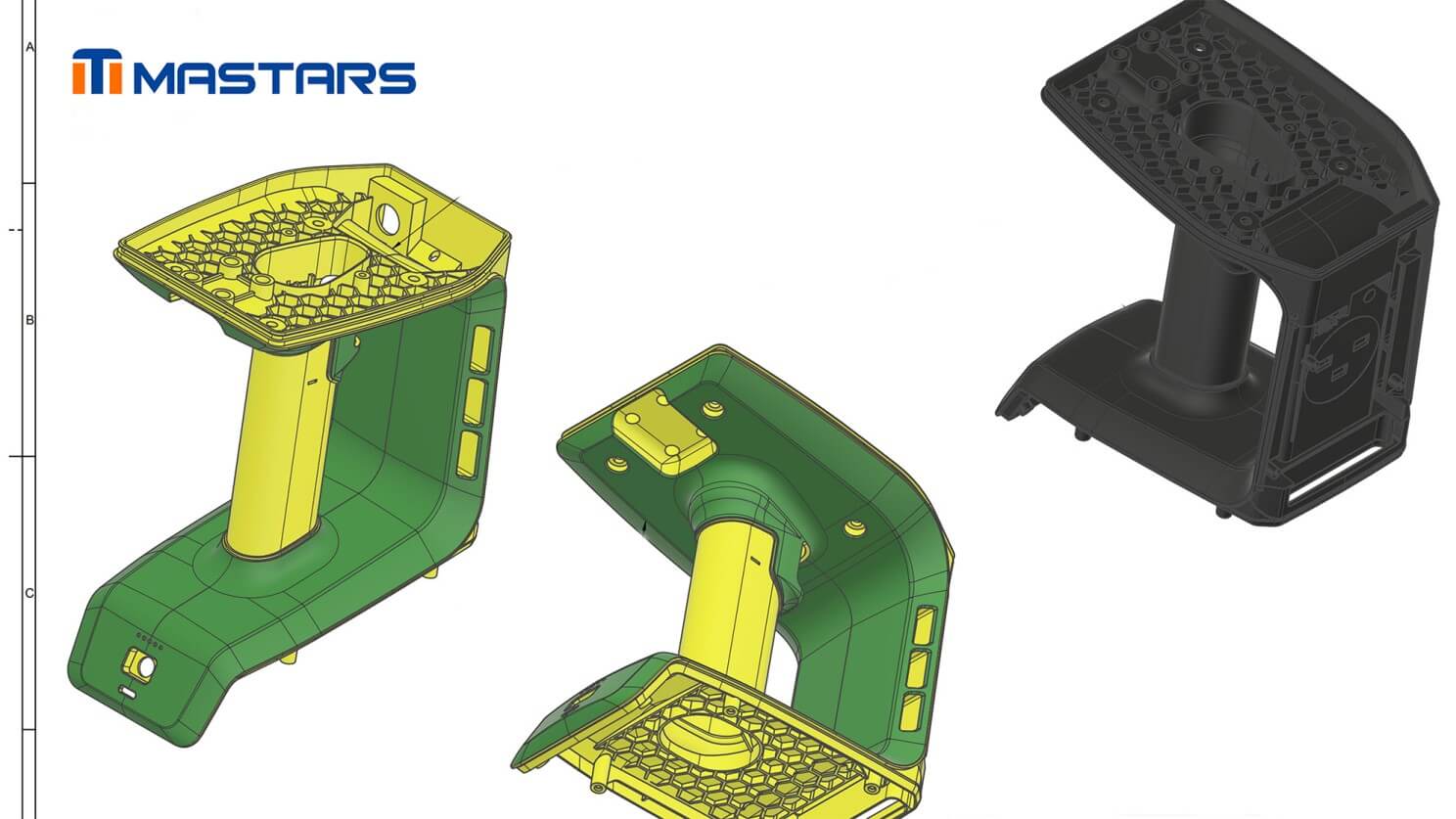
Engineering the Handle Housing
The Handle Housing integrates the primary gripping area with a larger structural frame, multiple openings, curved transitions, and assembly interfaces.
The production part measures approximately 105.893 × 186.707 × 154.023 mm, weighs 131 g, and is injection molded in PBT+20CF.
With this combination of material and geometry, manufacturability had to be considered before steel was cut. Molding and release, tooling actions, gating, specified surfaces, and downstream assembly all needed to work together.
The mold had to be engineered around the product—not the other way around.
Turning DFM Into Mold Engineering
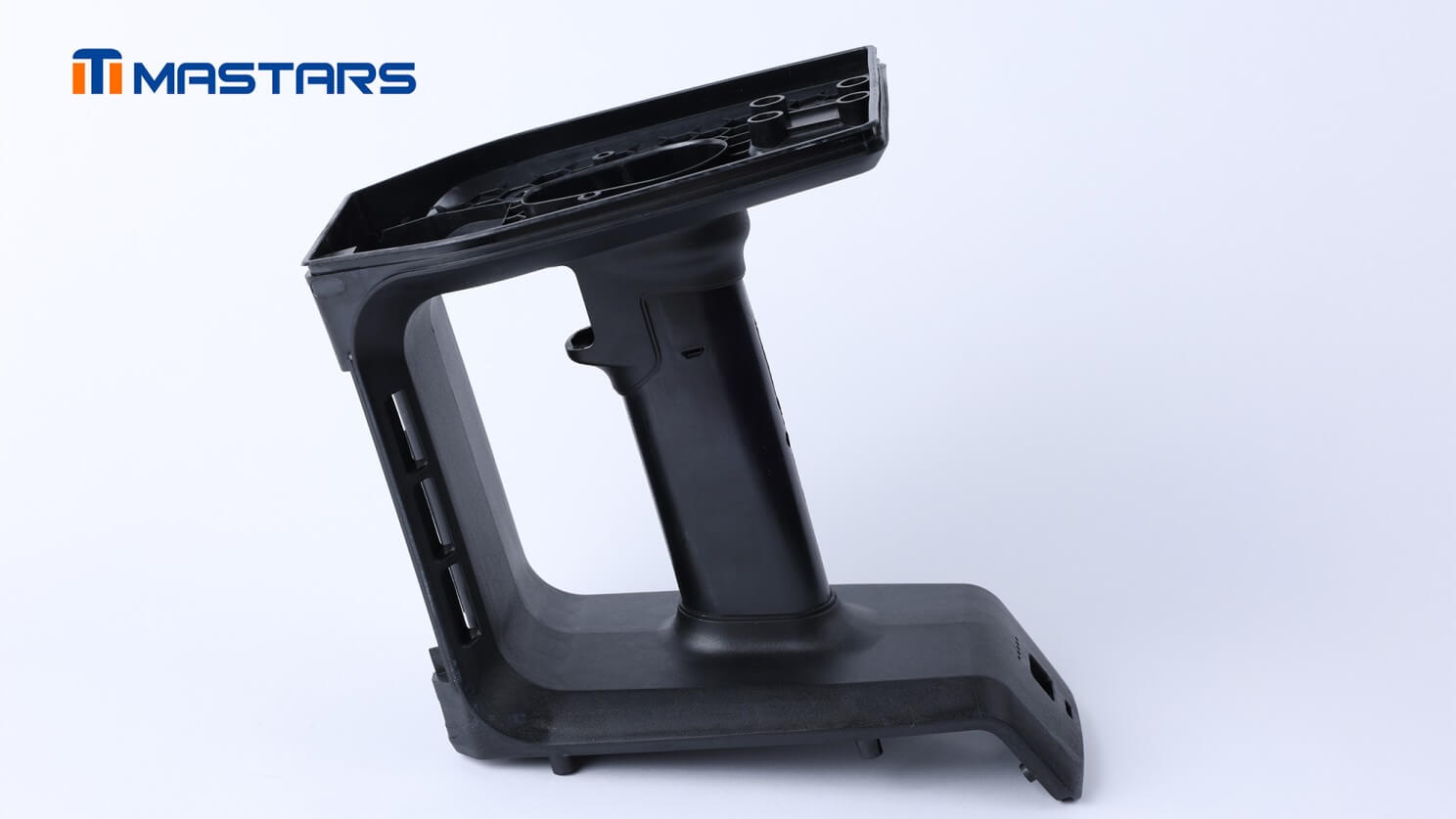
Following DFM, Mastars designed and manufactured the production mold for the Handle Housing.
The 500 × 550 × 671 mm three-plate mold uses a 1×1 cavity configuration, with:
Two sliders — addressing geometry that cannot be released through the primary mold-opening direction.
Single pin-point gate + cold-runner system — integrated into the three-plate mold architecture.
738H steel — used for the core, cavity, and sliders.
SPI-B2 / VDI 3400-30 — defining the specified molded surface requirements.
The mold runs on a 400-ton injection molding machine.
These are not simply tooling specifications. Together, they show how product geometry, material, surface requirements, and production needs were translated into an executable molding solution.
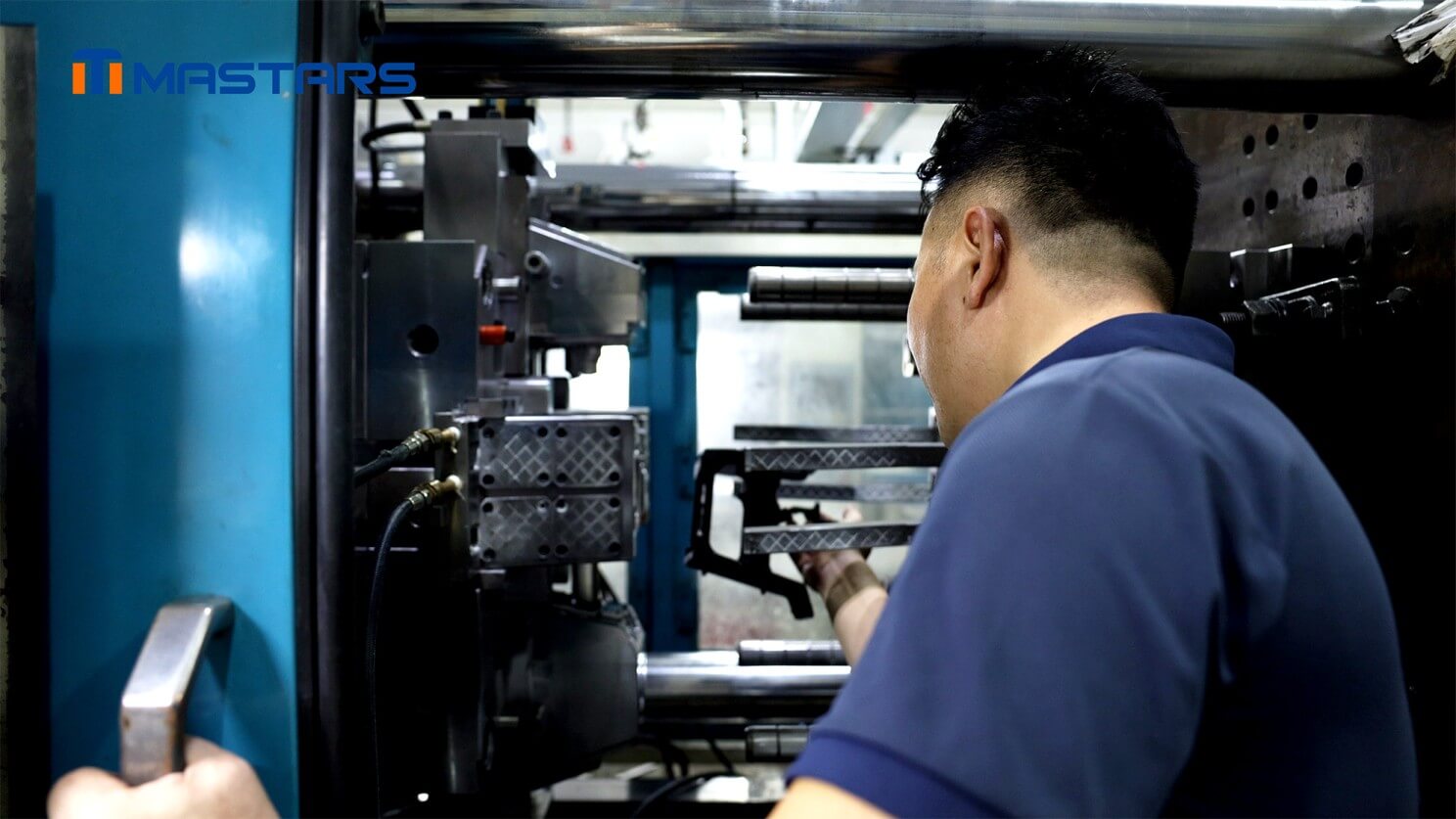
Material, Geometry, and Tooling Work Together
Using PBT+20CF meant we also had to consider material behavior alongside part geometry and tooling.
Flow path, gate strategy, shrinkage behavior, surface condition, and dimensional results all need to be evaluated through the actual molding process rather than treated as separate design questions.
For this reason, the project remained connected through:
DFM → Mold Engineering → Tool Manufacturing → Trial Molding → Part Verification → Injection Molding Production
The molded part itself becomes an important source of engineering feedback. What is observed during trial molding can feed directly back into tooling and process decisions.
For Mastars, the goal is not simply to manufacture a mold or a plastic part, but to keep the engineering decisions connected from DFM through production.
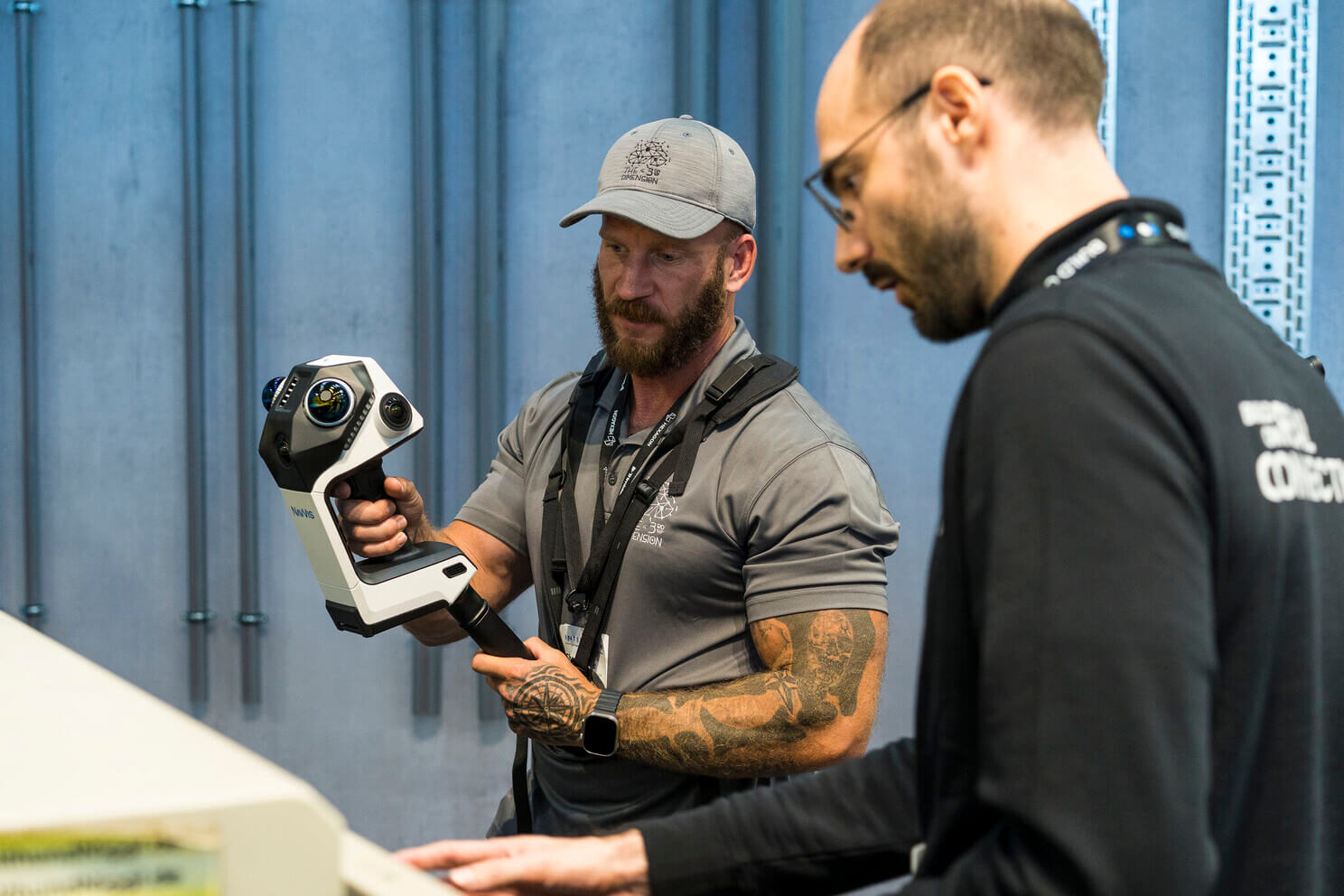
The Project Did Not End With the Mold
Completing the mold was an important milestone—but not the end of the project.
After tool manufacturing, Mastars continued through trial molding, part verification, and injection molding production.
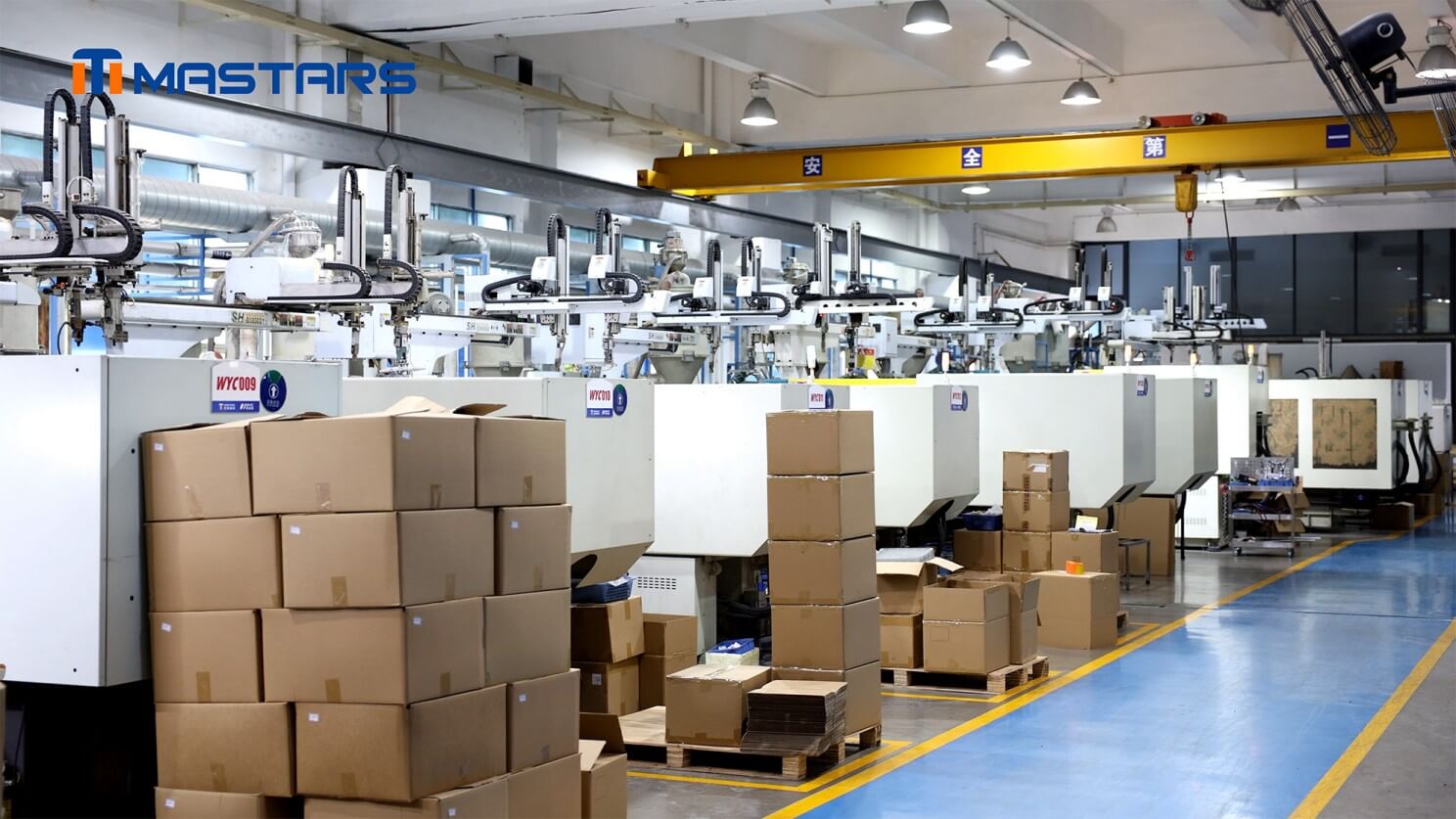
Today, CLX injection-molded components remain in production at Mastars.
This connected manufacturing route gives the customer several practical advantages:
Earlier manufacturability feedback — molding, release, gating, surface, and assembly considerations enter the discussion during DFM.
Tooling and molding remain connected — feedback from mold manufacturing and trial molding can move directly into the next engineering decision.
Less information loss between stages — product requirements established during DFM remain visible as the project moves into tooling and production.
Continuity beyond first samples — Mastars' involvement continues from mold development into ongoing injection molding production.
The value is not simply having fewer suppliers. It is maintaining continuity from design intent to physical production.
Production Is Still an Engineering Process
Moving into production does not mean verification stops.
For a structural component like the Handle Housing, dimensional relationships, assembly interfaces, molded surfaces, and process repeatability remain relevant as production continues.
Material behavior, tooling condition, and molding parameters can all influence the final component and therefore remain part of production control.
The objective is not simply to reproduce the same shape.
This keeps the production part aligned with the requirements that originally drove the DFM and tooling decisions.
From Reality Capture to Broader Applications
The same manufacturing logic applies wherever complex engineering polymer components must move from design into repeatable injection molding:
- Industrial Electronics — handheld instruments, inspection devices, controller housings
- Robotics — sensor housings, controller enclosures, structural polymer components
- Medical Devices — handheld equipment housings, functional frames, device enclosures
- Professional Electronics — measurement systems, field equipment, portable technical devices
If your next product involves complex plastic geometry, engineering polymers, and critical assembly interfaces, are those manufacturing questions being addressed before the mold is built?
Mastars supports product teams from DFM and mold engineering through tooling, verification, and injection molding production. Get a quote!

Mastars, the most trusted one-stop manufacturing services provider for low-volume production worldwide!
Hot Articles
Hot Tags
Stay Connected!


Manufacturing on Demand
Please fill in the following information to obtain plan details (information is confidential and not disclosed publicly), we will contact you within 24 hours, please keep your phone available!
Upload a 3D/2D model to see instant pricing, lead time, and DFM feedback.