



Turning Complex Lattice Concepts Into Testable Products


When Design Meets Engineering Validation
Can a complex design still work when it leaves the screen and becomes a real part? For industrial design companies, this is often where the pressure begins. A handle, grip, support structure, or decorative hardware component may look strong and distinctive in a rendering. Still, the real question is whether its organic form, lattice structure, surface texture, and assembly areas can be manufactured and tested quickly.
This is especially difficult when the design includes lightweight geometry, thin ribs, ergonomic contact surfaces, or internal openings. Traditional CNC machining may struggle with hidden internal spaces, while injection molding may require tooling investment before the structure has been fully validated. Without early engineering input, the design team may face repeated supplier communication, uncertain lead times, cost changes, and delayed validation.
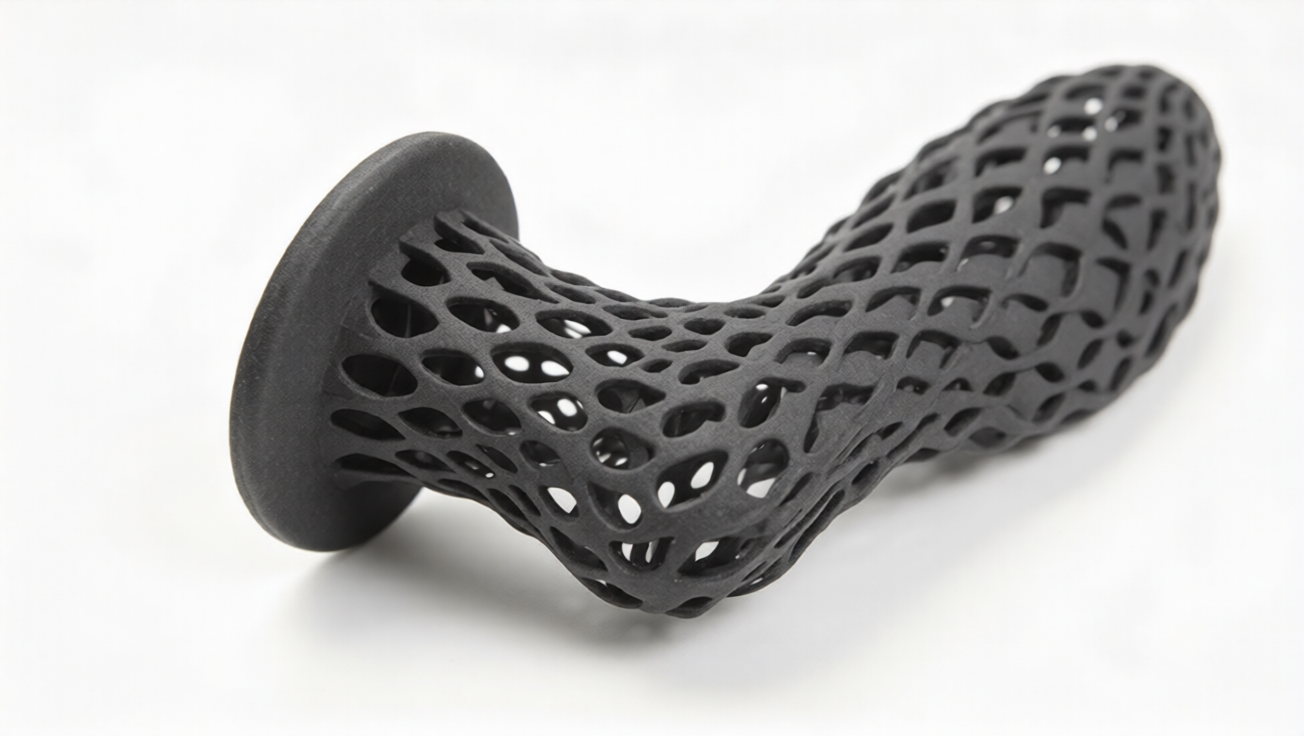
SLS printed lattice handle prototype.
Engineering Control Behind Complex Lattices
For lattice parts, the risk is not only about whether the part can be printed. Thin ribs, powder removal, Z-direction strength, surface consistency, and long-term grip loading all affect whether the design can move from a visual concept to a usable product. If wall thickness, print orientation, and post-processing are not reviewed early, the part may face rib breakage, irregular openings, powder residue, uneven color, or fatigue failure after repeated use.
Mastars uses SLS PA12 nylon 3D printing to help industrial design teams validate complex lattice structures before making traditional tooling decisions. By combining manufacturability review, print orientation planning, lattice thickness control, powder cleaning, surface finishing, and inspection checks, Mastars helps turn complex design ideas into physical parts that can be tested, assembled, and reviewed for low-volume production. This gives design teams a faster and more controlled route from concept approval to functional validation.

SLS capacity for fast validation.
What Designers Can Validate Before Tooling
Based on typical SLS PA12 nylon properties, complex lattice parts can be validated for appearance, grip, assembly, and loading behavior before tooling investment.
These values are reflected at several specific delivery levels:
SLS PA12 printed-part density: around 0.95–1.05 g/cm³
Tensile strength around 48–51 MPa supports functional validation
Elongation at break around 18–20% supports grip-related testing
Lattice weight reduction can be quantified by CAD volume comparison
No traditional tooling is required for early structure validation
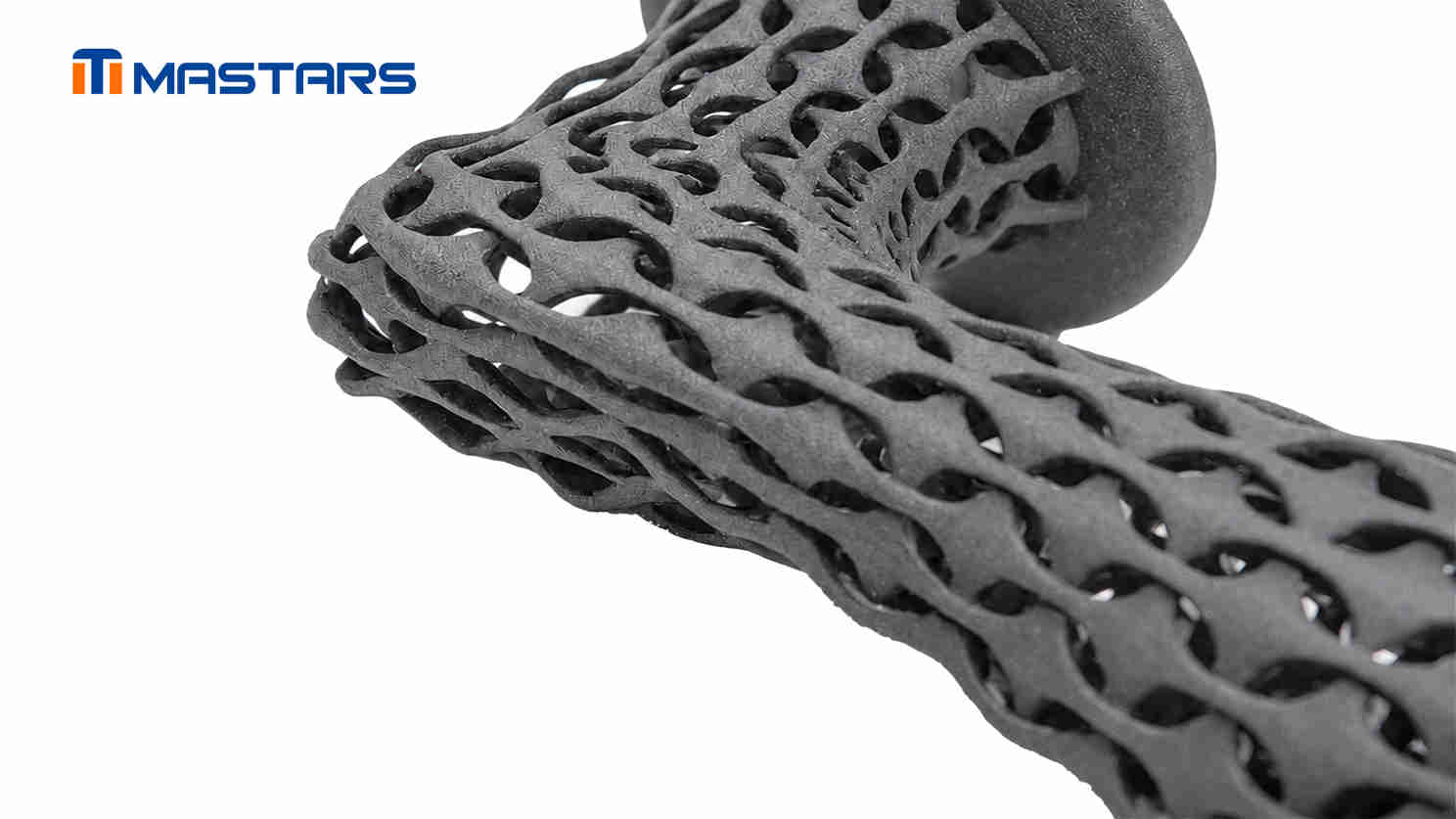
Close-up of the lattice ribs and surface texture formed by SLS PA12 printing.
Where Lattice Structures Fit Best
Lattice structures are valuable when a product needs more than a solid shape. They are especially useful for parts that require lightweight design, visible geometry, ergonomic contact, or internal space that cannot be easily produced by conventional machining or molding. For industrial design companies, the key is not only whether the structure looks innovative, but whether it can still be cleaned, finished, tested, and repeated after printing.
Therefore, its manufacturing logic applies not only to individual products but also to more industry scenarios as follows:
- Furniture Hardware — cabinet handles and decorative pulls
- Interior Products — functional fittings with visible design details
- Consumer Products — ergonomic grips and lightweight support parts
- Medical and Wellness Products — customized support and cushioning structures
- Design Prototypes — complex geometry samples for early validation
If your product needs an organic form, open lattice, or lightweight functional structure, the real question is: can the design still perform after manufacturing? Share your part requirements with Mastars, and our team will help review the right manufacturing route.

Hot Articles
Hot Tags
Stay Connected!


Manufacturing on Demand
Please fill in the following information to obtain plan details (information is confidential and not disclosed publicly), we will contact you within 24 hours, please keep your phone available!
Upload a 3D/2D model to see instant pricing, lead time, and DFM feedback.