



Injection Molding for Food Packaging: Key Benefits, Design Rules and Industry Applications


Food packaging demands a unique balance of safety, durability, cost efficiency and visual appeal. Every container, lid, closure and disposable food contact component must comply with strict global regulatory standards while meeting high-volume production needs and delivering consistent end-user performance. Among all modern manufacturing methods, injection molding stands out as the most reliable, scalable solution for mass-producing precision food packaging parts.
From rigid plastic food containers and tamper-evident caps to thin-wall packaging inserts and reusable food-safe housings, injection molding enables manufacturers to produce complex, dimensionally consistent components at speed. This article explores why injection molding dominates the food packaging sector, outlines critical food-grade manufacturing requirements, breaks down core applications, and shares actionable design best practices for packaging engineers and product developers.
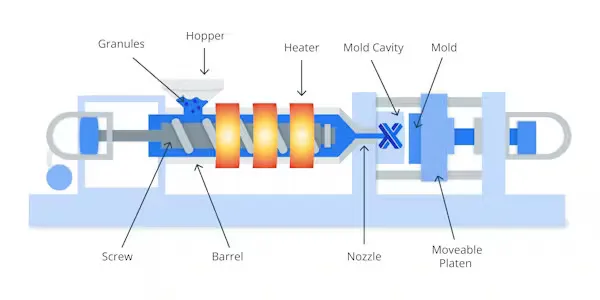
Why Injection Molding Is Ideal for Food Packaging Production
Food packaging manufacturing faces non-negotiable challenges: zero tolerance for contamination, tight dimensional tolerances for sealing compatibility, high production throughput, and resistance to temperature and chemical degradation. Injection molding addresses all these pain points more effectively than 3D printing, thermoforming or blow molding for rigid and semi-rigid packaging components. Its core advantages are tailored to the unique demands of the food and beverage industry.
1. Unmatched Consistency and Precision
Packaging performance relies heavily on precision fits. Bottle caps, snap-fit lids, sealing gaskets and compartmentalized food trays require micron-level dimensional accuracy to ensure airtight, leak-proof sealing. Injection molding delivers repeatable part geometry across millions of cycles, eliminating the inconsistent wall thickness, uneven edges and poor fit issues common with alternative processes. This consistency directly reduces product spoilage, improves shelf-life stability and minimizes assembly waste for high-speed packaging lines.
2. Compliance with Global Food Safety Standards
Unlike general plastic parts, food packaging components must meet rigorous food contact regulations, including FDA (U.S.), EU Food Contact Materials (FCM) standards, and GB food safety regulations. Injection molding supports the exclusive use of food-grade resin materials such as PP, PE, PET and PC, which are non-toxic, BPA-free and resistant to food acids, oils and high-temperature sterilization. The closed, controlled molding process also eliminates external contamination risks during production, ensuring full regulatory compliance for consumer-facing food products.
3. High-Volume Cost Efficiency
Food packaging is a high-volume, low-margin industry, requiring manufacturing processes that scale seamlessly. While injection mold tooling carries initial upfront costs, the per-unit production cost drops dramatically with mass production. Once the mold is validated, manufacturers can produce thousands of identical parts per hour with minimal labor and material waste. For disposable takeout packaging, beverage closures and daily-use food containers, this scalability makes injection molding the most cost-effective long-term production solution.
4. Versatile Design and Functional Customization
Modern food packaging is no longer just functional—it drives brand differentiation and user experience. Injection molding supports intricate design features including tamper-evident structures, anti-slip textures, custom logos, snap-fit mechanisms and multi-compartment layouts. Engineers can optimize part wall thickness, add structural ribs for drop resistance, or integrate sealing grooves in a single molded part, eliminating secondary assembly processes and streamlining production workflows.
5. Excellent Material and Environmental Adaptability
Injection-molded food packaging parts deliver superior environmental resistance. Food-grade molded plastics withstand refrigeration, freezing, microwave heating and high-pressure cleaning without deforming, leaching chemicals or compromising structural integrity. Additionally, the process is compatible with recycled food-safe plastics and biodegradable resins, helping brands meet sustainable packaging goals without sacrificing part performance or safety.
Critical Food-Grade Injection Molding Requirements
Producing food-safe packaging via injection molding demands stricter process control than standard plastic molding. Even minor deviations in materials, tooling or production environments can lead to non-compliant, unsafe products. The following criteria are mandatory for all food packaging molding projects.
Food-Safe Resin Selection
Only certified food-contact resins are permitted for direct food contact applications. The most widely used materials in food packaging injection molding include:
• Polypropylene (PP): The most versatile option, heat-resistant, microwave-safe, chemical-inert and ideal for food containers, lids and disposable packaging.
• Polyethylene (PE/HDPE/LDPE): Lightweight, flexible and moisture-resistant, perfect for beverage caps, food bag closures and soft packaging components.
• Polyethylene Terephthalate (PET): Clear, rigid and shatter-resistant, commonly used for transparent food containers and packaging inserts.
• Food-Grade Polycarbonate (PC): High-strength and heat-resistant, suitable for reusable food storage containers and catering packaging.
All resins must be free of toxic additives, heavy metals and non-food-grade colorants, with full material certification for regional market compliance.
Hygienic Production Environment
Food packaging molding must take place in dust-free, sanitized production workshops to prevent microbial or particulate contamination. Mold cavities, injection barrels and conveying systems require regular deep cleaning to eliminate residual plastic debris and bacteria. Many premium packaging manufacturers adopt ISO 22000 food safety management systems to standardize production hygiene.
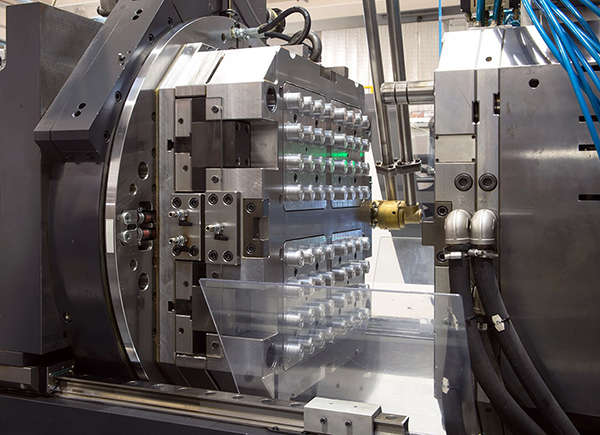
Strict Mold and Process Control
Mold surfaces must be polished to a food-grade smooth finish to avoid residue buildup and simplify cleaning. Process parameters including melt temperature, injection pressure and cooling time are precisely calibrated to prevent resin degradation, which can cause chemical leaching. No recycled non-food-grade materials are allowed in the production of direct food-contact parts.
Key Injection Molding Applications in Food Packaging
Injection molding covers nearly all rigid and functional food packaging components, supporting diverse scenarios from daily consumer packaging to commercial catering and industrial food packaging.
Disposable Food and Beverage Packaging
Disposable packaging is the largest application segment for food-grade injection molding. This includes takeout food boxes, sauce cups, yogurt containers, dessert boxes and beverage bottle caps. Thin-wall injection molding technology enables ultra-lightweight parts that reduce material usage and transportation costs, while maintaining sufficient rigidity for stacking and transportation. High-speed molding cycles support the massive market demand for single-use food packaging.
Reusable Food Storage Packaging
Reusable food storage containers, crisper boxes and refrigerator storage bins rely on injection molding for durable, long-lasting performance. Molded PP and PC materials resist repeated high-temperature washing and microwave heating, while precision-molded sealing rings and snap lids ensure long-term airtight and fresh-keeping effects. Customized sizes and compartment designs also meet diverse household and commercial storage needs.
Tamper-Evident and Safety Packaging Components
Food safety and anti-counterfeiting are critical for branded food products. Injection molding can integrate one-time breakable tamper-evident structures on bottle caps, jar lids and packaging seals. These molded safety features cannot be restored after opening, effectively preventing product tampering and ensuring food safety for consumers. The integrated molding process avoids secondary assembly, improving packaging integrity.
Commercial Catering and Industrial Packaging
For catering enterprises, food processing factories and logistics industries, injection molding produces heavy-duty food turnover boxes, tray holders, packaging brackets and insulated food container housings. These molded parts feature high load-bearing capacity, impact resistance and corrosion resistance, adapting to frequent turnover and high-standard food transportation and storage environments.
Design Best Practices for Injection Molded Food Packaging
Optimized design is critical to balancing safety, performance, cost and manufacturability for food packaging injection molding. Based on industry manufacturing experience, these key design principles help developers avoid common defects and improve production efficiency.
• Maintain uniform wall thickness: Consistent wall thickness prevents uneven cooling, warping and sink marks, ensuring flat sealing surfaces and stable packaging performance.
• Optimize fillet and corner design: Smooth rounded corners eliminate stress concentration, improve mold filling efficiency, and reduce part cracking during stacking and transportation.
• Avoid complex undercut structures unnecessarily: Simplify undercut features where possible to reduce mold complexity and tooling costs, while retaining functional structures like tamper-evident locks.
• Match material properties with usage scenarios: Select heat-resistant PP for microwaveable packaging, transparent PET for display packaging, and high-toughness PE for flexible closure parts.
• Prioritize easy-clean surface design: Smooth, non-porous mold finishes prevent food residue adhesion, meeting hygienic cleaning requirements for reusable packaging.
Future Trends of Injection Molding in Food Packaging
As global food safety regulations tighten and sustainable packaging trends accelerate, food packaging injection molding is evolving rapidly. Two trends are reshaping the industry:
First, sustainable material molding is becoming mainstream. More manufacturers are adopting food-grade recycled plastics and biodegradable bio-resins for injection molding, reducing plastic waste while maintaining food safety compliance. Advanced molding technologies now adapt to the unique processing characteristics of eco-friendly materials to ensure stable part quality.
Second, intelligent and customized packaging is rising. Precision injection molding enables the integration of micro-structured breathable films, anti-fog surfaces and anti-bacterial functions into packaging parts, extending food shelf life. Meanwhile, low-volume rapid injection molding supports small-batch customized packaging for niche food brands, balancing personalized design and production efficiency.
Final Thoughts
Injection molding remains the backbone of modern food packaging manufacturing, delivering unrivaled advantages in safety consistency, production scalability, design flexibility and cost control. For packaging engineers and product teams, understanding food-grade material specifications, hygienic production standards and design optimization rules is essential to developing compliant, high-performance and market-competitive packaging products.
Whether you are designing disposable consumer packaging, reusable food storage solutions or safety-critical tamper-evident components, injection molding provides a reliable, scalable manufacturing path to meet strict food industry standards and evolving market demands.
Looking to optimize your food packaging injection molding design or validate food-grade production feasibility? Connect with our engineering team for professional design feedback and manufacturing guidance tailored to your project.
Hot Articles
Hot Tags
Stay Connected!


Manufacturing on Demand
Please fill in the following information to obtain plan details (information is confidential and not disclosed publicly), we will contact you within 24 hours, please keep your phone available!
Upload a 3D/2D model to see instant pricing, lead time, and DFM feedback.