



The skill of choosing the right die material|Injection mold company


Mastars(provide rapid cnc services,rapid cnc machining,rapid prototyping services.)Mold material selection is a very important link in the whole mold manufacturing process. Three principles should be met for die material selection, namely: the die should meet the requirements of working conditions such as wear resistance, strength and toughness; The mold meets the process performance requirements; The mold meets the economic requirements.
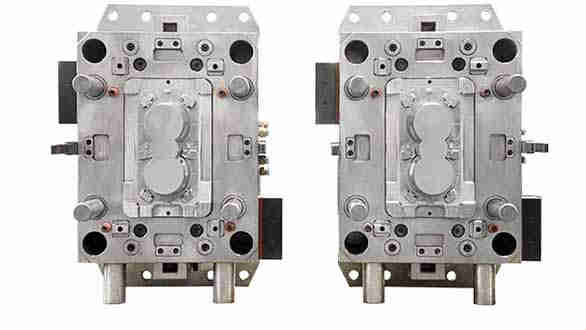
(1) The mold meets the requirements of working conditions
1. wear resistance
When the blank is plastically deformed in the mold cavity, it flows and slides along the cavity surface, causing severe friction between the cavity surface and the blank, resulting in the failure of the mold due to wear. Therefore, wear resistance of the material is one of the most basic and important properties of the die. Hardness is the main factor affecting wear resistance. In general, the higher the hardness of die parts, the smaller the wear, and the better the wear resistance. In addition, the wear resistance is also related to the type, quantity, shape, size and distribution of carbides in the material.
2. strength and toughness
Most of the working conditions of the dies are very bad, some of them often bear large impact load, resulting in brittle fracture. In order to prevent sudden brittle fracture of die parts during operation, the die should have high strength and toughness. The toughness of the die mainly depends on the carbon content, grain size and microstructure of the material.
3. fatigue fracture performance
During the working process of the die, fatigue fracture is often caused by the long-term action of cyclic stress. Its forms are: small energy multiple impact fatigue fracture, tensile fatigue fracture, contact fatigue fracture and bending fatigue fracture. The fatigue fracture performance of the die mainly depends on its strength, toughness, hardness and the content of inclusions in the material.
4. high temperature performance
When the working temperature of the die is high, the hardness and strength will decrease, resulting in early wear or plastic deformation and failure of the die. Therefore, the die material should have high tempering stability to ensure that the die has high hardness and strength at the working temperature.
5. cold and hot fatigue resistance
Some moulds are heated and cooled repeatedly in the working process, so that the surface of the cavity is subject to the action of variable stress such as tension and pressure, which causes surface cracking and spalling, increases friction, hinders plastic deformation, reduces dimensional accuracy, and leads to die failure. Cold and hot fatigue is one of the main forms of failure of hot working dies. Such dies should have high cold and hot fatigue resistance.
6. corrosion resistance
When some moulds, such as plastic moulds, work, due to the presence of chlorine, fluorine and other elements in the plastic, they decompose and precipitate HCl, HF and other strong corrosive gases after heating, eroding the surface of the mould cavity, increasing its surface roughness and aggravating wear failure.
www.mastars.com
Email: marketing@mastars.com
Tel: +86 755-88210690
Mobile: +86 181 0029 4997
Add: Building 6,Blue Sky Industrial Park, Ditang Road, Shajing Town, Shenzhen City, Guangdong, China
Hot Articles
Hot Tags
Stay Connected!


Manufacturing on Demand
Please fill in the following information to obtain plan details (information is confidential and not disclosed publicly), we will contact you within 24 hours, please keep your phone available!
Upload a 3D/2D model to see instant pricing, lead time, and DFM feedback.