MJF 3D Printing-Services

Overall

MJF 3D Printing Service

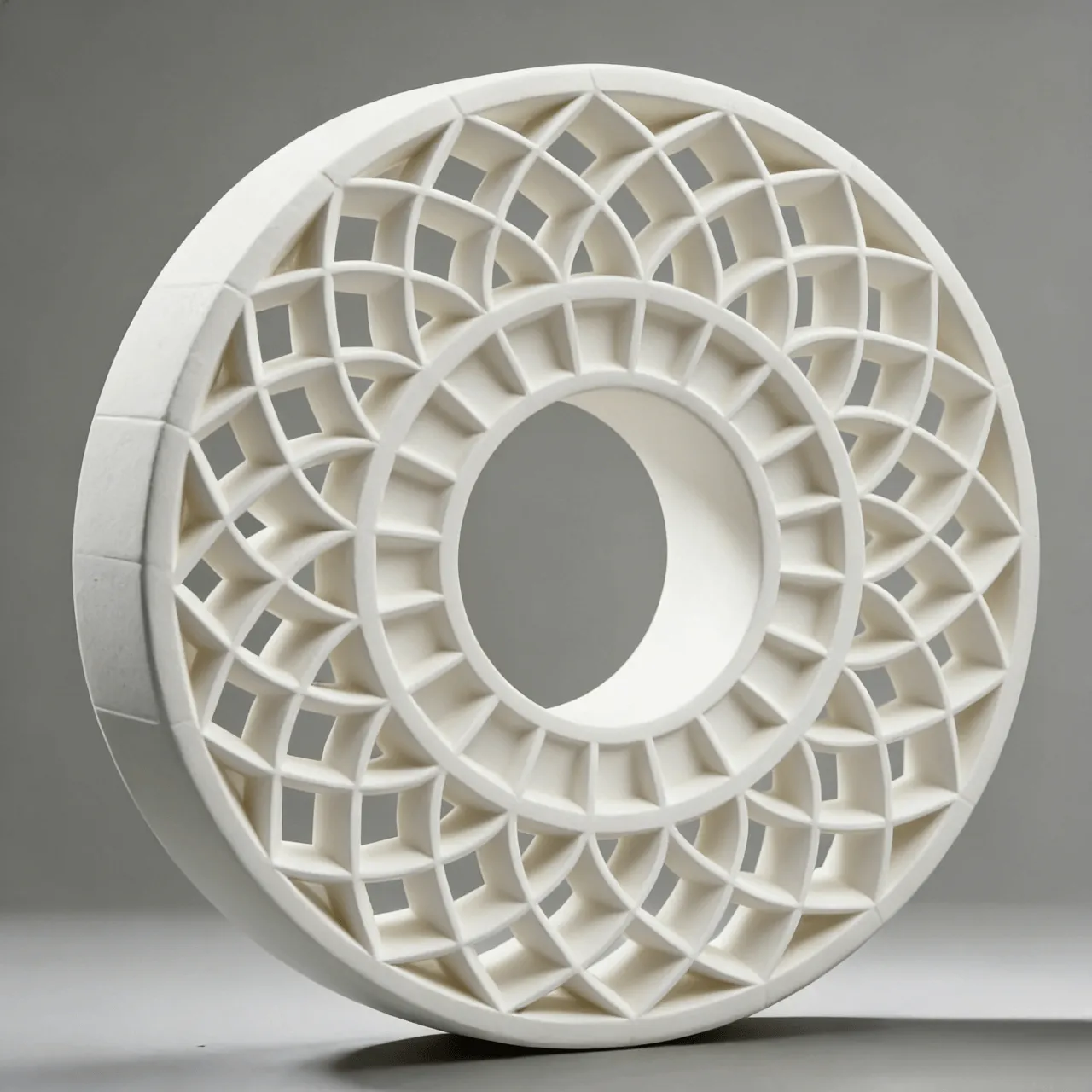
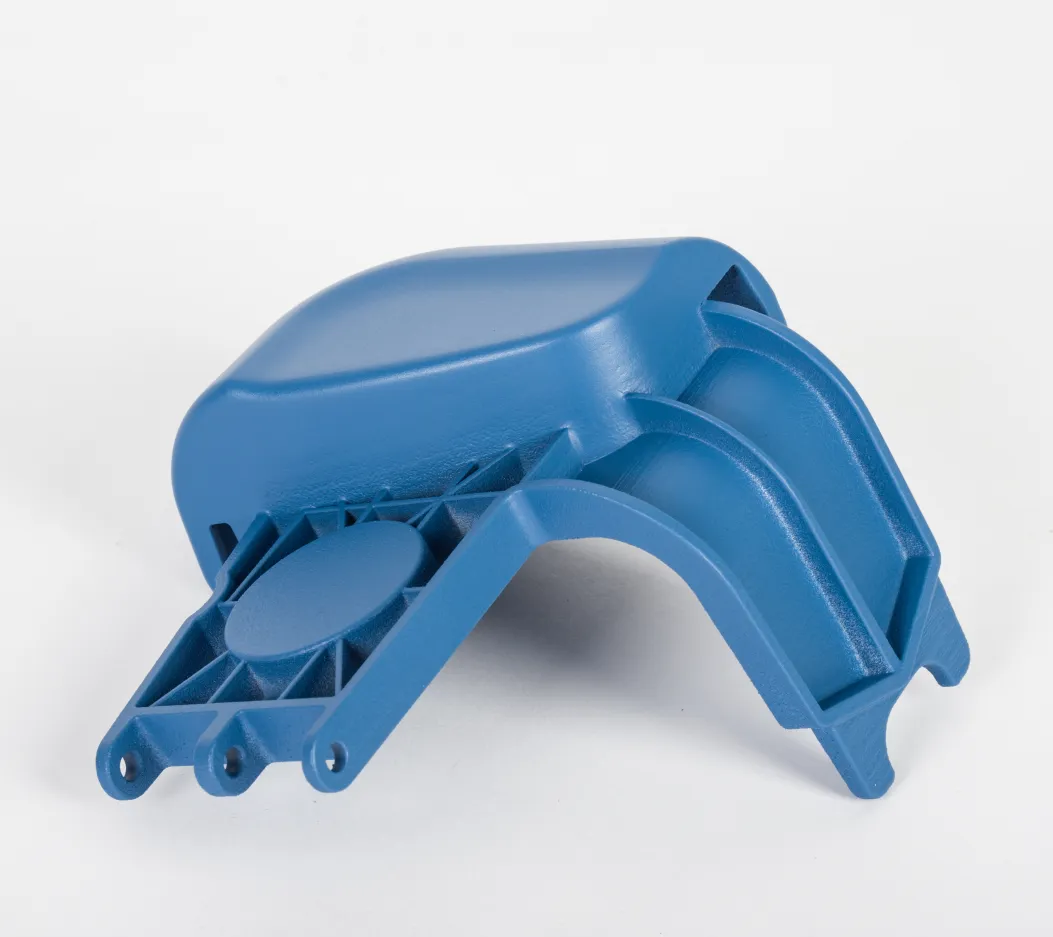
MJF 3D printing produces high-quality nylon components ideal for both rapid prototyping and end-use production.

Get an online quote now.

Get Instant Quote
View Materials
Certifications:

ISO 9001:2015

ISO 13485:2016

IATF 16949:2016

Multi Jet Fusion (MJF) is an industrial-grade 3D printing technology that delivers functional nylon prototypes and end‑use production parts in as fast as one day. Compared to processes such as selective laser sintering, MJF‑produced parts deliver superior surface finishes, finer feature resolution, and more consistent mechanical properties across the build.

Get A Quote
MJF 3D Printing Process

Why Use MJF 3D Printing?

Choosing MJF (Multi Jet Fusion) 3D printing services delivers powerful advantages for industrial prototyping and end‑use production. It offers extremely fast turnaround, producing functional nylon parts in as fast as one day, helping teams accelerate product development and time‑to‑market. MJF excels in surface quality, fine feature resolution, and consistent mechanical properties—often outperforming processes like SLS in uniformity and detail.

The technology supports high‑efficiency nesting of multiple parts in a single build, maximizing throughput and lowering per‑unit costs. It works with high‑performance nylons, creating durable components with excellent strength, heat resistance, and dimensional stability. With minimal post‑processing and reliable batch production, MJF is a cost‑effective, versatile solution for both low‑volume prototypes and higher‑volume production runs.

Design Guidelines

We don't have MOQ, only 1pcs is according to high standard to make, we pursuit the product is perfect to every customer, from 1pcs to million,we are glad to witness and grow together with our customers, that make us proud.

Our basic guidelines for Multi Jet Fusion include important design considerations to help improve part manufacturability, enhance cosmetic appearance, and reduce overall production time. ​

Tolerances: For well-designed parts, tolerances of +/- 0.012 in. (0.30mm) plus 0.1% of nominal length for each additional inch can typically be achieved. Note that tolerances may change depending on part geometry.

Warpage: Larger part sizes (>7 in.) and parts with thin features are the most susceptible to warp. We recommend maintaining a uniform thickness of 0.125 in. (3.175mm) to ensure stability.

*swip right to view all
US Metric
Maximum Part Size11.1 in. x 14.9 in. x 14.9 in 284mm x 380mm x 380mm
Layer Thickness0.00315 in.80 microns
Minimum Feature Size0.020 in.0.5mm
Wall Thickness0.020 in.0.5mm

Our Ideas Have Helped Clients Bring Hundreds Of Products To Market

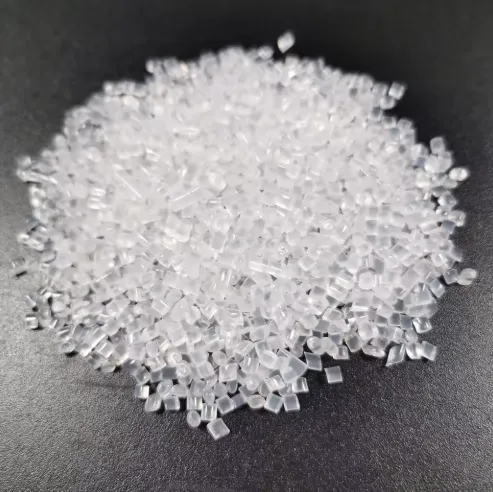
MJF 3D Printing material options,thermoplastic materials

MJF Material Options

✔️ Polyamide 12 (PA12)

· HP 3D PA12, PA12 W (White), · PA12 S, · PA12 FR (Flame-Retardant)

✔️ Glass Fiber Reinforced PA12

· PA12 GB (40% glass bead filled)

✔️ Polyamide 11 (PA11)

· HP 3D HR PA11

✔️ Thermoplastic Polyurethane (TPU)

· Estane 3D TPU, · Ultrasint TPU01 (88A/90A)

✔️ Polypropylene (PP)

· HP 3D HR PP

✔️ Thermoplastic Polyamide (TPA)

· HP 3D HR TPA

Surface Finish Options

✔️ Standard

Bead blasting effectively removes all residual powder and creates a uniform, consistent surface texture across the part. After blasting, parts are dyed to a standard black finish for a clean, professional appearance.

✔️ Vapor Smoothing

Surface smoothing significantly reduces roughness from over 250 μin RA in the as‑printed state to 64–100 μin RA after treatment. This enhanced finish is available for PA12 Black parts.

✔️ Custom

Secondary finishing options include primer application, as well as the installation of threaded taps and inserts.

MJF 3D Printing surface finishing options,finishing options
MJF 3D Printing Process

How Does Multi Jet Fusion Work?

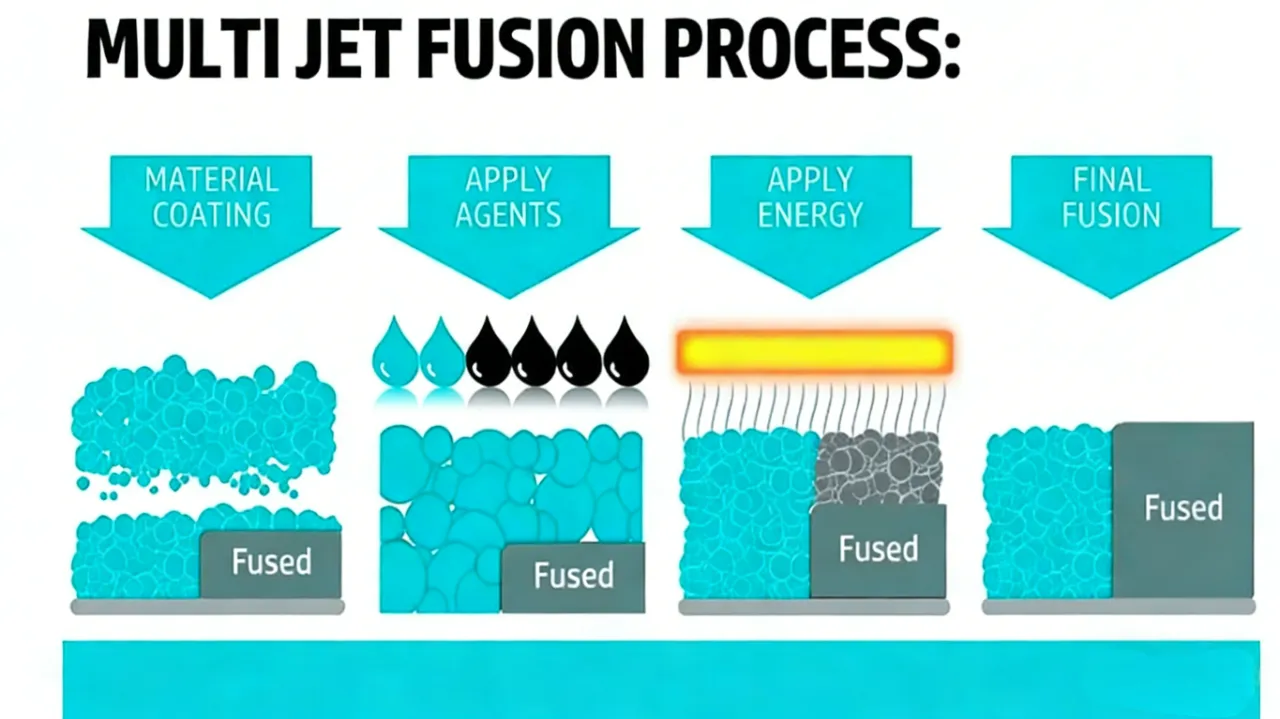
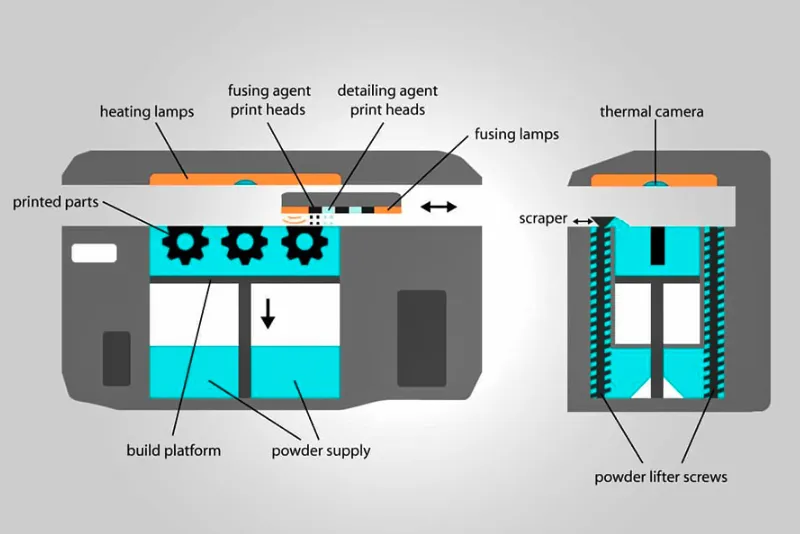
Multi Jet Fusion (MJF) uses an inkjet array to selectively deposit fusing and detailing agents across a bed of nylon powder. Heating elements then fuse the treated areas into a solid layer. After each layer, fresh powder is spread over the bed, and the cycle repeats until the part is fully built.

Once printing is complete, the entire powder bed containing the parts is transferred to a processing station. An integrated vacuum removes most loose powder, followed by bead blasting to eliminate any remaining residue. Parts are then sent to the finishing department, where they are dyed black to enhance cosmetic appearance.

Quick links

Technical video

One Supplier

Stay Connected!

Submission

Manufacturing on Demand

Please fill in the following information to obtain plan details (information is confidential and not disclosed publicly), we will contact you within 24 hours, please keep your phone available!

Upload a 3D/2D model to see instant pricing, lead time, and DFM feedback.

I consent to have my email collected in order to process this request - See Privacy Policy
We use cookies to understand how our audience uses our site.text
Mastars Industries Co., Ltd. websites use cookies to deliver and improve the website experience, See our cookie policy for further details on how we use cookies and how to change your cookie settings Cookie policy.
Accept
Reject