



 English





Risks Often Start Before Production
An injection-molded part does not become a stable production product after a single molding cycle. Many manufacturing problems do not start during production. They often begin earlier, during part design, tooling development, and process planning.
Factors such as part structure, wall thickness, material flow, mold design, and process stability all affect the final product quality. If these risks are not identified early, they may lead to:
Injection molding is a process influenced by many factors. Product quality depends not only on material selection, but also on part design, tooling, process parameters, machine stability, and manufacturing experience. Therefore, stable injection molding is not only about fixing problems after they appear. It is about identifying risks before production starts and improving the process in advance.
This is what Mastars focuses on during injection molding projects: Engineering support should start early, before problems happen.
Three Key Factors Affecting Injection Molding Stability
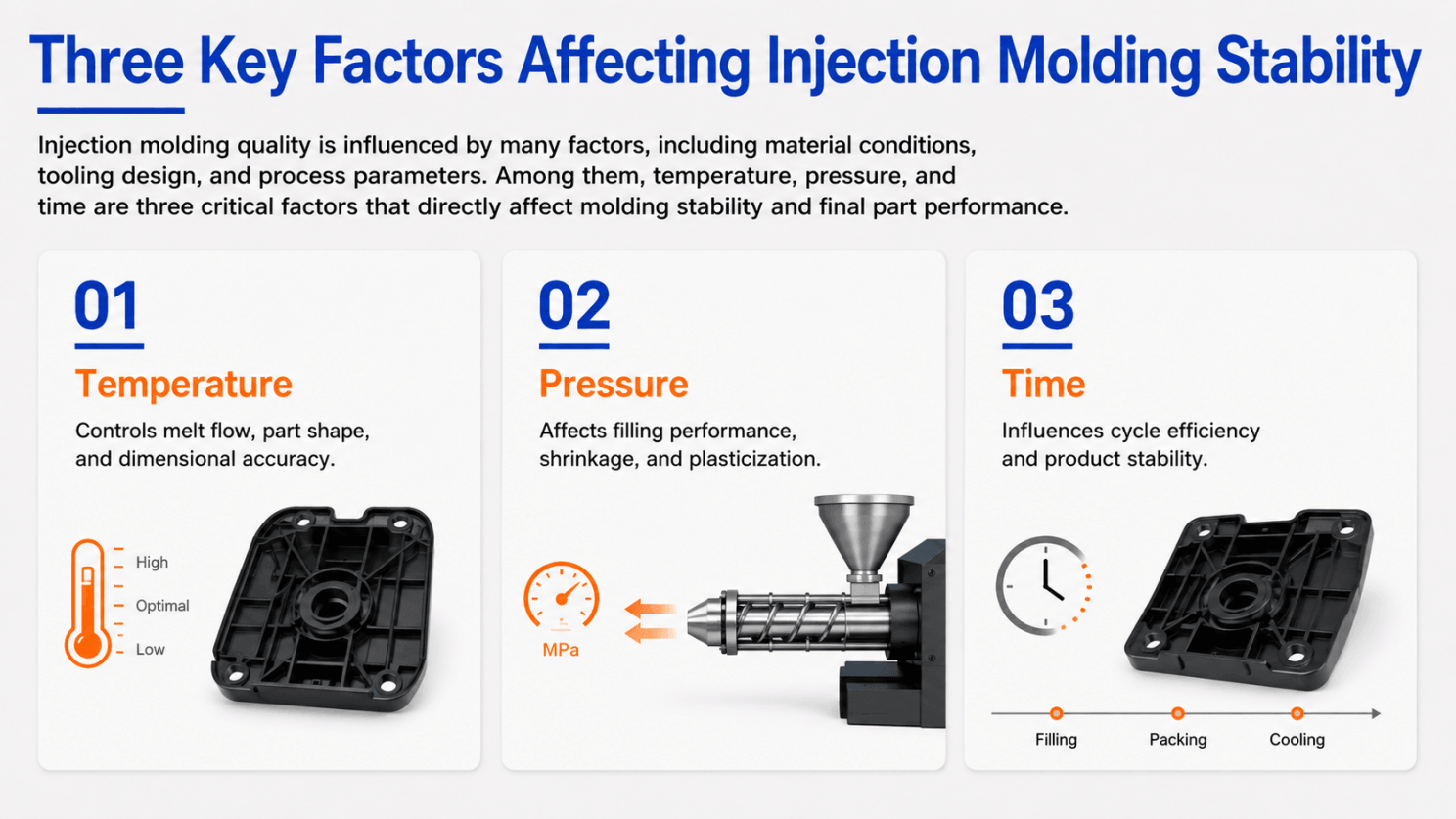
1. Temperature Control: Affecting Material Flow and Molding Quality
The main temperatures controlled during injection molding include:
The plasticizing temperature of the material and the melt temperature injected from the nozzle are mainly determined by the barrel and nozzle temperatures.
To maintain good part shape and dimensional accuracy, excessive warpage after demolding should be avoided. Therefore, the mold temperature needs to remain below the material’s heat distortion temperature.
In actual production, temperature parameters need to be adjusted according to:
Proper temperature control helps maintain stable material flow and consistent molding results.
2. Pressure Control: Affecting Filling Performance and Shrinkage
The pressures involved in injection molding mainly include:
(1) Injection Pressure
Injection pressure is used to overcome the resistance of molten plastic flowing from the barrel into the mold cavity.
It provides:
Proper injection pressure helps ensure complete cavity filling and stable part formation.
(2) Holding Pressure and Holding Time
Holding pressure depends on:
For complex and thin-wall parts, injection pressure is usually higher, while holding pressure can be slightly lower.
For thicker parts, selecting the right holding pressure is more complicated.
Excessive holding pressure may increase molecular orientation and internal stress, affecting part stability.
When holding pressure is properly controlled, shrinkage can be reduced and dimensional variation during production can be minimized.
(3) Back Pressure and Screw Speed
Back pressure refers to the pressure applied to the molten material at the front of the screw during screw rotation and retraction.
Back pressure mainly affects:
Increasing back pressure can:
However, if screw speed is not adjusted accordingly, excessive back pressure may increase reverse flow and leakage inside the screw channel, reducing plasticizing efficiency.
3. Time Control: Affecting Cycle Time and Product Stability
The time required to complete one injection molding process is called the molding cycle.
A complete molding cycle mainly includes:
While maintaining product quality, each stage of the molding cycle should be optimized to improve production efficiency.
Among these factors, injection time and cooling time have the greatest influence on product quality stability.
Common Injection Molding Defects and Improvement Directions
1. Splay Marks
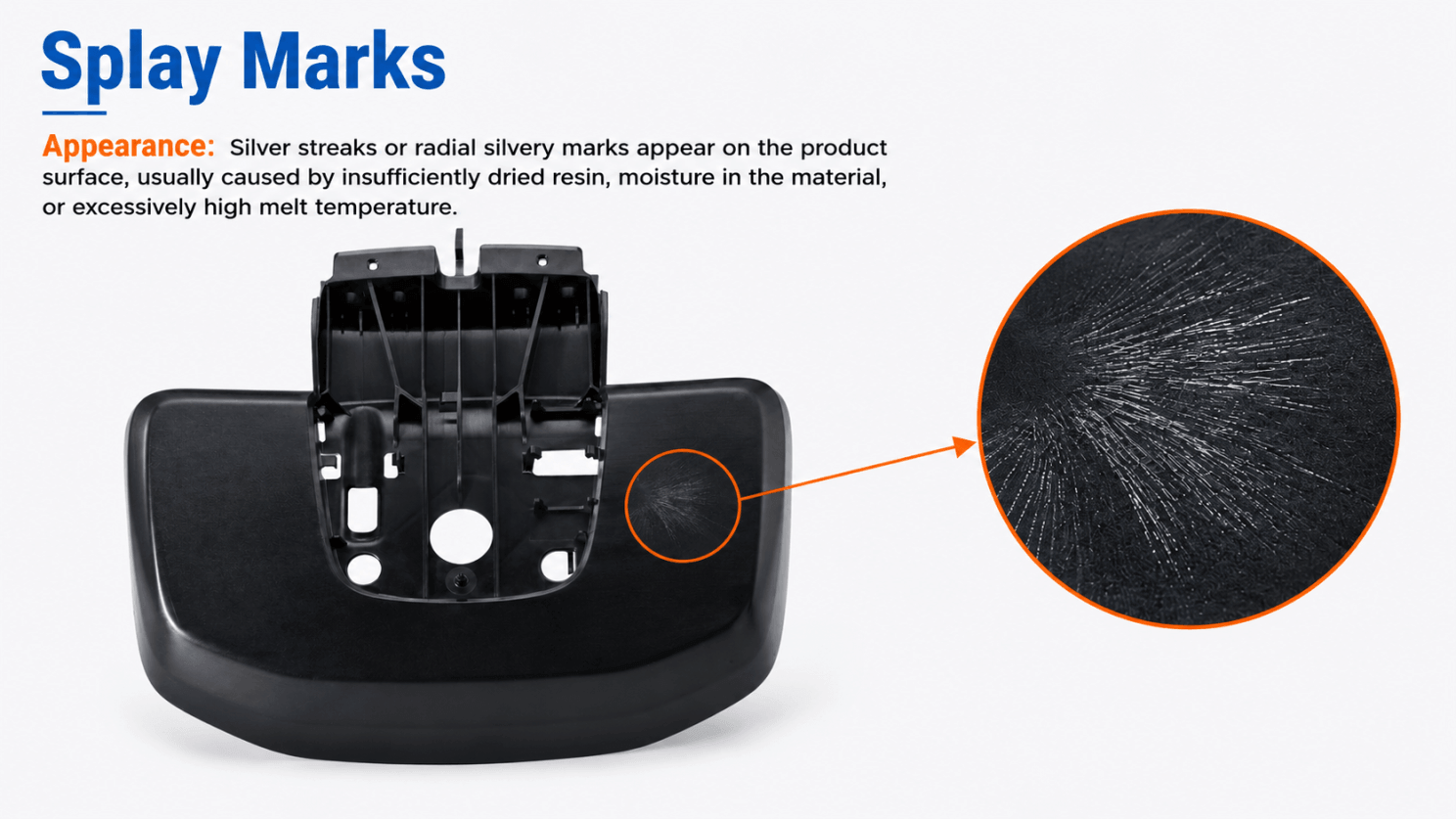
Main Causes
Splay marks are usually caused by moisture or volatile gases inside the plastic material during the injection molding process. These gases create silver streaks or marks on the product surface.
Common causes include:
Improvement Directions
Splay marks can be improved by:
2. Sink Mark
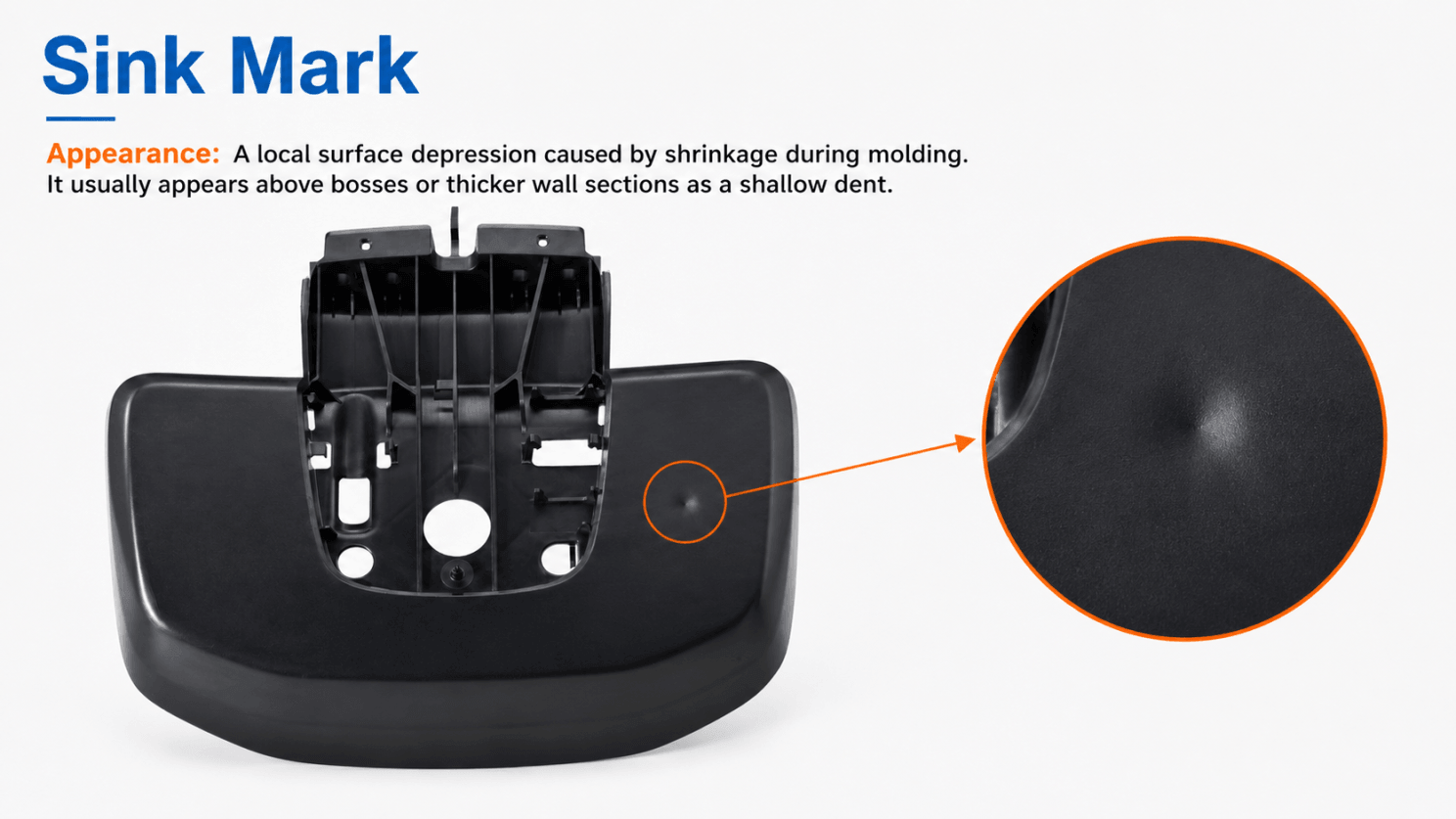
Main Causes
Sink marks are usually caused by uneven shrinkage during the cooling process.
Common causes include:
Improvement Directions
Sink marks can be improved by:
3. Weld Line
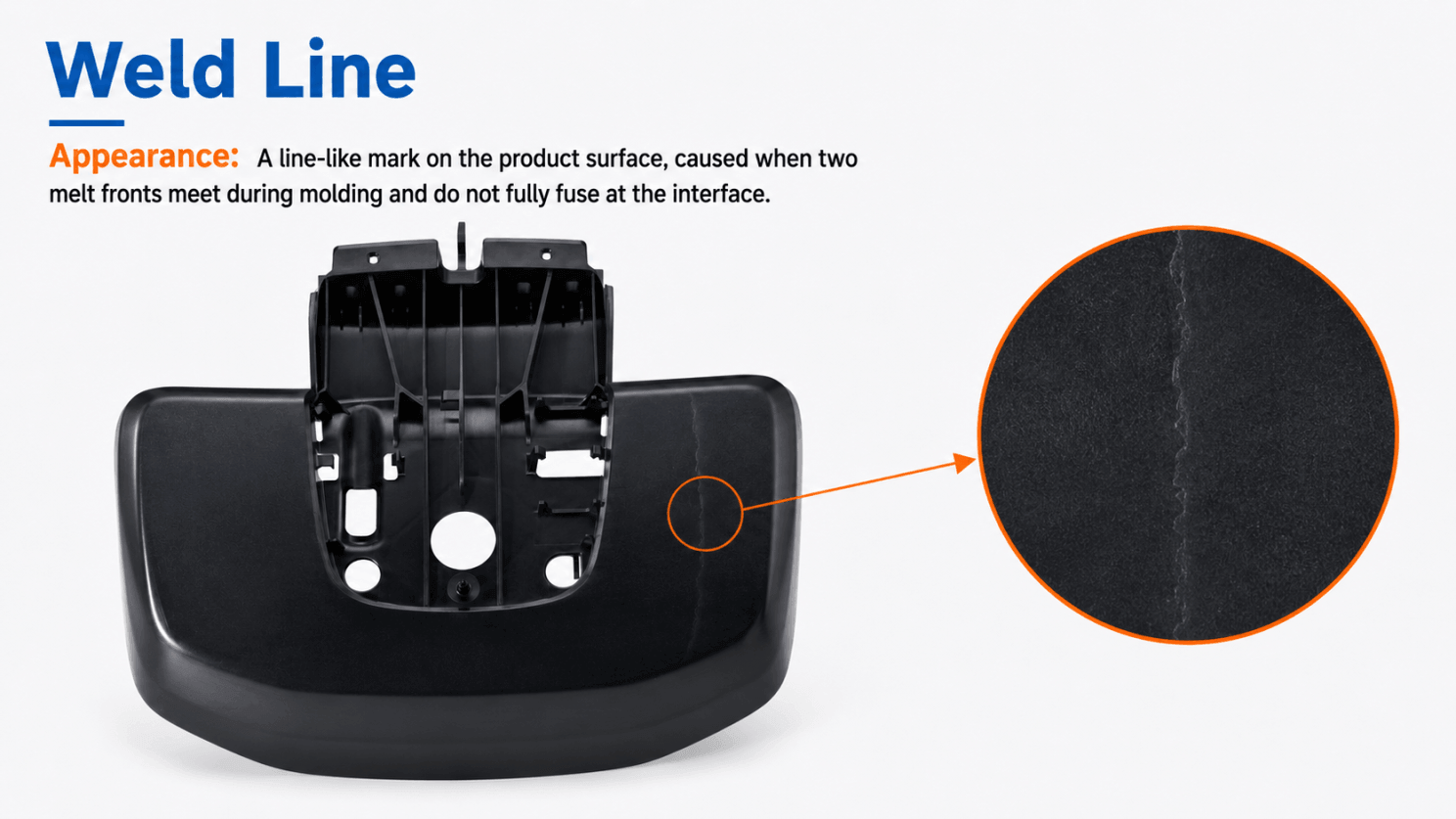
Main Causes
Weld lines occur when two or more molten plastic flows meet but do not fully fuse together at the joining area.
Common causes include:
Improvement Directions
Weld lines can be improved by:
4. Short Shot
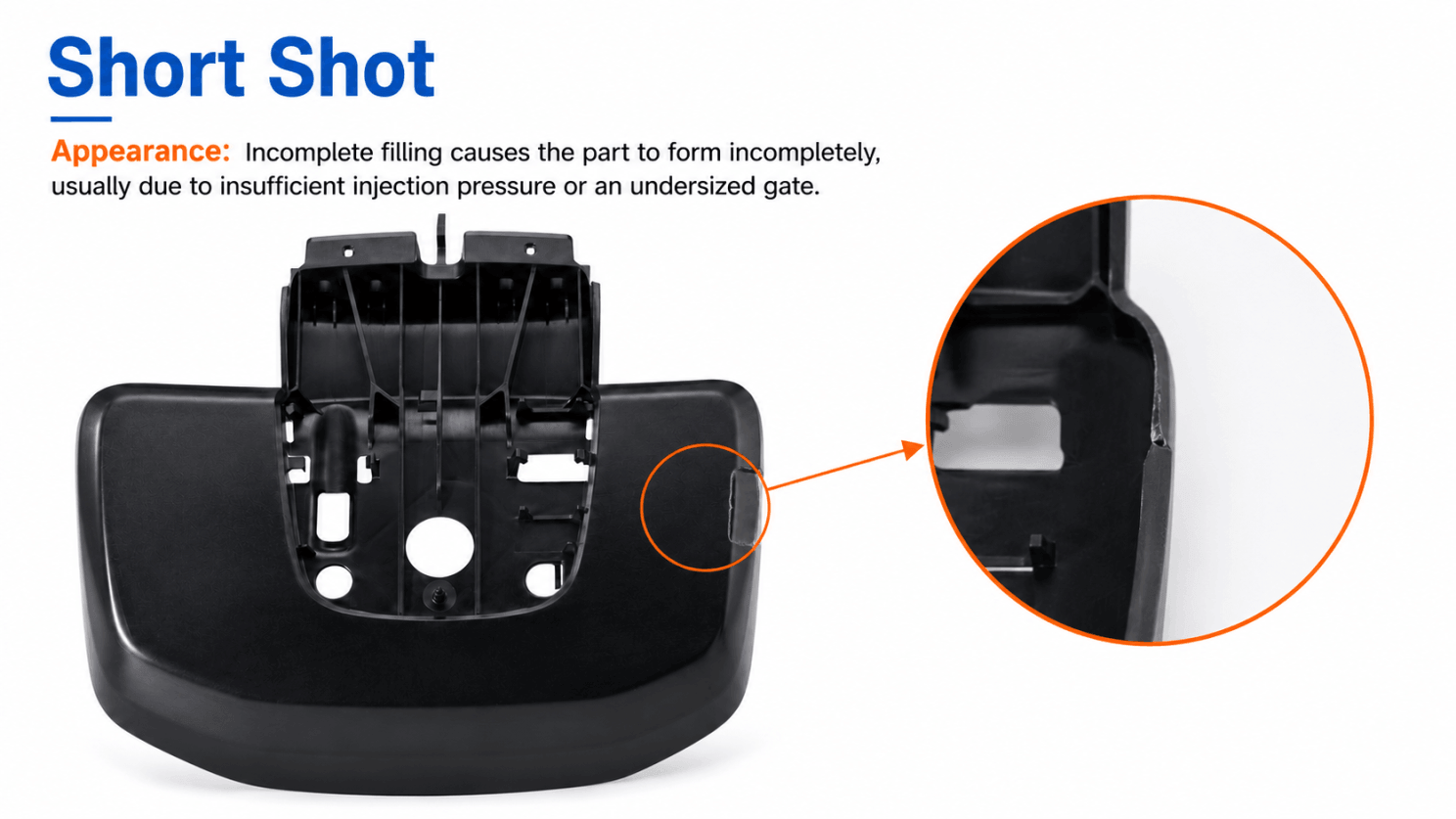
Main Causes
Short shots occur when molten plastic cannot fill the mold cavity.
Common causes include:
Improvement Directions
Short shots can be improved by:
5. Ejector Whitening
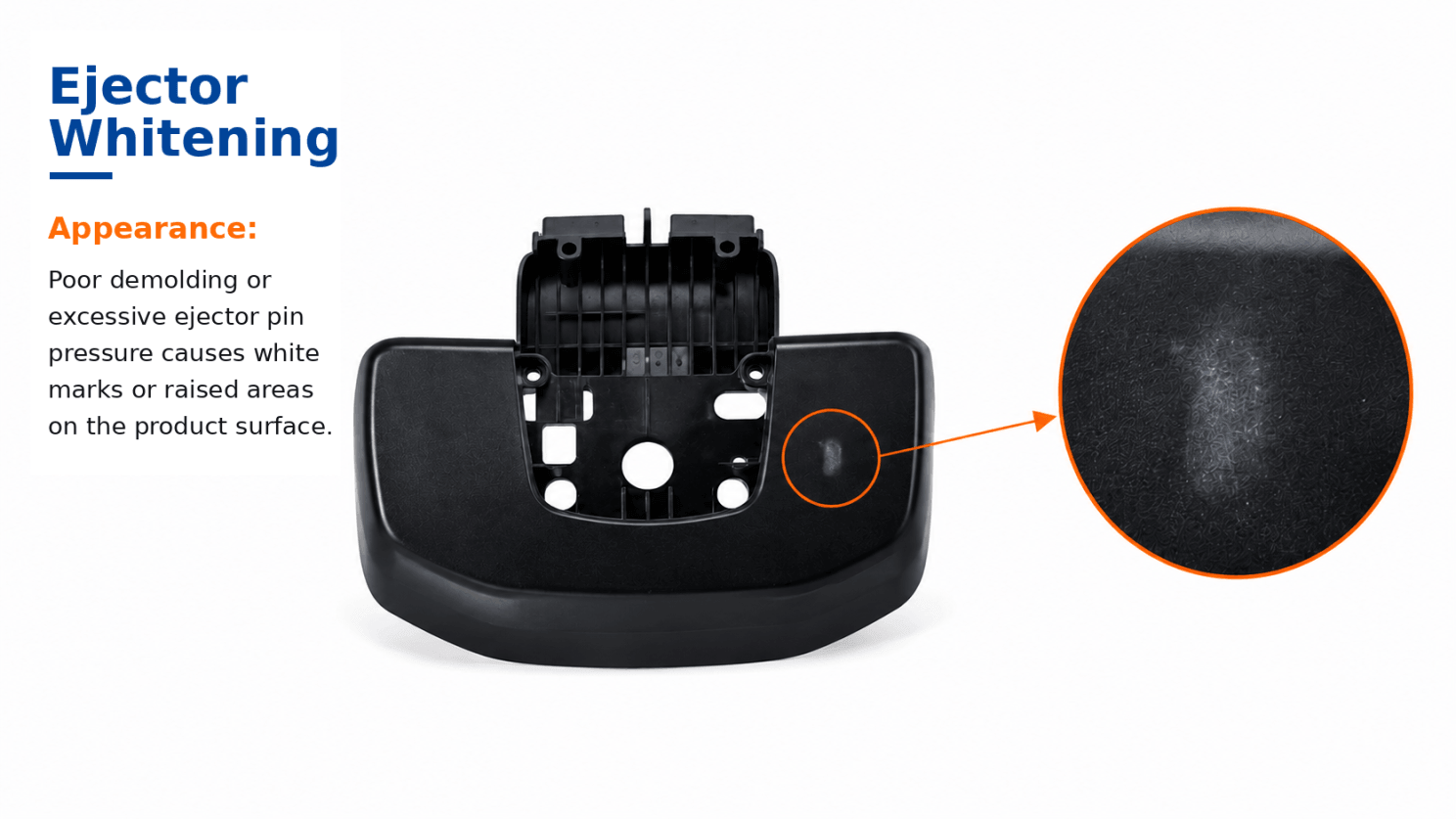
Main Causes
Ejector whitening usually occurs when excessive demolding resistance or ejector force creates stress concentration on the product surface.
Common causes include:
Improvement Directions
Ejector whitening can be improved by:
6. Surface Scratches
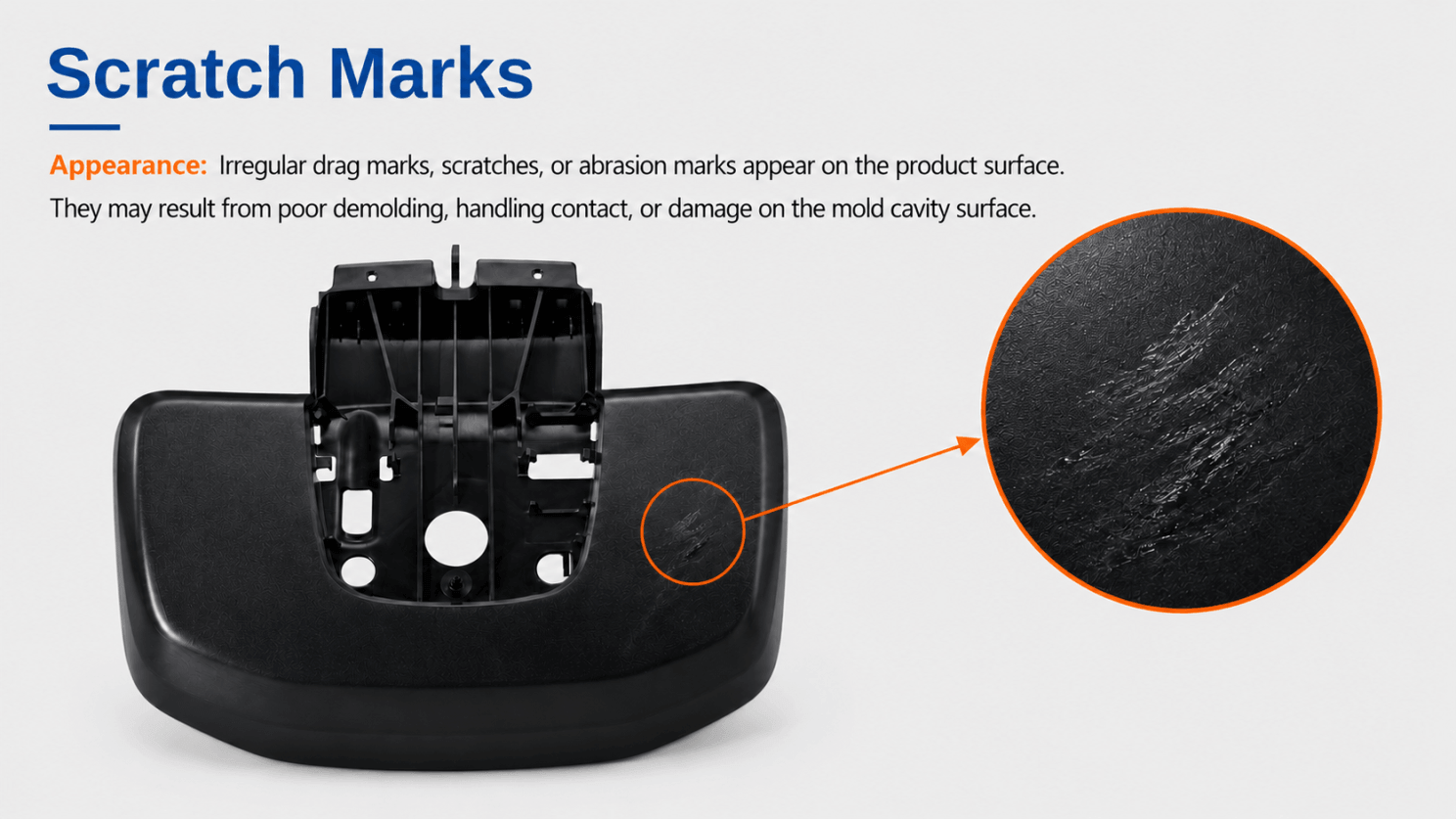
Main Causes
Surface scratches usually occur due to demolding issues, mold surface conditions, or improper handling after molding.
Common causes include:
Improvement Directions
Surface scratches can be improved by:
7. Warpage
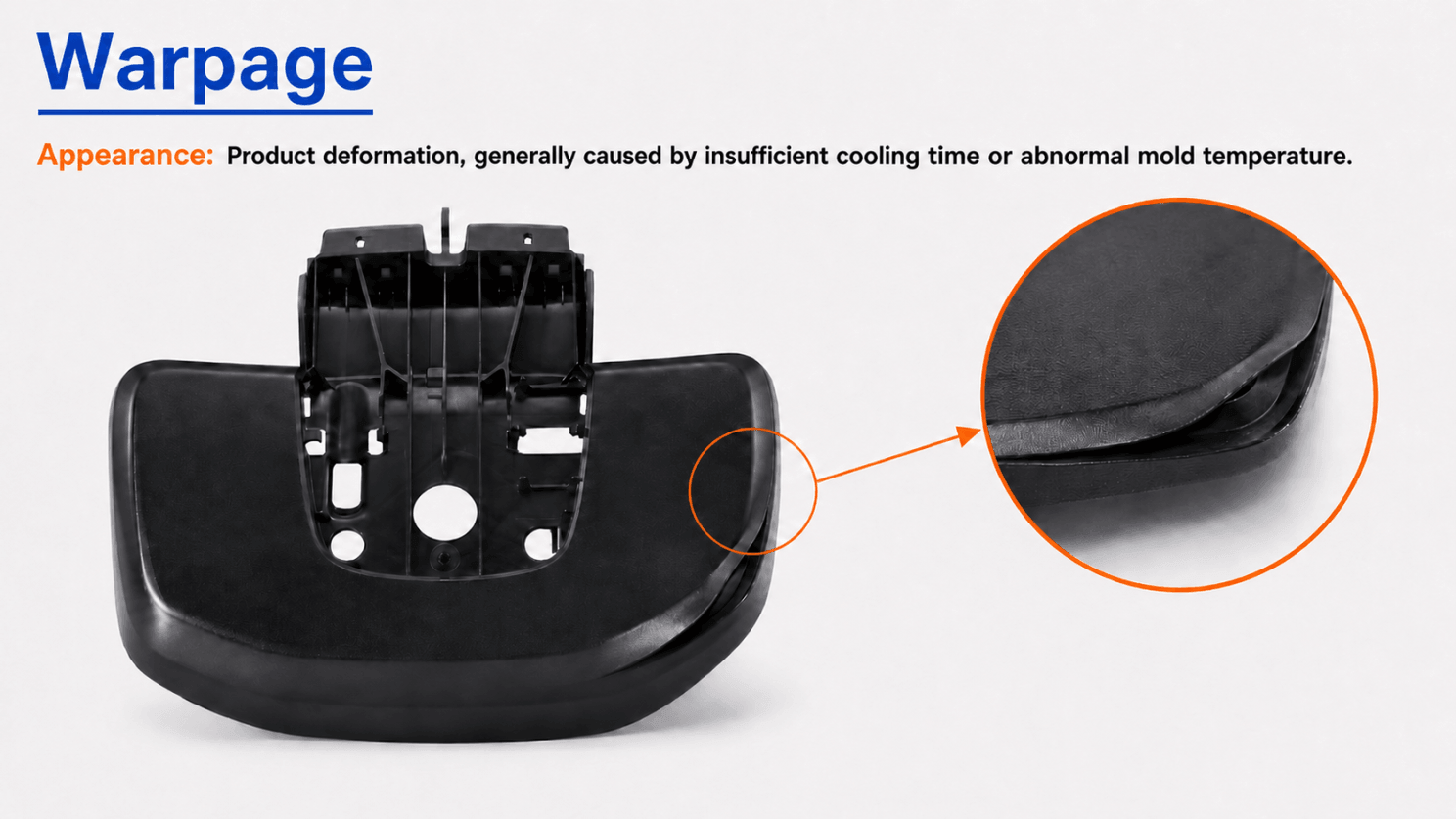
Main Causes
Warpage usually occurs when different areas of the part cool and shrink unevenly, causing deformation after demolding.
Common causes include:
Improvement Directions
Warpage can be improved by:
8. Color Mixing
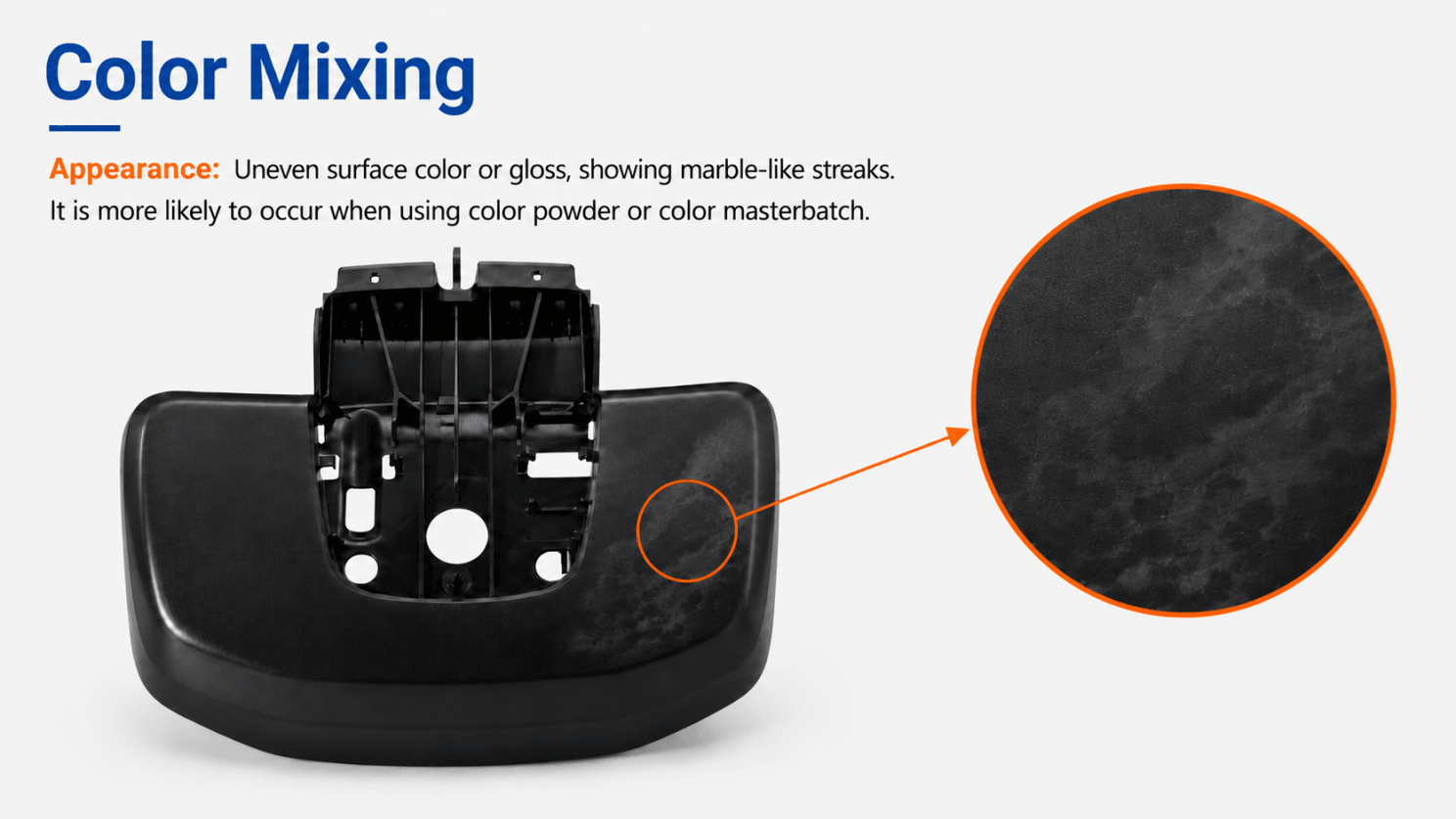
Main Causes
Color mixing occurs when raw materials, pigments, or masterbatch are not evenly mixed, causing inconsistent color and gloss on the product surface.
Common causes include:
Improvement Directions
Color mixing can be improved by:
9. Flash
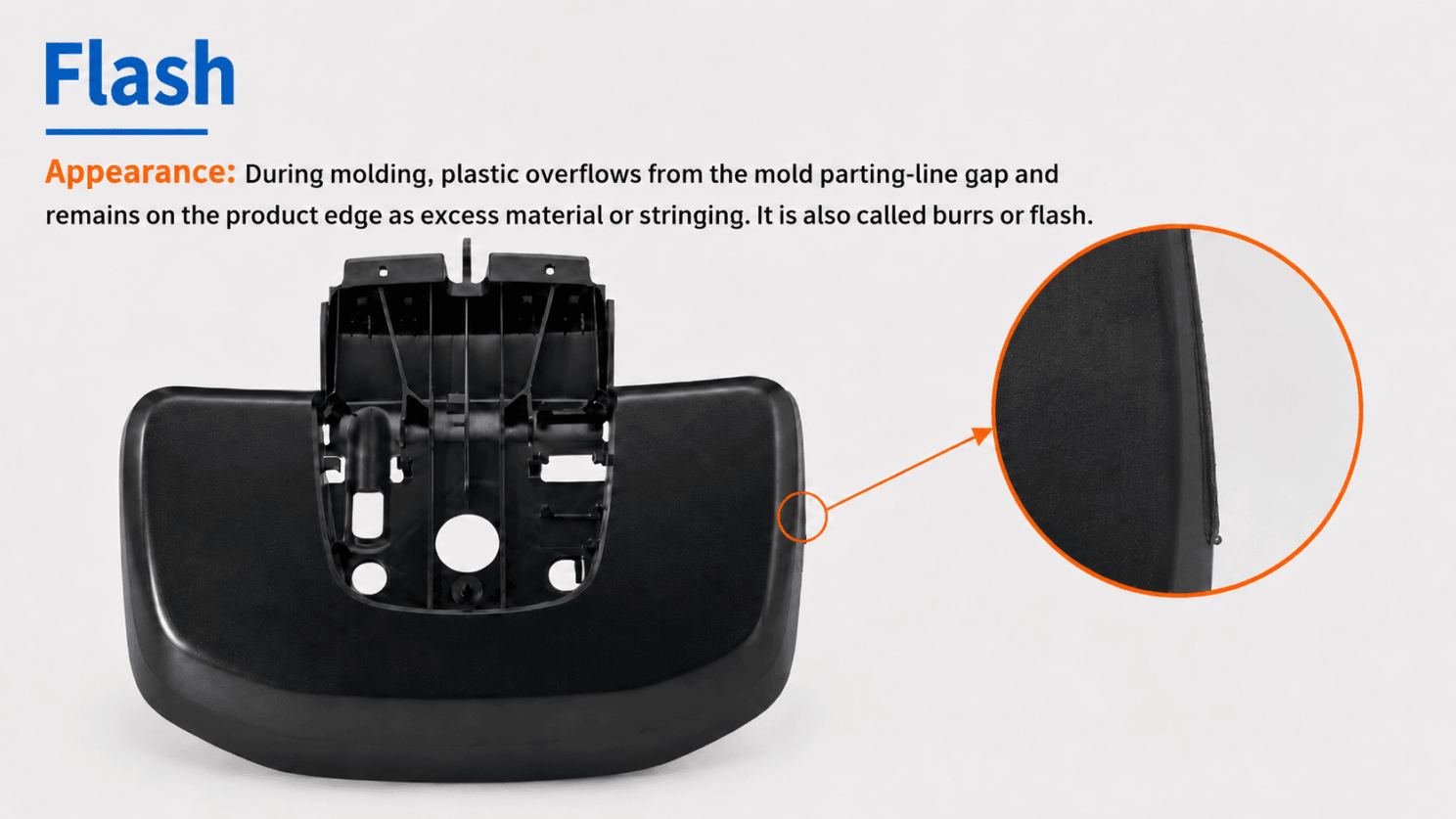
Main Causes
Flash occurs when molten plastic leaks from the mold parting surface or gaps and remains on the product edge.
Common causes include:
Improvement Directions
Flash can be improved by:
From Risk Identification to Stable Delivery
Shrinkage, ejector whitening, short shots, weld lines, and warpage are not caused by only one factor.
They can be affected by part design, mold conditions, material handling, and molding parameters such as temperature, pressure, and time.
To reduce these risks before production, Mastars starts reviewing potential issues at an early stage.
Our engineering team focuses on key areas such as wall thickness, draft angles, bosses and ribs, gate locations, venting, cooling, and ejection conditions.
After tooling is completed, we review trial results and defect locations to understand the causes and make targeted improvements to the mold and molding process.
After improvements, parts are checked for appearance, critical dimensions, and assembly conditions. Inspection records are also maintained to support more stable future production.
Similar manufacturing requirements can also be found in many industries, including:
Are you facing challenges with part design, tooling development, or existing injection molding defects? Contact Mastars to review your project requirements and manufacturing risks with our engineering team. Let’s build a more reliable injection molding solution together.

Mastars, the most trusted one-stop manufacturing services provider for low-volume production worldwide!
 Headquarters


